Cold.
That is the first thing you remember about a North Korean winter—not the ideology, not the slogans painted in fading red across concrete walls, and certainly not the portraits hanging above the doorframe, though you wiped the dust from their glass every morning with a designated cloth so clean it could never touch another surface. You remember the cold seeping through the soles of thin canvas shoes as you stood in a frozen schoolyard at seven in the morning, breath plumed white in the gray air, listening to a loudspeaker crackle to life with news from Pyongyang. For a more detailed analysis into this area, we suggest: this related article.
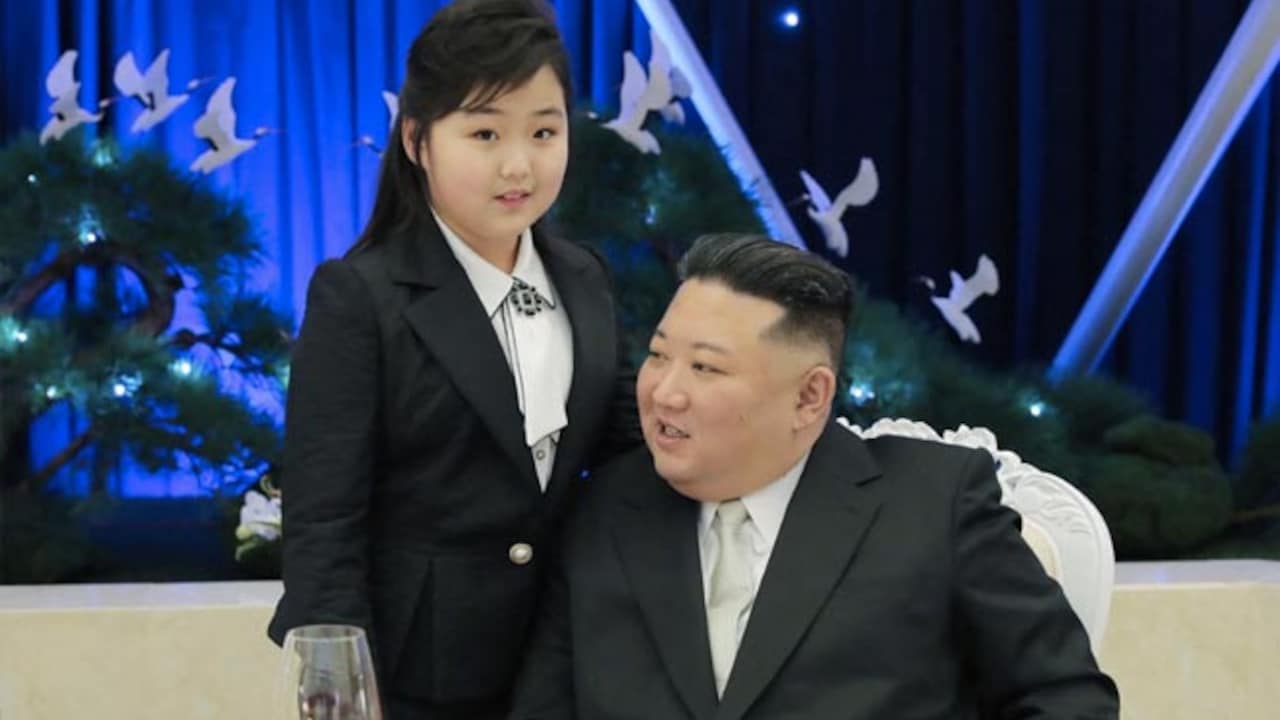
To understand what North Korean defectors see when they look at the photographs of Kim Ju Ae—the young girl standing beside her father in a white puffer jacket on a missile launch pad, or seated at the center of a banquet table ringed by four-star generals—you have to forget everything you know about politics. You have to stop thinking about succession plans, geopolitical chessboards, and nuclear deterrence.
You have to think about gods. For further details on this development, comprehensive analysis is available on TIME.
When a defector in Seoul, sitting in a sunlit coffee shop miles away from the DMZ, looks at a glowing smartphone screen showing Kim Jong Un’s daughter, they do not see a pre-teen girl in a designer coat. They see a theological event. They see the continuation of a bloodline that was taught to them, from the moment they could form words, as the literal sun around which their existence orbited.
The Architecture of Worship
To grasp why the phrase "like gods" keeps surfacing in interviews with those who escaped the North, consider a hypothetical scenario. Picture a child born in a remote valley in North Hamgyong Province—let us call her Ji-eun—who has never seen an unedited photograph of the outside world. From the age of three, before Ji-eun learns to tie her own shoes, she is taught to bow to two portraits in her living room. Before she eats a bowl of corn porridge, she thanks the Great Leader. When a rare harvest succeeds, it is because of the Leader’s benevolence; when the river floods and washes away the village bridge, it is because the enemies of the state conspired against the Leader’s plans.
In that world, the Kim family is not a government. A government can fail. A government can be voted out, protested against, or replaced when the electricity goes out for the third winter in a row.
The Mount Paektu bloodline—the mythic lineage stretching from Kim Il Sung through Kim Jong Il to Kim Jong Un—is framed as divine inevitability.
State propaganda has spent nearly eight decades engineering a secular religion out of Confucian filial piety and Stalinist personality cults. Inside North Korea, citizens are told that the Kim family possesses supernatural intuition, boundless paternal love, and an almost mystical connection to the sacred mountain on the Chinese border where the Korean nation supposedly began. Even after the horrific famine of the 1990s—known officially as the Arduous March, which killed hundreds of thousands and shattered the state’s promise to feed its people—the foundational myth of the bloodline proved remarkably stubborn. People blamed corrupt local officials. They blamed American sanctions. They blamed the weather.
Blaming the gods was too terrifying to contemplate, because if the gods were false, then forty years of starvation and sacrifice meant nothing at all.
So when Ji-eun escapes across the Tumen River, survives the perilous journey through China, and finally builds a quiet life in South Korea, she carries that conditioning inside her nervous system like shrapnel. Even after years of freedom, even after reading history books and watching documentaries that expose the brutal reality of the regime, seeing a new face step onto the pedestal triggers an involuntary physical reaction. A tightening in the chest. A sudden, irrational urge to lower her eyes.
The White Coat on the Launch Pad
In November 2022, the world got its first verified look at Kim Ju Ae. State media released photographs of Kim Jong Un inspecting a Hwasong-17 intercontinental ballistic missile, holding the hand of a young girl in a quilted white winter coat and red shoes.
Western intelligence analysts immediately reached for their spreadsheets. They debated her exact birth year—most likely 2012 or 2013, making her around nine or ten at the time—and measured her height relative to her father’s shoulder. They asked whether Kim Jong Un was using her to soften his image, to present himself as a protective father shielding future generations with a nuclear umbrella.
Defectors saw something else entirely. They noticed the choreography.
In North Korean visual culture, nothing is accidental. Every millimeter of distance between figures in a state photograph carries precise political weight. Within months of her debut, Kim Ju Ae was no longer just walking beside her father; she was standing in the dead center of frame after frame, while elderly military commanders—men who had spent fifty years climbing the treacherous ladder of the Korean People's Army—clapped enthusiastically from the margins.
Then came the language. State broadcasts began referring to her not merely as Kim Jong Un’s beloved child, but as the "respected" daughter—an honorific adjective historically reserved only for the supreme leaders themselves. By early 2024, state media went even further, describing her alongside her father as a "great person of guidance," a title that in Pyongyang’s strict ideological lexicon signals unmistakable heir-apparent status.
For those who grew up decoding the subtle shifts in Rodong Sinmun, the state newspaper, the message was blindingly clear. You do not put a child in the center of a military parade, watch decorated generals kneel to whisper to her, and bestow sacred honorifics upon her unless you are preparing the public psyche to worship a fourth generation.
The Shock of a Female Heir
Yet beneath the awe lies a profound, unsettling contradiction that leaves even seasoned defectors divided.
North Korea remains a deeply patriarchal society, governed by rigid Confucian hierarchies where men dominate the military, the party apparatus, and the household. Throughout the regime’s history, power has passed strictly from father to son. When Kim Jong Il suffered a stroke in 2008 and rushed to install his youngest son, Kim Jong Un, as his successor, insiders whispered that the transition worked precisely because a young man could be molded into the traditional image of the warrior-king.
A girl changes the equation.
I remember speaking with former residents of Pyongyang who admitted their initial reaction to Kim Ju Ae’s prominence wasn't fear, but genuine bewilderment. How would the old guard in the military—men raised in a hyper-masculine barracks culture—accept taking orders from a young woman? Would soldiers march into battle under the banner of a female supreme commander?
Think of it like watching a centuries-old monarchy suddenly rewrite its laws of inheritance overnight, without warning or explanation, and expecting the clergy to celebrate the miracle by sunrise.
Some defectors argue that Kim Jong Un’s own sister, Kim Yo Jong, inadvertently paved the way. Over the past decade, Kim Yo Jong has emerged as one of the regime’s sharpest, most ruthless voices, issuing blistering statements against Seoul and Washington and visibly managing her brother’s public appearances. Her rise proved that a woman carrying the Paektu bloodline could wield terrifying authority without triggering a palace revolt.
Still, there is a vast difference between a powerful sister acting as the chief enforcer and a daughter sitting on the throne itself. Many defectors point out that in North Korea’s brutal elite circles, loyalty is maintained through a delicate balance of terror and shared survival. If Kim Jong Un—whose health has long been a subject of intense speculation given his heavy smoking, obesity, and family history of heart disease—were to die suddenly while Ju Ae is still a teenager, the regime would face a regency crisis unlike anything in its history. Would the generals bow to a twenty-year-old girl, or would they quietly tear the system apart behind closed doors while keeping her as a figurehead?
Nobody knows. And that uncertainty is precisely what makes the spectacle so haunting.
The Invisible Stakes of Dynasty
Why introduce her so early? Kim Jong Un himself was kept hidden from the public eye until he was twenty-six years old, unveiled only in 2010 when his father’s failing health left no time for a gradual rollout. Many North Koreans were initially skeptical of the young, inexperienced successor, mocking him quietly behind closed doors as a child who knew nothing of governance.
Kim Jong Un clearly remembers that vulnerability. By bringing Ju Ae onto the stage while she is still a child, he is attempting to inoculate the population against future doubt. If twenty-five million people watch her grow up alongside the nation’s nuclear arsenal, her authority becomes normalized long before she ever signs a decree. By the time she reaches adulthood, her face will be as familiar as the mountains, her legitimacy woven into the earliest memories of a new generation.
But there is a darker, quieter cost that rarely makes it into geopolitical briefings.
Every time Kim Ju Ae appears on state television wearing a Dior jacket—a garment costing thousands of dollars in a country where the average state worker earns a few dollars a month—defectors feel a familiar, sickening ache. They think of their cousins, their childhood neighbors, their aging parents still trapped inside the border, foraging for wild greens in the spring when the winter rations run out.
The contrast is obscene, yet inside the hermetically sealed information bubble of North Korea, that obscenity is inverted into virtue. Propaganda frames the luxury and majesty of the ruling family not as theft from the starving masses, but as proof of the nation’s dignity. If the gods wear fine clothes and stand beside mighty rockets, the logic goes, then the nation itself is strong, unconquerable, and proud.
Defectors see through the illusion now, because they have paid the price of waking up. Waking up from a totalizing myth is not a clean, triumphant moment; it is a long, disorienting grief. You realize that the songs you sang with tears in your eyes as a child were written to keep you in chains. You realize that the divine family you prayed to never knew your name and would let your village freeze to death to fund a single missile test.
Watching the Next Generation
Today, thousands of North Korean defectors live in South Korea, building ordinary lives as nurses, delivery drivers, business owners, and students. Yet whenever Pyongyang releases new footage from a military banquet or a rocket launch, group chats among defectors light up within minutes.
They zoom in on the grainy pixels of Kim Ju Ae’s face. They analyze the way she stands, the way she claps, the slight tilt of her chin that mimics her father’s posture and her grandfather’s smile.
Some feel a surge of anger, frustrated that the world’s media treats her appearances like royal celebrity gossip while millions of ordinary North Koreans remain invisible, voiceless, and hungry. Others feel a strange, lingering pity—recognizing that even a girl raised in palaces, surrounded by bowing generals and nuclear weapons, is ultimately a prisoner of the same monstrous machine, stripped of a normal childhood so she can become an idol of stone and steel.
Most of all, they feel the weight of time.
Every year that Kim Ju Ae stands beside those gleaming missiles, another cohort of North Korean children enters elementary school. They will learn to read using textbooks filled with stories of her wisdom. They will hang her portrait beside her father’s on freshly whitewashed walls, wiping the glass clean every morning in the freezing dark before walking out into the snow to pledge their lives to a girl they have only ever seen on a screen.