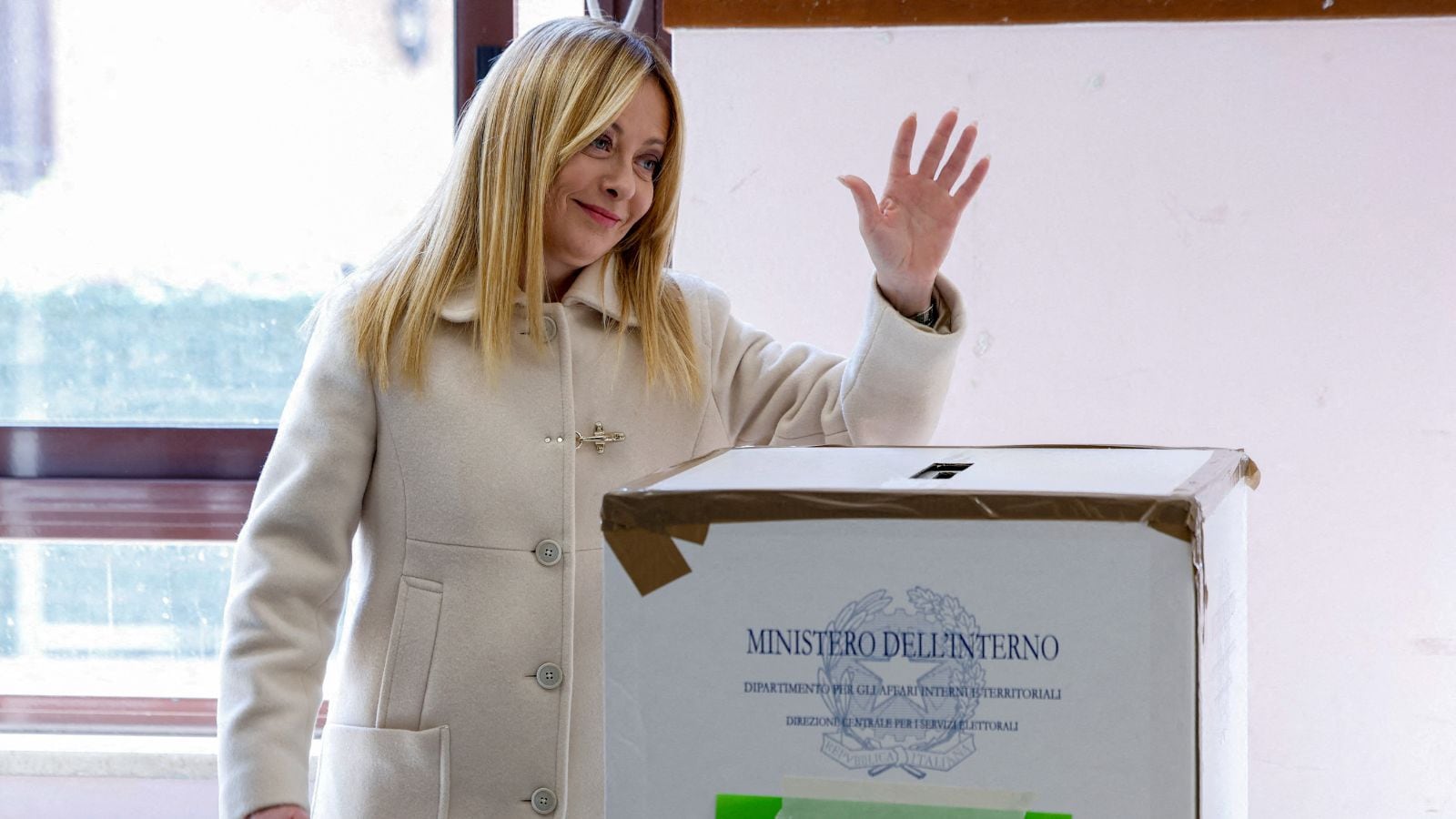
Italian political history is defined by its brevity. Cabinets rise, fracture over minor ideological disputes, and collapse with predictable regularity, averaging a lifespan of roughly thirteen months since the founding of the Italian Republic in 1946. Prime Minister Giorgia Meloni has officially broken that curse. By crossing the threshold to become the longest-serving continuous government leader in the nation's post-World War II era, she has achieved a milestone that mystified political scientists and confounded her international critics who predicted an imminent implosion from day one.
Surviving in Rome requires a specialized survival instinct. Meloni did not achieve this longevity by executing massive, sweeping structural overhauls that upended the European Union or transformed the Italian economy overnight. Instead, she achieved it through strict internal coalition discipline, strategic pragmatism on the international stage, and an opposition that remains chronically fragmented. Her government's stability rests on a foundation of calculated moderation abroad matched with hardline rhetoric at home, a dual-track strategy that has kept her right-wing allies in check while neutralizing potential threats from Brussels and Washington.
Understanding how the leader of Brothers of Italy accomplished what fifty-plus predecessors failed to do demands looking past the daily noise of parliamentary theater. The machinery of Italian governance is designed to devour prime ministers. Meloni dismantled that machinery not by force, but by out-waiting her rivals and exploiting the inherent weaknesses of a fractured democratic landscape.
The Anatomy of Post-War Instability
To grasp the magnitude of Meloni's record, examine the graveyard of her predecessors. Italy has seen nearly seventy governments in less than eighty years. Silvio Berlusconi held power across multiple fragmented terms, but none of his individual administrations achieved the unbroken, uninterrupted duration that Meloni has now secured. Romano Prodi, Bettino Craxi, and Alcide De Gasperi all faced the same underlying structural vulnerability. The Italian electoral system, historically prone to proportional representation quirks, practically guarantees coalition governments built on precarious compromises.
When minor parties hold veto power over a prime minister's agenda, any single policy disagreement can trigger a government crisis. Meloni inherited this exact constitutional trap. Yet, her party, Brothers of Italy, absorbed its smaller coalition partners rather than letting them dictate terms. By commanding a dominant share of the vote within the right-wing bloc—which includes Matteo Salvini’s League and Antonio Tajani’s Forza Italia—she reversed the traditional Italian power dynamic.
Smaller factions within her coalition cannot threaten to pull their support without facing political annihilation at the ballot box. Meloni turned proportional power dynamics on their head. She secured absolute dominance on the right, rendering her coalition partners dependent on her survival rather than the other way around.
Brussels Pragmatism Versus Domestic Rhetoric
Campaign trails are filled with fiery promises. Governing requires compromise. No one demonstrated this transition sharper than Meloni, whose eurosceptic roots initially sent shockwaves through European financial capitals. Observers anticipated a direct confrontation with the European Commission over debt targets, migration policy, and fiscal spending rules.
Instead, Meloni chose institutional alignment. She recognized quickly that Italy's massive public debt leaves zero room for financial adventurism. By maintaining strict adherence to the economic milestones required for post-pandemic recovery funds from the European Union, she placated the markets and earned the quiet approval of Berlin and Paris.
- Fiscal Compliance: Meloni avoided high-stakes budget clashes with the European Union, prioritizing economic credibility over anti-Brussels rhetoric.
- Foreign Policy Alignment: She maintained robust support for Ukraine and preserved close coordination with Washington and NATO, discarding old ideological alignments that favored Moscow.
- Migration Management: While maintaining tough rhetoric to satisfy her base, she outsourced enforcement mechanisms through bilateral deals with North African transit nations.
This pragmatic pivot alienated some ideological purists within her base. Yet, it achieved a vital political objective. It insulated her administration from external shocks and international pressure. European institutions realized that working with Meloni was preferable to dealing with the chaos of a collapsed Italian government and snap elections.
The Collapse of the Leftist Opposition
A government is only as strong as its opposition. Meloni's longevity is a byproduct of the profound strategic disarray gripping Italy's center-left forces, primarily the Democratic Party. The opposition has struggled to forge a coherent unified front, oscillating between populist economic demands and identity-focused platforms that fail to resonate with working-class voters outside major urban centers.
Elly Schlein, the leader of the Democratic Party, attempted to pull her movement toward a more progressive, activist stance. While this energized urban progressives and young voters, it widened the cultural chasm between the left and the traditional industrial and agrarian heartlands of Italy. Meloni capitalized on this disconnect. She positioned herself as the authentic voice of the forgotten Italian family, framing her administration as the sole barrier against foreign dictates and progressive cultural encroachment.
Whenever corruption scandals or economic pressures threatened to dent her approval ratings, the opposition repeatedly failed to capitalize. Divided over minimum wage legislation, foreign policy stances, and electoral strategy, her critics routinely canceled each other out in the media cycle. Meloni did not even need to mount a defense. Her rivals simply surrendered the narrative battlefield through friendly fire.
Structural Weaknesses Beneath the Surface
Longevity does not equal transformation. Beneath the historic milestone of her administration's duration lies a series of structural bottlenecks that continue to strangle the Italian peninsula. Demographics represent an existential threat that no political longevity can solve alone. Italy's birth rate continues to hover near historic lows, threatening the solvency of the national pension system and draining the labor force of vital dynamism.
Economic growth remains sluggish compared to other major eurozone economies. Bureaucratic inertia persists, bogging down judicial processes and deterring the scale of foreign direct investment required to modernize southern infrastructure. Meloni has championed constitutional reforms—specifically the direct election of the prime minister, dubbed the mother of all reforms—aimed at injecting permanent stability into the political system. Critics argue this reform risks concentrating too much power in a single office while failing to address the underlying economic rot.
Furthermore, voter apathy is rising. The percentage of Italians participating in regional and national elections has steadily declined, signaling a growing detachment between the citizenry and the political class. Meloni may have conquered the parliamentary game, but she presides over a weary electorate that remains deeply skeptical of institutional efficacy, regardless of who sits in the prime minister's office.
The Uncharted Horizon
Crossing the post-war threshold alters the trajectory of Italian politics. Prime ministers who achieve this level of durability begin to shape the state apparatus in their own image, embedding loyalists in key bureaucratic posts, state-owned enterprises, and judicial oversight boards. Meloni is quietly executing this consolidation of influence, ensuring that even if political tides eventually turn, the institutional landscape will bear her mark for a generation.
The challenge now is avoiding the hubris that historically blinds long-reigning executives. Complacency is the silent killer of dominant political forces. As global economic headwinds intensify and domestic patience wears thin over persistent cost-of-living pressures, the margin for error narrows. Meloni proved she knows how to win the game of survival in Rome. The remaining question is whether survival alone can rescue a nation caught in structural stagnation, or if longevity will merely manage the managed decline of a historic European power. She broke the record. Now she must confront the reality that staying in power is only half the mandate.