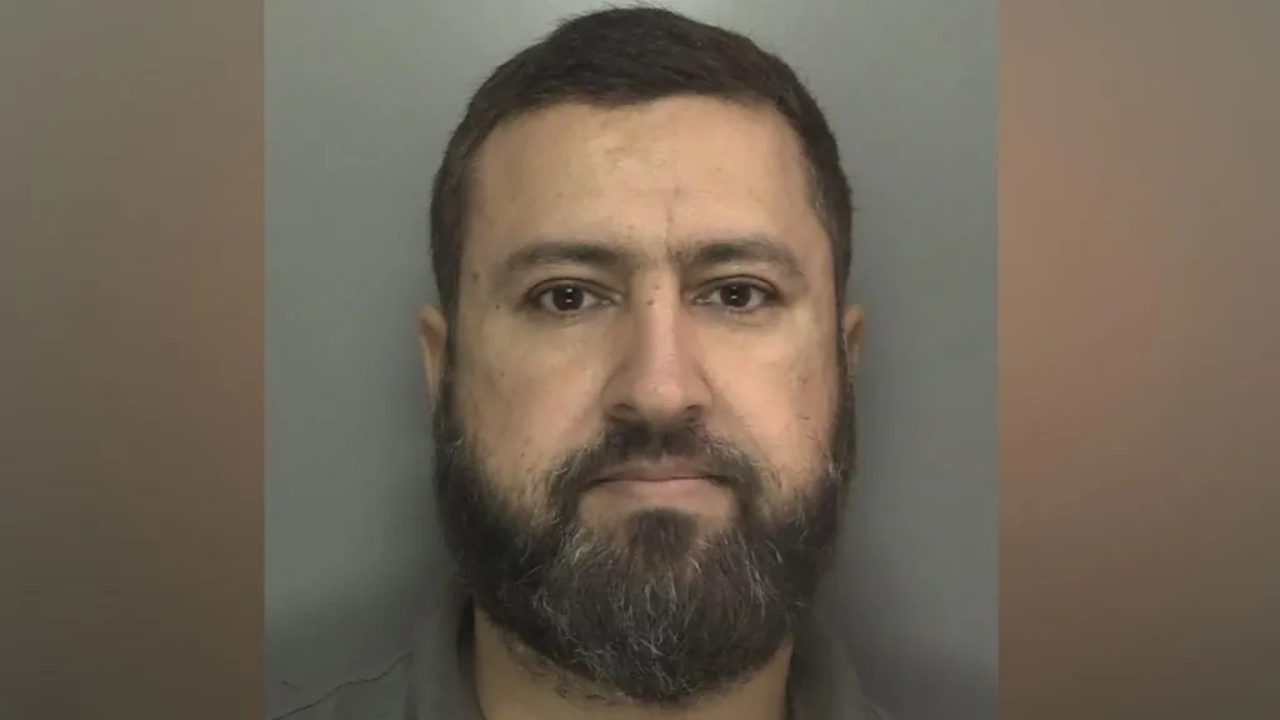
Every afternoon, a blue delivery van rattled through the rain-slicked streets of Merseyside. To anyone watching from a living room window, the man behind the wheel was just another anonymous cog in the great, grinding machinery of modern e-commerce. He wore the familiar high-visibility vest. He carried heavy cardboard boxes up steep concrete steps. He clicked his handheld scanner, dropped packages on doorsteps, and hurried back to his vehicle before the algorithmic timer on his dashboard could penalize him for a delay.
His name was Shahid Adnan. On paper, his life was a relentless loop of low-wage logistics and humble freelance tutoring through a small company he called Study Sharp Ltd.
But when the ignition cut out and the shifts ended, Adnan didn't go home to rest. He opened a laptop. He logged into secure university networks. And suddenly, the man who spent his mornings dropping off protein powder and phone chargers became a ghost writer for the future professional class.
For years, a silent transaction played out across the UK higher education system. On one side stood students melting under the suffocating pressure of unyielding deadlines, complex assignments, and the terrifying prospect of failing out of degrees that cost tens of thousands of pounds. On the other side sat Adnan, possessing a sharp mind, an intricate understanding of academic portals, and an absolute absence of ethical hesitation.
He didn't just offer hints. He didn't just proofread. He became them.
Adnan would acquire the private login credentials of desperate students, bypass security protocols, sit in front of the screen, and take their online examinations. He wrote their essays. He completed their complex coursework. For the price of a few hundred pounds per assignment, he bought young people the one thing the modern university machine refused to give them: an escape hatch.
It was wildly lucrative. While his official tax records painted the picture of a man scraping by on a delivery driver's wage, his bank accounts tells an entirely different story. Investigators eventually tracked a staggering £2.4 million passing through his PayPal and personal accounts. A forensic analysis pinned at least £300,000 of that fortune directly to his underground academic forgery empire.
Consider what happens when that kind of shadow money enters a modest life. The delivery driver wasn't just paying his rent; he was building a kingdom. When the police finally crossed his threshold, they found the classic relics of a hidden lottery winner. Bundles of cold cash were tucked away in corners. The rooms were filled with high-end luxury furnishings and expensive white goods. Outside, parked on a ordinary street, sat the ultimate trophies of his invisible business: a sleek Audi and a powerful BMW.
He had outsmarted the algorithm of the gig economy by inventing a far more ruthless algorithm of his own.
But the architecture of a lie is incredibly fragile. It rarely collapses because of a massive, sweeping investigative breakthrough. Instead, it falls apart because of a single, microscopic oversight.
The end began in March 2023 at Liverpool John Moores University. A computer forensics student—ironically, a discipline dedicated to finding hidden digital footprints—turned in a standard USB flash drive for a routine academic assessment.
When the lecturer plugged the drive into a university computer to grade the work, they weren't looking for a crime. They were looking for code. But as they scrolled through the digital layers of the device, they stumbled upon an anomalous pocket of data left behind by a previous owner.
It was a digital treasure chest belonging to Adnan.
The files were devastatingly explicit. There were lists of student names. There were private university login credentials, explicit coursework deadlines, and detailed financial ledgers tracking who owed what for which grade. The lecturer stopped grading and called Merseyside Police. The ghost in the machine suddenly had a name, a face, and a delivery route.
When detectives interrogated Adnan, the bravado of the shadow academic evaporated. He looked like what he ultimately was: a man caught between two worlds, trying to explain away a massive conspiracy as a misunderstanding. He admitted to sitting an exam for a student and pocketing a quick £250. Then, in a moment of staggering naivety or desperate legal posturing, he claimed he hadn't realized he needed explicit permission to log into a university network under someone else's identity to falsify a degree.
The courts were not amused by the defense. At Liverpool Crown Court, the full scale of the operation was laid bare. Adnan pleaded guilty to fraud by false representation, money laundering, and a hacking offense. Prosecutors described a deliberate, sophisticated effort to construct complex audit trails across multiple banking institutions, a calculated dance designed to keep the revenue hidden and ensure the state could never claw it back.
He was sentenced to three years in prison. The blue van will find another driver. The BMW will be auctioned off.
But the real crisis isn't found in the ruins of Shahid Adnan's life. The real crisis lingers in the lecture halls and the professional fields he left behind.
Police believe Adnan successfully completed degrees and exams for at least 124 students scattered across universities worldwide. Think about that number. Somewhere out there, individuals are holding diplomas they did not earn. They are applying for jobs, entering corporate boardroom meetings, and potentially stepping into fields where technical competence is a matter of public safety.
A credential is a social contract. It is a promise to the public that the person holding the paper spent the sleepless nights, did the heavy reading, and possesses the actual knowledge to heal, to build, or to lead. When that contract is subverted for £250 a pop, the value of the education system doesn't just decline—it curdles.
We live in a culture obsessed with the final destination, completely detached from the value of the journey. The 124 students who paid the delivery driver didn't want to learn; they just wanted to have learned. They wanted the armor of a degree without the scars of the battle. Adnan understood that desperation perfectly. He commodified the shortcut, turning academic anxiety into a luxury lifestyle, until a forgotten file on a plastic flash drive brought the whole house of cards crashing down to earth.


