The television screens of Michigan flickered through the humid midsummer twilight, glowing with faces that promised everything and said nothing. Commercial break after commercial break unspooled polished biographies, soaring music, and familiar anchors talking about manufacturing jobs and economic futures. Millions of dollars bought those seconds. Then millions more bought the seconds right after them.
To watch the ads was to inhabit a carefully curated reality where the American Israel Public Affairs Committee, known widely as AIPAC, did not exist. The organization and its affiliated super PACs poured an astonishing thirty million dollars into a single Democratic U.S. Senate primary, shattering every historical spending record for the group. They backed Representative Haley Stevens, a four-term incumbent whose loyalty to Israel was absolute. Yet the glossy commercials flooding the airwaves never mentioned the Middle East once. They played a different tune. They relied on invisibility.
Consider what happens when a political campaign behaves like an advertising agency trying to sell laundry detergent. You strip away the friction. You smooth over the geopolitical fractures. You hide the identity of the buyer behind pleasant imagery and archival footage of Barack Obama.
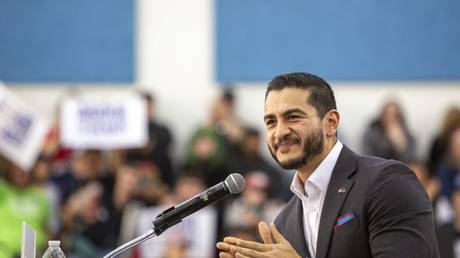
Against this wall of capital stood Abdul El-Sayed.
He is a former public health official, a progressive who built his campaign not on anonymous digital media buys funded by outside groups, but on the shoe-leather exhaustion of ten thousand volunteers. While Stevens and her corporate-backed allies commanded roughly sixty million dollars in total outside spending—outspending El-Sayed by an extraordinary margin—his strategy relied on a different kind of currency: human bodies moving across suburban driveways and urban street corners.
"You're not supposed to be able to beat that," El-Sayed would later tell a crowd gathered at Detroit's Majestic Theater under the flickering lights, with Tupac Shakur's lyrics hanging in the air.
The math of modern American elections suggests that he was right. Money talks, whispers, shouts, and ultimately purchases the megaphone. When an outside political action committee drops an unprecedented thirty million dollars into a regional primary, the sheer velocity of that spending usually flattens the opposition. It fills mailboxes. It defines opponents before they can define themselves. It turns an election into an auction.
Except the ground underneath the Democratic Party has shifted beneath the weight of compounding crises. Over the past few years, as the war in Gaza ground on and public opinion fractured, support for unconditional military aid to Israel transformed from an unquestioned orthodoxy into a glaring fault line. When a hundred and three House Democrats voted to block billions in aid, it was a signal flare from a party reckoning with its own internal contradictions.
Voters like Nicole Haines, navigating the quiet anxieties of paying bills and managing daily life in Oakland County, looked at the deluge of political advertising with a mixture of fatigue and cynicism. For many citizens casting ballots, the endless stream of attack ads felt disconnected from the immediate texture of their lives—the cost of housing, the threat of climate disruption, the fierce urgency of bodily autonomy. Yet the money kept pouring in, treating the electorate like a puzzle to be solved through sheer repetition.
The collision of these two forces—historic, corporate-backed Super PAC spending on one side and an energized, anti-establishment progressive movement on the other—turned Michigan into a national laboratory. It was a referendum not just on foreign policy, but on whether money could permanently colonize the democratic imagination.
Election night stretched into the small hours. The numbers trickled in, razor-thin, shifting by fractions of a percent as precincts reported from across the state. The establishment machine that had successfully crushed past progressive challengers through sheer financial dominance found itself grinding against a stubborn reality. People were tired of being scripted.
When the race was finally called, El-Sayed edged past Stevens by a narrow margin, securing the Democratic nomination. Sixty million dollars of corporate and lobby-backed spending had bought millions of impressions, dozens of television spots, and an army of consultants. It had bought everything except the outcome.
The commercial break is over. The studio lights are dimming. What remains is a bruised political landscape where the old rules no longer guarantee safety, and where the quiet, persistent work of human organizing has proven it can still outlast a fortune.
Abdul El-Sayed Triumphs Over Haley Stevens in $60M Loss for AIPAC, Corporations


