Silence.
In the humming, climate-controlled corridors of Silicon Valley’s most valuable fortress, silence is the loudest alarm you can hear. It is not the silence of an empty building after midnight, when the janitors have rolled their carts away and the server racks blink their steady, rhythmic green lights in the dark. It is the silence of a conference room where twelve senior security engineers are staring at a single packet log on a glass wall, realizing that the perimeter they spent ten billion dollars defending might have been breached not by a state-sponsored supercomputer in a bunker halfway across the world, but by someone holding a badge, a lanyard, and a smile.
If you have spent any time around hardware engineering, you know the smell of a cleanroom. It smells like ozone, isopropyl alcohol, and sheer human paranoia. You cannot bring a paper notebook inside. You cannot bring a personal phone. Every keystroke is logged, every badge swipe is timestamped to the millisecond, and every exit requires passing through a metal detector sensitive enough to pick up the foil wrapper of a stick of gum.
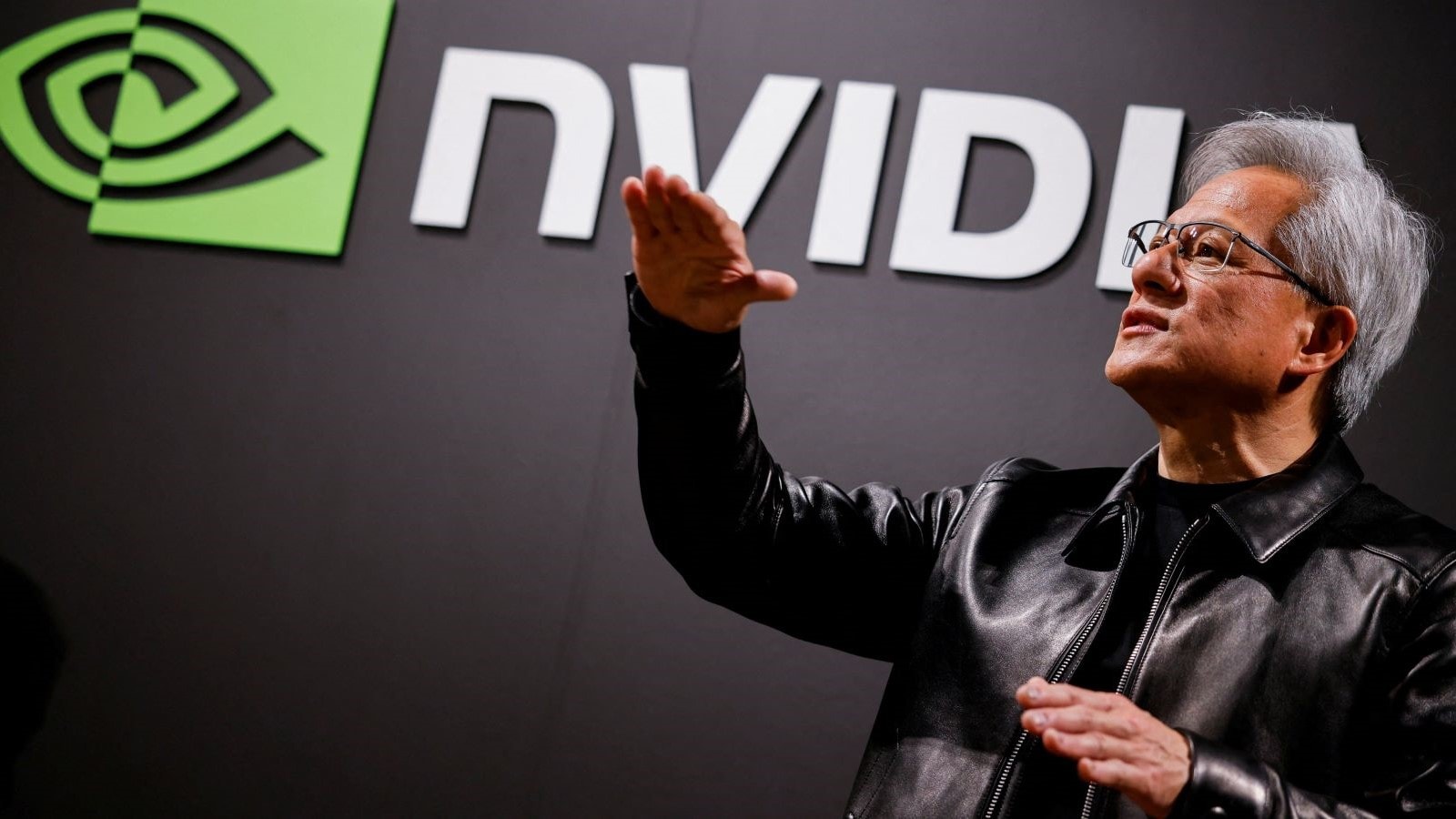
Yet here we are. Nvidia—the undisputed kingmaker of the artificial intelligence boom, a company whose market valuation swings by the GDP of small European nations before lunch—is reportedly investigating an alleged espionage plot reaching all the way to the orbit of its leather-jacketed chief executive, Jensen Huang.
Wait. Pause right there.
When news breaks that a tech titan is investigating an internal spy ring or a targeted intelligence operation aimed at its CEO, our brains immediately default to Hollywood tropes. We picture shadowy figures in trench coats swapping microSD cards under park benches in Santa Clara. We imagine dramatic late-night car chases down Highway 101.
The reality is infinitely more terrifying, and infinitely more boring. And to understand why this alleged plot matters to you—even if you have never written a line of CUDA code or bought a single share of NVDA—we have to look past the headlines and step inside the invisible war being fought over the architecture of the twenty-first century.
The Anatomy of a Modern Heist
Let us ground this in reality. Imagine a hypothetical engineer named Marcus. Marcus isn't a villain. He doesn't have an offshore bank account in the Caymans or a hidden room full of burner phones. Marcus is a thirty-four-year-old systems architect who has worked seventy-hour weeks for four years straight, optimizing the interconnects that allow ten thousand Blackwell GPUs to talk to one another without dropping a single bit of data. He is tired. His marriage is strained. His stock options have vested, making him rich on paper, yet he feels like a cog inside a machine that never sleeps.
One Tuesday evening, at a quiet wine bar in Palo Alto, Marcus strikes up a conversation with an academic researcher who seems fascinated by his obscure sub-field of thermal dynamics. They talk about liquid cooling. They talk about power density. They talk about the grueling travel schedule of the executive team. Three months later, that researcher introduces Marcus to a "consultant" representing a sovereign wealth fund, offering him half a million dollars just to "advise" on industry trends—and maybe mention when the CEO is planning his next unannounced trip to Taipei.
This is a hypothetical scenario, of course, constructed to illustrate how modern corporate espionage actually operates. According to public reports and the breadcrumbs left in federal indictments across the tech sector over the last decade, spies rarely kick down the front door anymore. They walk through the side door of human vulnerability.
When Nvidia launches an internal investigation into an alleged spy plot involving its CEO, we have to separate the verified smoke from the speculative fire. What do we actually know? We know that Nvidia sits at the absolute chokepoint of global compute. Every major nation, every defense contractor, and every trillion-dollar tech rival is desperate to know two things: what Nvidia’s silicon roadmap looks like three years from now, and what Jensen Huang is whispering behind closed doors to supply chain partners in Taiwan, South Korea, and Washington.
What we do not know—and what the company’s tight-lipped legal and security teams are guarding with their lives—is the exact vector of the alleged breach. Was it digital? A zero-day exploit planted on an executive travel device during an overseas summit? Or was it human? An insider compromised through blackmail, ideology, or cold, hard cash? Perhaps it was something even subtler: a pattern-of-life surveillance operation designed to track the CEO's private jet, intercept unencrypted logistics, and front-run billion-dollar supply deals before the ink was dry.
Why One Man’s Calendar Is Worth a Fortune
To grasp why someone would risk federal prison to spy on a hardware executive, you have to understand how power has shifted over the past five years.
Think of the global economy as a massive, roaring locomotive. For a century, oil was the fuel. If you wanted to predict the geopolitical weather, you tracked the tankers moving through the Strait of Hormuz and listened to the whispers coming out of OPEC meetings in Vienna. Today, the fuel is compute. And Nvidia owns the refinery, the pipeline, and the patent on the engine.
Jensen Huang is not a traditional corporate bureaucrat. He does not preside over a sleepy boardroom where decisions are made by committee six months in advance. By all accounts from people who have worked alongside him, Nvidia operates with a flat, hyper-agile hierarchy where dozens of top executives report directly to Huang. He is deeply involved in the granular physics of chip architecture, the ruthless allocation of scarce TSMC wafer capacity, and the geopolitical tightrope walk between American export controls and Asian manufacturing realities.
Consider what happens next when a single individual holds that much concentrated operational knowledge.
If a rival state or a desperate competitor knows, even three weeks early, that Nvidia is shifting its packaging allocation from one supplier to another, they can corner the market on substrates. If they know which sovereign AI project Huang is visiting next Tuesday, they can deploy diplomatic or financial countermeasures before the press release hits the wire. If they get their hands on the thermal failure rates of an upcoming chip revision, they can short the stock, adjust their own data center buildouts, or exploit the weakness in regulatory hearings.
Information at that altitude isn't just gossip. It is kinetic ammunition.
I remember sitting in a cramped basement server room in Northern Virginia a few years back, watching a security audit unfold for a mid-sized defense subcontractor. The engineers there were brilliant, fiercely proud of their air-gapped networks and biometric locks. When the red-team penetration testers finally showed how they had compromised the facility, nobody spoke for ten minutes. They hadn't hacked the firewall. They had compromised the third-party catering vendor who delivered lunch to the executive suite every Thursday, slipping a microscopic RF transmitter inside a hollow metal tray stand.
That memory stays with me whenever stories like the Nvidia investigation surface. We love to believe that technological superiority makes us invulnerable. We build taller digital walls, buy fancier encryption, and hire smarter cryptographers. Yet the weakest link in any system built by human beings is, and always will be, the human beings themselves.
The Invisible Toll Inside the Glass Walls
Let us talk about what an investigation like this actually feels like on the inside. The public reads a headline, nods, maybe checks the ticker symbol on their phone, and moves on to their morning coffee. Inside the company, the atmosphere changes overnight.
Trust evaporates.
Innovation—real, messy, boundary-pushing innovation—requires radical candor. Engineers have to be able to scribble half-baked ideas on whiteboards, argue loudly in hallways, and share sensitive schematics across teams without filling out forty pages of compliance forms. The moment an espionage investigation begins, that oxygen gets sucked out of the room.
Suddenly, you look twice at the colleague who stays late to finish a simulation. You wonder why a certain manager asked for access to a repository outside their immediate division. Legal counsel starts sitting in on routine product syncs. USB ports get glued shut. Travel laptops are wiped clean at the border and handed over to forensic teams in plastic evidence bags.
It is exhausting. It breeds a low-grade, ambient paranoia that slows everything down by ten percent—and in the semiconductor race, where generations are measured in months rather than years, a ten percent drag is a death sentence.
We also have to confront the uncomfortable truth about who is watching. In the twentieth century, industrial espionage was mostly a corporate dirty trick—one automaker hiring private detectives to photograph a rival's clay prototype on a test track in Michigan. Today, the lines between corporate competition and national security espionage have blurred into irrelevance. Intelligence agencies no longer view semiconductor schematics as commercial trade secrets; they view them as state assets on par with nuclear enrichment blueprints or stealth bomber coatings.
When an executive of Huang’s stature travels internationally, he isn't just navigating business meetings. He is walking through an invisible crossfire of signals intelligence, hotel room sweeps, compromised Wi-Fi networks, and human intelligence operatives whose full-time job is to map his habits, his preferences, and his inner circle.
What We Still Don’t Know—And Why It Haunts the Market
The hardest part of watching this story unfold is confronting the void of verified facts. In an era of instant leaks and breathless social media commentary, we hate admitting uncertainty. We want a neat narrative with a villain in handcuffs and a press conference explaining how the bad guys were caught.
We don't have that here.
We do not know if the alleged plot succeeded in extracting a single megabyte of proprietary data. We do not know if the threat originated from a foreign intelligence service, a mercenary corporate intelligence firm, or a disgruntled insider acting alone. We do not know whether the investigation was triggered by an internal anomaly spotted by Nvidia’s own cybersecurity hounds, or by a quiet tap on the shoulder from federal law enforcement agencies who picked up chatter on the other side of the world.
And honestly? That uncertainty is precisely what makes the market twitch.
Investors can price in a bad earnings quarter. They can model a supply chain delay in Taiwan or a tariff hike in Washington. What they cannot model is an unknown breach at the core of the company's nervous system. If an adversary has been sitting inside the house—or shadowing the CEO’s movements—for six months, every strategic move Nvidia makes suddenly carries a question mark. Did they pivot because the market demanded it, or because their hand was forced?
Yet there is another way to read this moment.
The fact that an investigation is underway means the immune system is awake. In the world of high-stakes counterintelligence, the companies you need to worry about aren't the ones investigating spy plots; they are the ones that insist they have never been targeted. Every major pillar of modern infrastructure—from power grids to pharmaceutical labs to AI chipmakers—is under constant, unrelenting siege. Silence doesn't mean safety. Silence just means nobody has found the wire yet.
The Weight of the Crown
Think back to the early days of Silicon Valley, when garage startups soldered circuit boards by hand and left their office doors unlocked so friends could drop by with pizza. That world is dead. It was buried under trillions of dollars of market cap and the crushing weight of geopolitical destiny.
Today, the people designing the chips that train our AI models are living inside gilded cages. They are guarded by executive protection details, briefed by former intelligence officers before boarding flights, and forced to treat every friendly stranger at an airport lounge as a potential asset handler. The price of building the future is living like a target.
Picture a lone engineer walking out of Nvidia’s Santa Clara headquarters late tonight. The California air is cool, smelling faintly of eucalyptus and damp asphalt. Above them rises the crystalline, triangular roof of the Endeavor building—a monument to human intellect, symmetry, and ambition. They tap their badge against the turnstile. A tiny green light flashes. The gate clicks open. They walk to their car, checking their rearview mirror twice before pulling out onto San Tomas Expressway, wondering who else might be watching the road ahead.


