The screen flickered in the dark room, casting a cold, blue geometry across the walls. To anyone else, it looked like code. To Ji-young, it looked like a prison.
She stared at the image generated by a machine trained on billions of parameters, a machine that had taken her face, her identity, her private dignity, and stitched them into a digital fiction. It was not a drawing. It was not a cartoon. It looked real. In the eyes of the law, however, it was just math. And math, until very recently, had no conscience.
South Korea found itself standing at a terrifying threshold. A court had just handed down an acquittal in a high-profile case involving deepfake pornography. The logic of the ruling was chilling in its strict adherence to outdated statutes: because the victim was an adult, and because the manipulated imagery did not technically violate specific, narrow definitions of existing distribution laws regarding explicit content produced with physical cameras, the creator walked free.
The loophole was wide enough to drive a truck through. Or, more accurately, wide enough to deploy an algorithm through.
Panic spread through digital corridors. If an AI could construct a hyper-realistic fabrication of anyone with just a handful of public photographs, and the legal system shrugged its shoulders because the pixels were synthetic, what safety was left? Privacy became an illusion. Identity became open-source.
Consider what happens next when the law fails to keep pace with code.
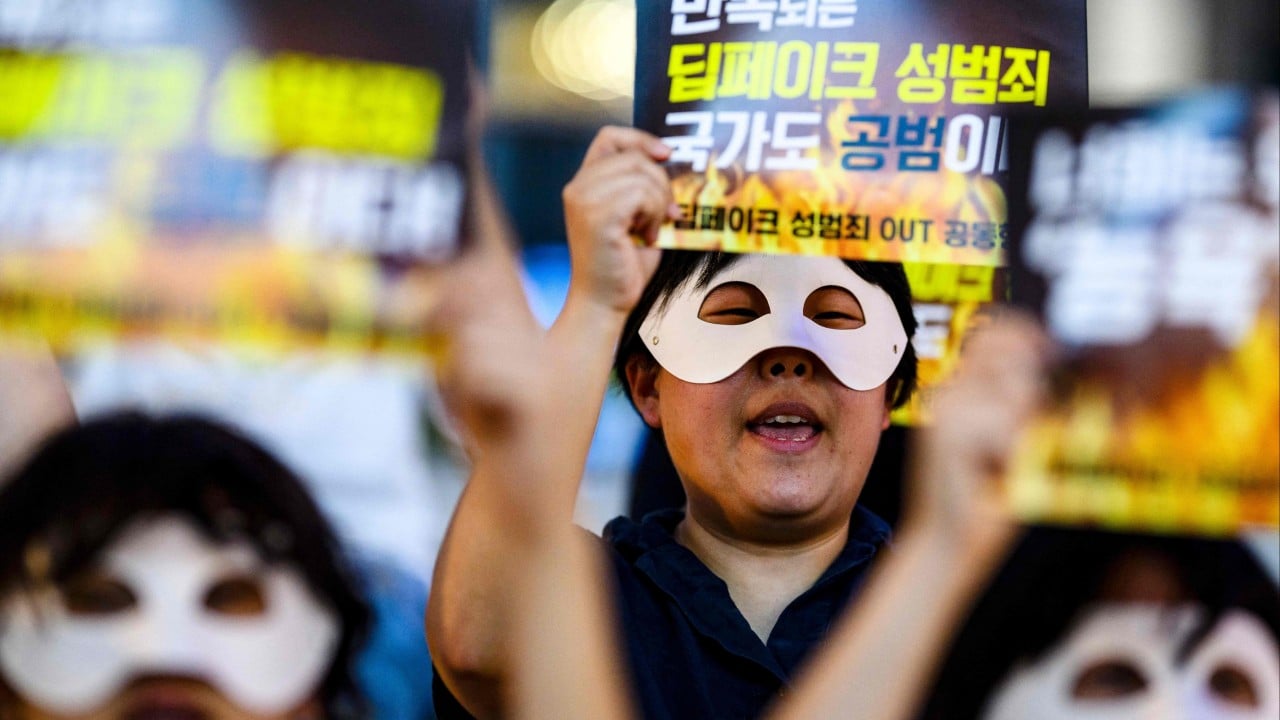
The streets of Seoul are wired. Neon signs bleed into the damp pavement, and citizens move through a hyper-connected metropolis where technology is breathed like air. Yet, beneath the polished surface of smartphones and high-speed transit, a quiet panic took root. Women across the country began locking down their social media profiles. Public photos were scrubbed. Accounts went private. A collective retreat into digital shadows, born of a singular realization: the tools of violation had outpaced the tools of justice.
Lawmakers scrambled. The public outcry was not a whisper; it was a roar that rattled the halls of the National Assembly. When an acquittal becomes an invitation for abuse, the legislature has only two choices. Rewriting the rules of the digital age, or watching public trust disintegrate entirely.
The legislative response was swift and sweeping. South Korea moved decisively to criminalize the possession, purchase, and viewing of deepfake pornography, even when created without explicit intent to blackmail, closing the gaping loophole that had enabled the initial acquittal. Penalties were sharpened. The state drew a hard line in the digital sand. Fictional pornography generated by artificial intelligence was no longer a legal gray area. It was a crime.
Yet, laws do not magically erase code.
The algorithms remain. They sit on open-source repositories, downloadable by anyone with an internet connection and a graphics card. A statute can mandate prison time, but it cannot scrub the underlying mathematics from existence. That is the haunting reality of our current era. We are trying to build dam walls out of parchment paper, attempting to contain a flood of synthetic media with human words.
I remember watching the first wave of generative models roll out years ago, greeted with breathless optimism by tech evangelists who promised a new dawn of human creativity. They spoke of efficiency. They spoke of art. They forgot to mention the human cost. They forgot that every technology is a double-edged sword, and the sharper edge always finds the most vulnerable throat.
Skepticism is warranted. Every time a government expands criminal definitions to police digital spaces, the specter of overreach looms large. Where is the boundary between malicious generation and personal expression? How do enforcement agencies track down distributed, encrypted models running on local hardware without violating the privacy of millions of innocent users? These are not trivial questions. They are the defining legal battles of our generation.
The judicial system is inherently retroactive. It waits for the crime to happen, waits for the victim to bleed, waits for the loophole to be exposed before it stitches the wound. Technology, by contrast, is aggressively proactive. It moves at the speed of silicon. It compounds exponentially.
To bridge this gap, society must shift from reactive punishment to structural resilience. It means building cryptographic provenance tools into cameras and software, watermarking authenticity into the very fabric of digital media so that fake can be instantly separated from fact. It means changing cultural norms around digital consent, teaching a generation raised on screens that just because you can create something doesn't mean you have the right to do so.
The courtroom door closed on that landmark acquittal, but the echoes of the gavel are still bouncing off the concrete. Ji-young closed her laptop. The blue light died. In the dark, the screen remained black, reflecting the silhouette of a world still trying to figure out how to be human in the age of machines.