Two percent.
Say it out loud, and it sounds like a rounding error, the kind of margin you leave behind in a tip jar or lose to inflation before lunch. Yet in the humid, breathless twilight of October 30, 2022, two percent—specifically, a 50.9% to 49.1% split, roughly 2.1 million votes out of more than 124 million cast—became the fault line running straight down the spine of South America’s largest democracy.
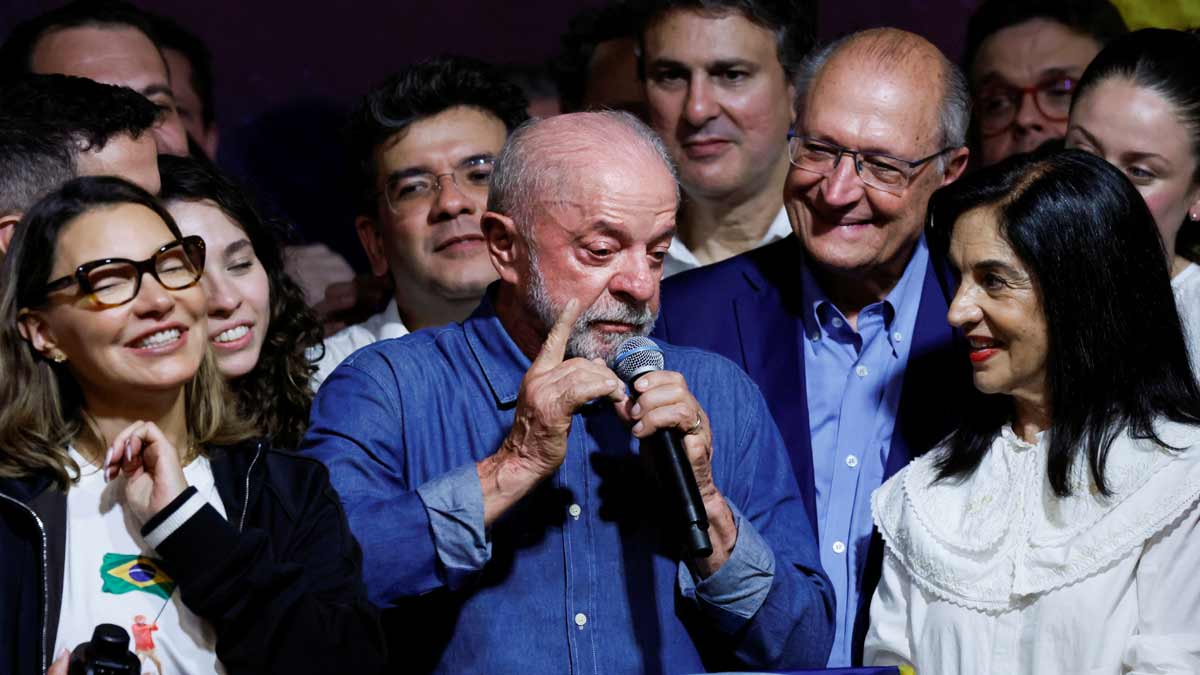
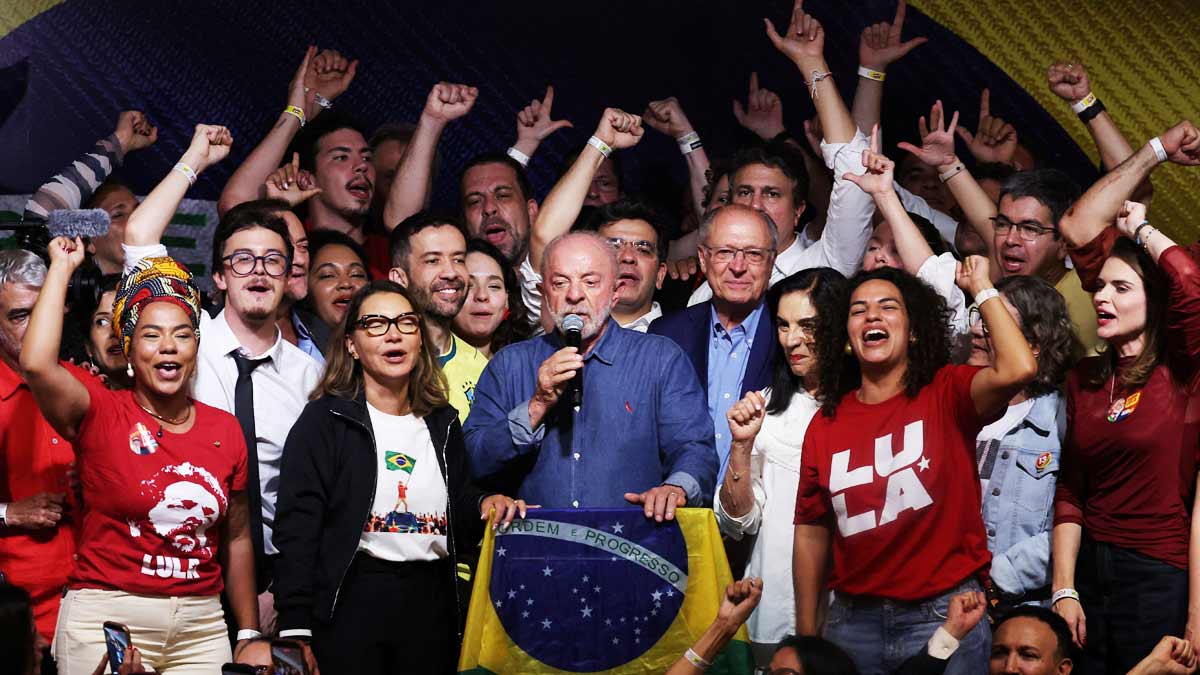
Luiz Inácio Lula da Silva had done what political scientists rarely witness outside of fiction. Four years earlier, he was sitting in a federal police cell in Curitiba, stripped of his candidacy, his legacy seemingly entombed beneath the sprawling corruption investigations of Operation Car Wash. Now, at seventy-seven, his voice raspy from decades of union rallies and a bout with throat cancer, he stood before a sea of red flags on São Paulo’s Paulista Avenue as the first Brazilian president ever elected to a third term.
He had defeated Jair Bolsonaro, the right-wing populist incumbent, making Bolsonaro the first sitting president to lose a reelection bid since Brazil returned to democracy in 1985.
History was made. The headlines wrote themselves.
But if you stepped off Paulista Avenue that night and walked twenty blocks into any middle-class apartment building, or drove three hundred miles west into the soy-and-cattle heartland of Mato Grosso, you felt something entirely different from triumph. You felt a cold, static hum. A nation had not reached a consensus; it had fought itself to a standstill, and the referee had merely called time on a tie.
The Dinner Table as a DMZ
To understand what a 1.8-percentage-point margin actually feels like when you live inside it, consider a hypothetical family—let’s call them the Silvas, though their real names echo in thousands of WhatsApp groups from Porto Alegre to Manaus.
Imagine Mateus, thirty-four, an agronomist working in the agribusiness corridor of Goiás. For Mateus, the four years under Bolsonaro weren't an abstract ideological experiment; they were tangible. Deregulation meant faster permits. Gun ownership laws meant feeling secure on a remote property two hours from the nearest police precinct. When Mateus looked at Lula, he didn't see the charming former metalworker who lifted millions out of poverty in the 2000s; he saw the face of the Workers' Party scandals, the specter of higher taxes, and a rhetoric that painted rural producers as environmental villains.
Now sit across the Sunday table from Mateus’s aunt, Helena, a sixty-two-year-old retired public school teacher in Belo Horizonte. Helena remembers what Brazil looked like in the late 1990s before Lula’s first presidency—when hunger wasn't a policy debate, it was the hollow-cheeked kids falling asleep at the back of her classroom because they hadn't eaten since Friday. Under Bolsonaro, she watched inflation eat her pension alive, watched beef become a luxury item she bought once a month, and watched a chaotic pandemic response claim nearly 700,000 Brazilian lives while the president mocked vaccines. To Helena, Lula wasn't a saint; his convictions had been annulled by the Supreme Court on procedural grounds rather than full exoneration, a nuance she knew well. Yet to her, he represented competence, social safety nets, and a return to institutional normalcy.
Neither Mateus nor Helena is a caricature. Neither is an extremist. Yet by the autumn of 2022, the political ecosystem in Brazil had engineered a reality where Mateus believed Helena was voting for economic ruin, and Helena believed Mateus was voting for authoritarianism.
That is the invisible stake of Brazil’s election. You can inaugurate a president in Brasília, hand him the green-and-yellow sash, and convene the diplomatic corps. You cannot, however, legislate a truce between two halves of a country that no longer share the same basic facts.
The Long Shadow of the Cell and the Sword
How does a nation arrive at a place where its only two viable choices are a former president who went to prison and a sitting president who openly questioned the legitimacy of the voting machines that elected him?
History never starts on election day. Think of Brazilian democracy like a young tree planted in 1985 after twenty-one years of military dictatorship—its roots are real, its trunk is thick, yet the soil around it has never quite stopped shifting.
When Lula first took office in 2003, global commodity prices were booming. China was hungry for Brazilian iron ore and soybeans, and Lula used that windfall to fund Bolsa Família, a conditional cash-transfer program that became a global model for poverty reduction. By the time he left office in 2010, his approval rating stood at an astonishing 87%. Brazil was hosting the World Cup and the Olympics; it was the rising star of the Global South.
Then the tide went out.
Under Lula’s handpicked successor, Dilma Rousseff, commodity prices crashed, the economy plunged into its worst recession in decades, and Operation Car Wash exposed a systemic web of kickbacks involving state oil giant Petrobras, major construction firms, and politicians across the ideological spectrum. Rousseff was impeached in 2016. Two years later, Lula was imprisoned on corruption and money-laundering charges.
Into that vacuum marched Jair Bolsonaro, a former army captain who had spent nearly three decades on the margins of Congress. Bolsonaro understood something the establishment missed: millions of Brazilians weren't just angry about corruption; they were terrified by violent crime, alienated by rapid cultural shifts, and disgusted by a political class they felt had betrayed them. In 2018, he rode that fury—and a surge of evangelical Christian support—straight to the Planalto Palace.
By 2021, when Supreme Court Justice Edson Fachin annulled Lula’s convictions—ruling that the Curitiba court lacked jurisdiction and later finding that the presiding judge, Sergio Moro, had been biased—the stage was set for a collision of titans. Two men. Two completely incompatible origin stories. Two visions of what Brazil is supposed to be.
The Weight of a Narrow Mandate
Winning an election in a polarized country is a bit like buying a house in the middle of a neighborhood feud: the deed is in your name, and the roof is yours to fix, even though half the block refuses to recognize your fence line.
Look closely at the arithmetic Lula inherited when the Superior Electoral Court confirmed his victory. While Lula won the presidency by 2.1 million votes, Bolsonaro’s Liberal Party emerged from the same election as the largest single bloc in both the Chamber of Deputies and the Federal Senate. Prominent Bolsonaro allies—including his former infrastructure minister Tarcísio de Freitas in São Paulo, Brazil’s wealthiest and most populous state—won key governorships.
Let that sink in.
In Brazil’s presidential system, a president without a legislative majority cannot pass a budget, cannot confirm cabinet appointees without friction, and cannot survive an impeachment threat. During his first two terms, Lula governed through coalition presidentialism—a delicate, often messy art of assembling broad alliances across center and center-right parties. In 2023, he walked into a Congress tilted sharply to the right, where the Centrão—a powerful, transactional bloc of centrist lawmakers—holds the keys to every legislative door and charges a steep toll to open them.
Meanwhile, the street itself refused to quiet down. In the days immediately following the vote, truckers sympathetic to Bolsonaro blocked hundreds of highways across the country, threatening fuel and food supply chains. Outside army barracks from Rio de Janeiro to Brasília, thousands of protesters camped out in the rain, demanding military intervention to overturn an election that international observers, the United States, and Brazil’s own electoral authorities certified as free and fair.
Bolsonaro himself remained largely silent for nearly forty-eight hours after the results were announced, before delivering a brief, two-minute statement authorizing the transition of power without explicitly conceding defeat—and later departing for Florida days before Lula’s January 1 inauguration.
If you were watching from abroad, it looked like a close call resolved by democratic resilience. If you were standing on the ground in Brazil, it felt like watching a dam hold back a reservoir whose water level kept rising inch by inch.
What Happens When the Honeymoon Never Arrives
Most newly elected leaders get a hundred days of grace. Lula didn't get a hundred hours.
Consider the promises stacked on his desk before he even took the oath of office:
- The Hunger Crisis: According to the Brazilian Research Network on Food and Nutrition Sovereignty and Security, roughly 33 million Brazilians were experiencing severe hunger by 2022—a staggering regression in a country that is one of the world’s largest food exporters. Lula promised to put picanha (a prized cut of beef) and beer back on working-class tables, expand Bolsa Família payments to 600 reais per month plus an extra 150 reais per child under six, and raise the minimum wage above inflation.
- The Amazon and the World: Deforestation in the Brazilian Amazon had surged during Bolsonaro’s tenure, turning Brazil into a diplomatic pariah on climate policy. Lula pledged "zero deforestation" by 2030, resurrected the Amazon Fund with backing from Norway and Germany, and created a dedicated Ministry of Indigenous Peoples led by Sonia Guajajara.
- The Fiscal Tightrope: Financial markets watched every syllable Lula uttered with hair-trigger anxiety. Spending billions to rescue the poor while keeping public debt sustainable and interest rates—then sitting at 13.75%, among the highest in the world—from choking growth required threading a needle in a windstorm.
Here is the paradox at the heart of Lula’s comeback, and it is the part that makes even his supporters lose sleep: the economic conditions of 2023 bear almost no resemblance to 2003.
In 2003, global interest rates were low, China was growing at double digits, and Brazil’s public debt was a fraction of its modern size. Two decades later, global growth was sluggish, inflation was a stubborn global ghost, and every real spent on social programs invited immediate pushback from investors on São Paulo’s Faria Lima financial district. Every time Lula criticized the Central Bank’s high interest rates or suggested relaxing strict spending caps, the Brazilian real wobbled and the stock market dipped.
To govern, Lula had to build what he called a "broad front" for democracy—bringing aboard former political rivals like his vice president, Geraldo Alckmin, a center-right politician who had run against Lula for the presidency in 2006. Think about what that alliance required: to beat Bolsonaro, Lula had to stretch his coalition from democratic socialists on the left to orthodox economists and traditional conservatives in the center.
Keeping that coalition from tearing itself apart while delivering rapid, visible relief to the 60.3 million people who voted for him is less like governing and more like performing surgery while riding a bicycle over cobblestones.
The Echo Chamber That Outlived Election Day
Perhaps the deepest scar of the election isn't fiscal or legislative at all. It is psychological.
During the campaign, Brazil’s Superior Electoral Court took extraordinary—and controversial—measures to combat disinformation on social media, ordering the removal of posts and suspending accounts that spread falsehoods about the electronic voting system. Supporters saw those rulings as an essential firewall protecting democracy from a coordinated assault on truth. Critics, including many moderate legal scholars, worried that granting judges sweeping authority to police speech set a dangerous precedent that could easily be weaponized in the future.
Notice how even the cure became a symptom of the disease.
In cities and small towns across the country, friendships built over decades dissolved over forwarded voice notes on WhatsApp. Wearing the iconic yellow jersey of the Brazilian national football team—once the ultimate symbol of national unity during World Cup summers—had become so closely associated with Bolsonaro’s political rallies that millions of Brazilians felt uncomfortable wearing it on the street, forcing Lula’s supporters to try to "reclaim" the shirt during the 2022 World Cup in Qatar just weeks after the election.
Stop and appreciate that detail. A country famous around the world for futebol and alegria could no longer look at its own national jersey without wondering which candidate the person wearing it had voted for.
And what of Bolsonaro? Losing by less than two percentage points did not extinguish Bolsonarismo; it crystallized it into a permanent, disciplined opposition movement. Unlike traditional Brazilian political parties, which often function as loose alliances of regional power brokers, Bolsonaro forged an ideological identity rooted in faith, family, patriotism, and deep skepticism of institutions—from the press to the judiciary. Even without the presidency, that movement commands millions of fiercely loyal voters, a massive digital network, and formidable representation in Congress.
The Bridge Over Troubled Water
So where does a nation go when half the room is cheering and the other half is bracing for impact?
History offers no easy guarantees, yet it does offer clues. Democracies rarely collapse all at once; more often, they erode when citizens stop believing that the person across the aisle has a legitimate right to win, or when leaders govern exclusively for the half of the country that put them in office.
Lula’s greatest asset has never been ideology—it has been his uncanny instinct for negotiation, forged in the late 1970s on the factory floors of São Bernardo do Campo, where a union leader learned that a strike only succeeds when you know how to sit down at the table with the factory owners and cut a deal everyone can live with.
In his victory speech on that October night in 2022, Lula acknowledged the fracture directly. "I will govern for 215 million Brazilians," he told the crowd, "and not just for those who voted for me. There are not two Brazils. We are one country, one people, one great nation."
Beautiful words. Necessary words.
Yet words are only blueprints, and the real test happens far from the cameras—in whether Mateus in Goiás sees his livelihood respected while the Amazon is protected; in whether Helena in Belo Horizonte sees dignity restored to public schools and hospitals without bankrupting the treasury; in whether a young generation of Brazilians grows up believing that a two-percent margin is a mandate for compromise rather than a license for endless cold war.
Walk down Paulista Avenue on any ordinary Tuesday morning now, long after the confetti has been swept into the storm drains and the campaign flags have been folded away. Street vendors are grilling cheese over small charcoal braziers, office workers are hurrying toward the metro entrances with plastic cups of bitter coffee, and the buses are roaring past in the humid air. Side by side on the crowded sidewalk, two strangers brush shoulders at the crosswalk—one wearing a faded yellow football shirt, the other carrying a red canvas tote bag—both waiting for the exact same light to turn green so they can cross the street together.