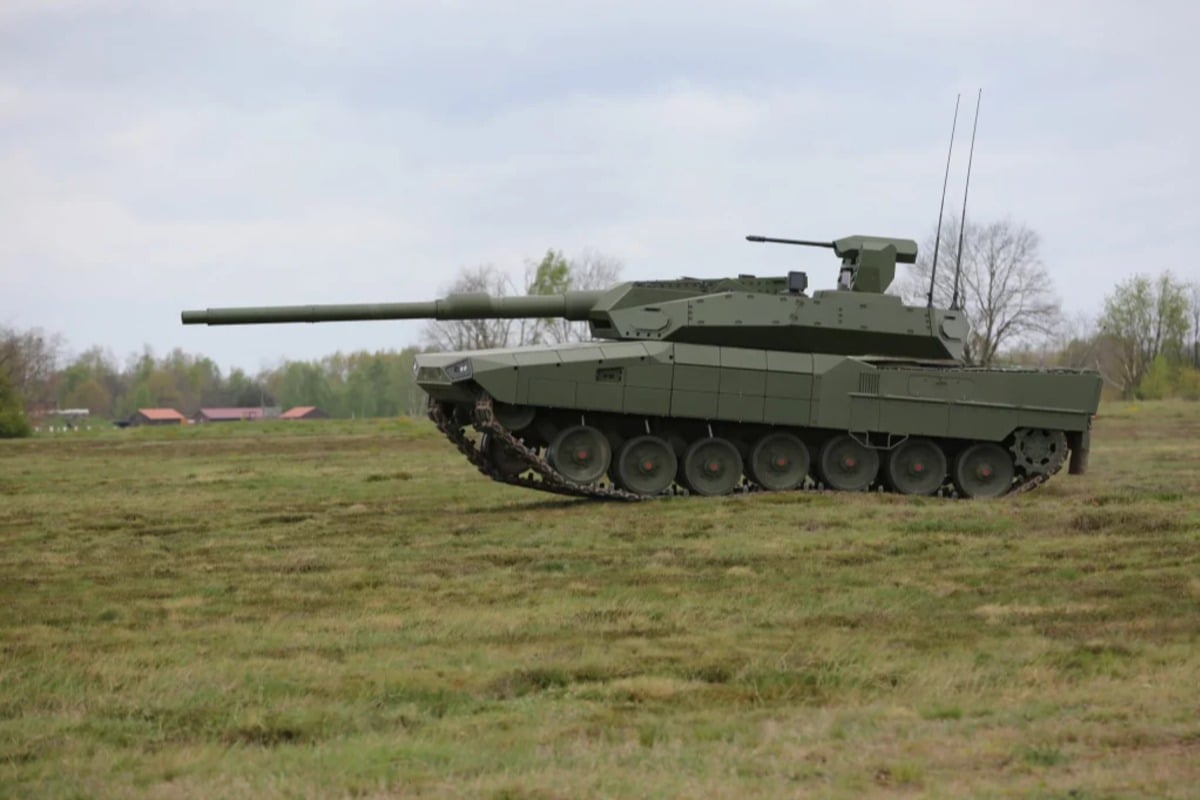
The grand dream of a unified European military industrial complex just hit a massive speed bump. If you've been following European defense news, the recent announcement from Berlin and Paris shouldn't surprise you. Germany and France scale back their joint tank program, officially known as the Main Ground Combat System (MGCS), and it signals a massive shift in how these two nations view the future of land warfare. They aren't building a shared tank anymore. Instead, they're basically saving face by focusing on software and digital architecture.
It's a messy reality. For years, politicians in both capitals stood on stages promising a revolutionary armored vehicle that would replace the German Leopard 2 and the French Leclerc. But behind the scenes, national interests, industrial greed, and completely different military philosophies tore the project apart.
The Moment Germany and France Scale Back Their Joint Tank Program
The official statement from the German Federal Ministry of Defence following the recent Franco-German Ministerial Council meeting made it obvious. The wording completely shifted. There is no longer any mention of a shared family of combat vehicles built on a unified chassis. The dream of a single Franco-German tank is dead.
Instead, the two nations are turning their attention to platform-independent technologies. They want to collaborate on what they call the digital nervous system. That means they will work together on networking, communication, and software interoperability while building their own separate armored hulls and big guns. It mimics the recent collapse of the Future Combat Air System (FCAS) fighter jet program. There too, Friedrich Merz and Emmanuel Macron had to admit that a shared physical jet wasn't happening, opting instead to cooperate purely on cloud networking.
Why the Shared Chassis Vision Crashed and Burned
Building a tank together sounds great during a diplomatic press conference. It's an nightmare in practice. When the program kicked off, it was supposed to be a neat 50-50 split between French defense firm Nexter and Germany's Krauss-Maffei Wegmann, who had merged into a holding company called KNDS. Then Berlin brought Rheinmetall into the mix.
That single move wrecked the balance. French officials immediately grew suspicious that Germany was trying to hijack the industrial workshare. The friction grew so loud that Tom Enders, the head of the KNDS board, publicly complained about Berlin trying to lock down intellectual property rights, asking if France was being treated like a hostile foreign power.
The Big Gun Disagreement
You can't build a tank if you can't agree on the gun. This was the exact roadblock that paralyzed the MGCS project for over two years.
- France pushed hard for its domestic 140mm Ascalon gun system, developed by Nexter.
- Germany stubbornly insisted on Rheinmetall's 130mm Rh-130 smoothbore cannon.
Instead of compromising, they agreed to let both countries develop their guns separately and test them against each other later. It was a ridiculous compromise that duplicated costs and proved that neither side actually trusted the other's engineering.
Distinct Military Strategies and Pressing Deadlines
The industrial bickering hides an even deeper truth. France and Germany don't want the same kind of tank. French doctrine favors highly mobile, lighter armored forces capable of rapid deployment, a legacy of their overseas operations. Germany designs heavy, heavily armored beasts meant to hold defensive lines on European soil.
Time is also running out at different speeds for both nations. France needs a replacement for its Leclerc tanks soon. They plan to phase them out around 2037. Because the joint program kept slipping into the 2040s, the French military faced a terrifying gap in its capabilities.
To prevent this, France recently started evaluating an interim national battle tank solution. It's a stopgap measure built around domestic industry interests. Germany is doing the exact same thing, focusing on upgraded variants of the Leopard 2, like the Leopard 2A8, and marketing them to European neighbors. When both countries started investing heavily in their own bridge solutions, the writing was on the wall for a shared platform.
What Survives of the MGCS Framework
The project isn't entirely canceled, but it is deeply hollowed out. Originally, the program was divided into eight distinct areas or pillars.
The physical elements, like the heavy chassis under German lead and the secondary missile armaments under French lead, will now likely diverge into purely national designs. What remains of the joint effort is Pillar 4, the communications and command system.
Berlin and Paris will still try to build a unified digital architecture. This ensures that when French and German tanks fight alongside each other in a future conflict, their computer systems can talk to each other. They'll share sensor data, coordinate drone defense strategies, and run joint simulation environments. It's a pragmatic retreat. If you can't build the hardware together, you might as well make sure the software is compatible.
The Smart Move for European Defense Buyers
If you're an ally or a defense buyer in Europe, you need to accept that the era of massive, cross-border hardware programs is fractured. Relying on a grand Franco-German industrial alliance to deliver weapons on time is a gamble that rarely pays off.
Look toward modular, open-architecture systems that allow you to integrate technologies from multiple vendors rather than waiting for a single, harmonized solution. Prioritize buying operational equipment available right now over empty political promises of future tech. The strategic reality in Europe requires immediate rearmament, not decades of industrial committee meetings. Focus your procurement on platforms that exist today, and leave the diplomatic experiments to the politicians.