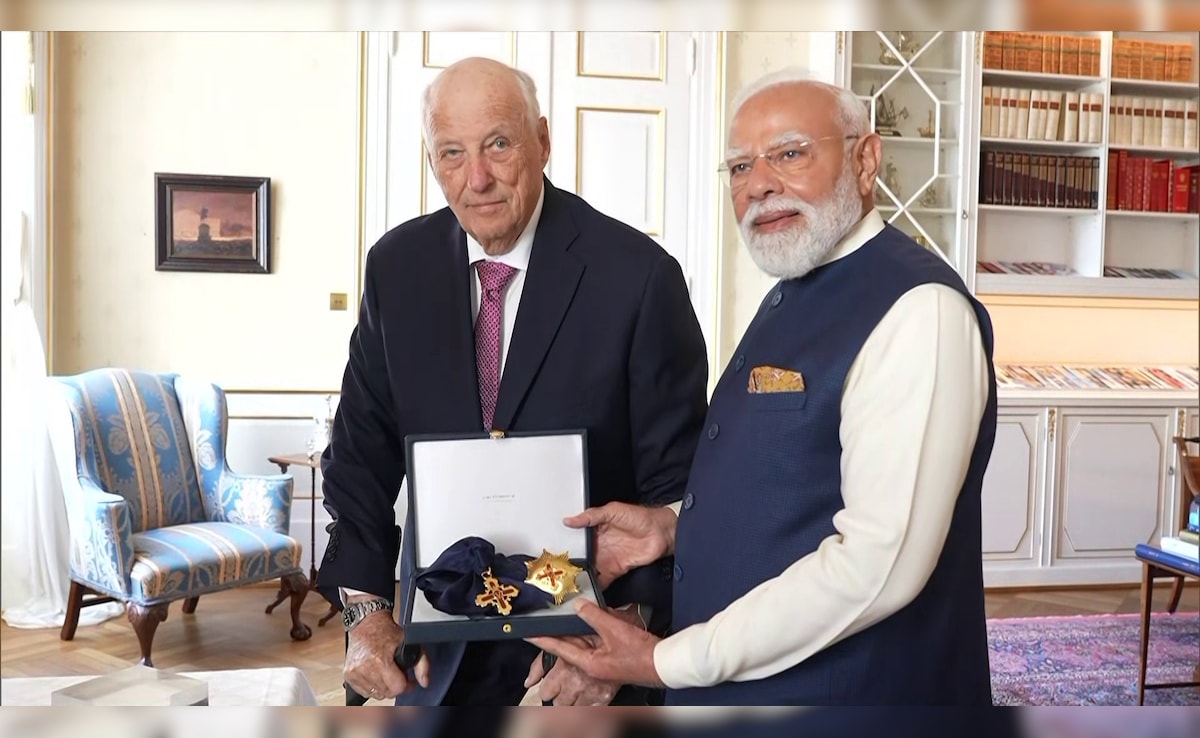
The mainstream media loves a coronation. When news broke that Indian Prime Minister Narendra Modi received Norway’s highest civilian honor—marking his 32nd global award—the press did exactly what it always does. It copied and pasted the official press releases, counted up the medals like points in a video game, and declared it a historic triumph of international diplomacy.
It is a comforting narrative. It is also entirely wrong.
We need to stop treating diplomatic participation trophies as proof of strategic leverage. In the real world of global statecraft, an abundance of foreign medals usually signals the exact opposite of what the public believes. It does not mean a country has arrived as a superpower. It means established powers are using cheap, symbolic gestures to buy time, secure trade concessions, or manage a rising power they do not want to fully integrate into the global order.
Let us dismantle the lazy consensus surrounding global awards and look at the actual mechanics of transactional diplomacy.
The Anatomy of a Diplomatic Participation Trophy
A foreign award is not an objective validation of domestic policy. It is a lagging indicator of geopolitical anxiety.
When a Western nation hands out a civilian honor to a leader from the Global South, it is rarely an endorsement of that leader's philosophy. Instead, it is a highly calculated, low-cost diplomatic maneuver. I have spent years analyzing trade flows and bilateral treaties, and the pattern is unmissable: medals are cheap; structural concessions are expensive.
Consider what actually happens behind the closed doors of international ministries. Giving a rising economy preferential tariff treatments or technology transfers requires fighting domestic lobbies and risking local jobs. Handing a visiting leader a gold-plated medallion and a ribbon requires a five-minute ceremony and a photographer.
It is the ultimate geopolitical vanity metric.
When you look at the timing of these 32 global awards, they do not correlate with breakthroughs in human development or unprecedented economic stability. They correlate almost perfectly with major bilateral trade negotiations, military procurement windows, and shifts in regional security dynamics.
Award Dynamics: Substance vs. Symbolism
To understand why these honors are handed out so freely, look at the stark contrast between what nations say through awards and what they do through policy:
| The Symbolic Gesture (What They Get) | The Economic Reality (What They Give Up) |
|---|---|
| Highest Civilian Honor ceremonies | Strict carbon border adjustment taxes targeting developing industries |
| Commendations for global leadership | High-tech export controls and restricted access to core intellectual property |
| State dinners and photo opportunities | Protracted negotiations on visa relaxations for skilled professionals |
| Joint statements on shared values | Protectionist agricultural subsidies that shut out foreign farmers |
The math is simple. If a country can satisfy a strategic partner’s desire for global recognition with a medal, it saves billions in actual economic concessions. The media celebrates the medal; the foreign treasury quietly protects its bottom line.
The Myth of the Independent Award
The public assumes these awards are independent recognitions of merit. This ignores the basic reality of sovereign self-interest.
No government hands out its highest civilian honor to a foreign leader without a clear, transactional return on investment. Norway, for instance, is a nation deeply embedded in the European energy architecture and global maritime trade. India represents one of the largest consuming markets on earth. To view an award from Oslo through a lens of pure appreciation is naive. It is a diplomatic handshake designed to smooth over friction points in free trade agreement negotiations, particularly between India and the European Free Trade Association (EFTA).
"In statecraft, goodwill that costs nothing is worth exactly what you paid for it."
When a nation collects dozens of these honors, it is not a sign of absolute dominance. It is a sign that the nation is a lucrative target for foreign lobbying and strategic flattery. True superpowers do not collect awards; they dictate terms.
Think about the global hierarchy. How many foreign civilian honors do the leaders of the world's absolute economic heavyweights collect? They rarely receive them because they do not need them, and their geopolitical positions are too controversial to allow for easy consensus. An abundance of awards means a leader is currently useful to the immediate tactical goals of other sovereign states.
The Real Cost of Chasing International Validation
There is a distinct downside to this obsession with global accolades, and it is one that proponents of aggressive diplomacy refuse to admit.
When a government benchmarks its international success by the number of trophies on the mantelpiece, it creates a dangerous feedback loop. It prioritizes superficial global optics over hard-nosed, transactional foreign policy.
Imagine a scenario where a developing nation is negotiating a massive semiconductor manufacturing deal with a Western power. The Western power offers two paths:
- A highly publicized state visit with the country's highest honor awarded to the visiting leader, combined with a standard, restrictive trade template.
- A quiet, unglamorous bilateral agreement with deep technology transfers, no public fanfare, and significant opposition from Western corporate tech giants.
When a political apparatus is hooked on the dopamine hit of international awards to fuel its domestic press machine, it will choose the first option almost every single time. The awards look great on evening news broadcasts. The technology transfers, which take a decade to bear fruit, do not move the needle in the next election cycle.
This focus on prestige over substance leaves countries vulnerable to asymmetric diplomacy. Foreign strategists know exactly which leaders value international prestige, and they use that knowledge as leverage to protect their own markets.
Dismantling the "Global Recognition" Premise
People frequently ask: Doesn't this massive collection of awards prove that a nation's soft power is at an all-time high?
The question itself is flawed because it misunderstands what soft power actually is. Soft power is not the popularity of a single political figure among foreign elites. True soft power is structural. It is the global adoption of your technology standards, the universal appeal of your cultural exports, the dominance of your currency in central bank reserves, and the reliance of other nations on your educational institutions.
A 5-amp plug standard adopted across an entire continent is worth more soft power than fifty civilian medals.
When the press screams about a leader's 32nd international award, they are substituting elite validation for structural influence. If foreign corporations are still pulling supply chains out of your region due to bureaucratic red tape, or if your passports still require grueling visa processes for basic business travel, the medals are meaningless. They are anesthetizing the public to the lack of real, structural progress on the world stage.
Stop Counting Medals, Start Counting Chokepoints
If you want to measure a nation's true standing in the modern geopolitical arena, stop looking at the awards section of the state media. Turn off the television broadcasts of formal handshakes and ribbons.
Start tracking the variables that actually dictate the survival and dominance of a state in a fractured global economy:
- Control of Critical Mineral Supply Chains: Who owns the processing facilities for lithium, cobalt, and rare earth elements?
- Sovereign Debt Leverage: How much of the developing world's infrastructure debt is held by your financial institutions?
- Patents in Deep Tech: What percentage of foundational patents in quantum computing and advanced lithography belong to your domestic firms?
- Maritime Chokepoint Viability: Can your navy project enough power to guarantee or disrupt trade through vital global straits without relying on a foreign alliance?
Those are the metrics of a superpower.
Every time a foreign ministry announces another historic award, look at what trade deal was signed in parallel. Look at what maritime access agreements were extended. Look at what tariff barriers remained completely untouched despite the warm rhetoric.
Stop letting diplomatic theater blind you to economic reality. The next time the media counts up a leader's global honors, understand it for what it is: a high-stakes distraction designed to keep the public cheering for symbols while foreign treasuries walk away with the substance.