Commercial aviation route planning operates on a deterministic risk matrix where sovereign airspace closures, kinetic conflict zones, and regulatory mandates dictate margin compression and operational efficiency. When carriers modify network topography due to localized security incidents, the systemic adjustments reveal the underlying cost functions of geopolitical volatility. The operational response of major international carriers to escalating Middle Eastern security dynamics—specifically surrounding Israeli airspace and regional Muslim-majority jurisdictions—demonstrates a structural decoupling between political signaling and flight deck operational protocols.
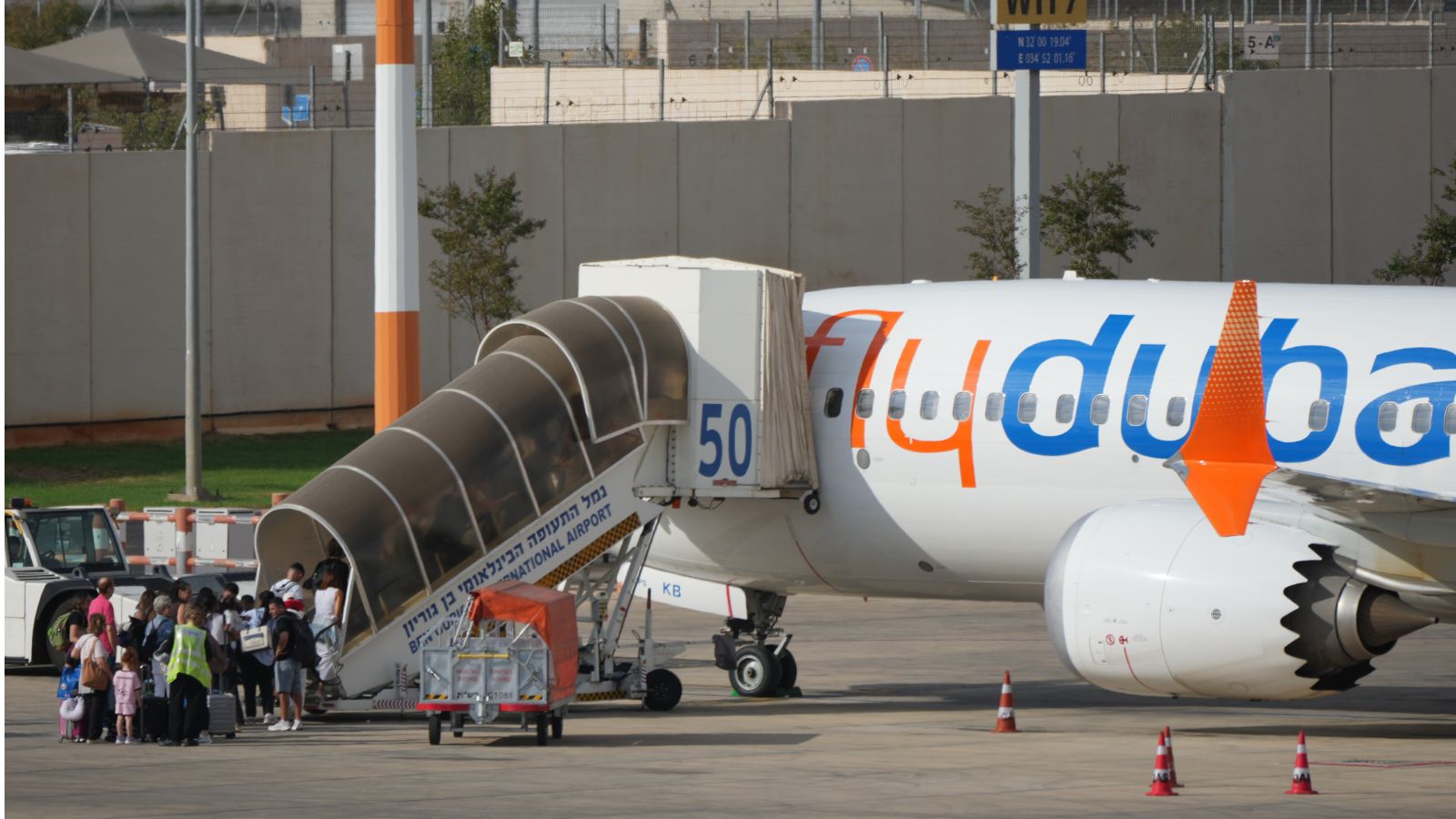
At the core of international route architecture lies the principle of sovereign airspace jurisdiction, governed by the Chicago Convention of 1944. While states retain absolute sovereignty over the airspace above their territory, the practical implementation of safety directives involves a cascading hierarchy of risk assessment. When an incident occurs, such as the reported security friction involving Flydubai assets or broader regional missile exchanges, risk management frameworks within legacy carriers activate distinct operational thresholds.
Carrier risk assessment models rely on three primary input variables: sovereign threat intelligence feeds, insurance underwriting adjustments, and crew liability exposure. Air France’s operational adjustments regarding specific regional jurisdictions highlight the friction points between commercial transit rights and strict liability labor laws governing flight crew safety.
[Threat Intelligence Input]
       │
       ▼
[Insurance Underwriting & War-Risk Premiums]
       │
       ▼
[Crew Liability & Labor Union Mandates]
       │
       ▼
[Network Topography Modification / Airspace Avoidance]
To understand the mechanics of these route adjustments, one must analyze the cost function of airspace avoidance. Detour routing introduces measurable economic variables that compound across high-frequency long-haul networks.
The primary cost vector is fuel burn penalty. Deviating from standard great-circle routing to bypass restricted airspace extends block hours. This temporal extension triggers higher fuel consumption, which scales exponentially based on payload weight and altitude constraints. Furthermore, extended flight times infringe upon international crew duty limitation regulations. These regulations mandate rest periods and often require positioning backup crews or scheduling intermediate technical stops, which incurs airport handling fees, landing rights charges, and hotel accommodation costs.
Simultaneously, secondary revenue implications emerge. Increased transit times reduce asset utilization rates. An aircraft spending an additional ninety minutes per rotation due to airspace avoidance experiences a contraction in daily flight cycles, directly impairing capital efficiency metrics for narrow-body and wide-body fleets alike.
In parallel, diplomatic and regulatory friction complicates multi-jurisdictional ticketing and code-sharing arrangements. When a carrier implements sweeping restrictions concerning specific nations, the operational friction extends beyond direct route economics into regulatory compliance. Bilateral Air Services Agreements often contain provisions regarding non-discrimination and transit rights. While safety exemptions universally override commercial agreements under International Civil Aviation Organization guidelines, the arbitrary application of broad national bans introduces diplomatic friction between flag carriers and sovereign civil aviation authorities.
The interplay between domestic labor unions and airline executive boards adds another layer of operational constraint. Flight crew associations frequently possess contractual clauses allowing members to refuse flights into designated conflict zones or regions operating under heightened threat matrices. Consequently, management decisions are frequently lagging indicators of labor force risk tolerance. When Air France or peer network carriers restrict specific pilot demographics or flight paths, the action often reflects preemptive mitigation of labor disputes rather than purely sovereign intelligence mandates.
Inspecting the structural mechanics of these corridor adjustments reveals a permanent shift in how commercial aviation prices geopolitical instability. Legacy routing models built on frictionless globalization are systematically being replaced by dynamic risk-hedging networks, where sovereign airspace is evaluated through the lens of worst-case liability rather than optimal economic performance.
Allocate capital toward predictive route optimization software that integrates real-time kinetic telemetry with crew-contract constraint matrices to minimize block-hour degradation during sudden airspace closures.