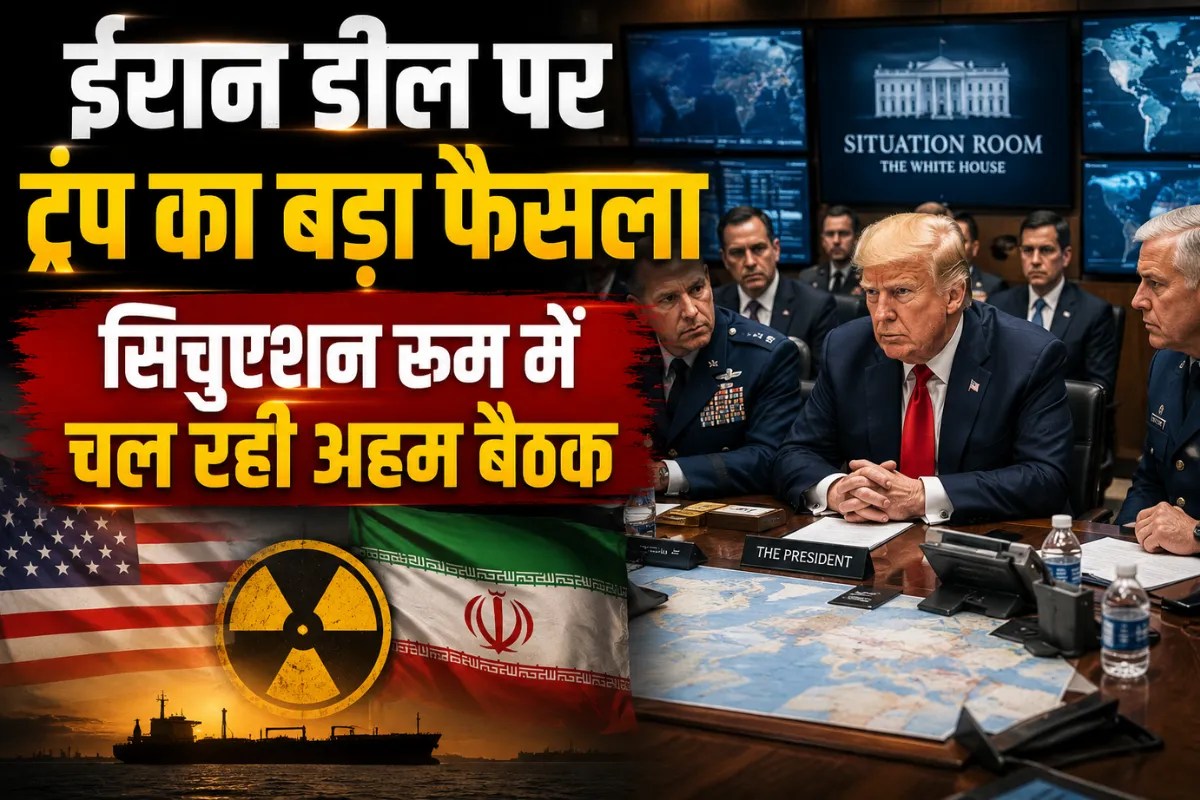
The convening of an emergency session within the White House Situation Room regarding the Joint Comprehensive Plan of Action (JCPOA) represents more than a localized foreign policy pivot. It serves as a textbook manifestation of high-stakes, asymmetric risk management. When an executive administration approaches a definitive deadline on international treaties, the decision-making process is frequently misunderstood as a simple choice between compliance and exit. In reality, the strategic calculus is governed by a complex interplay of domestic political capital, multilateral institutional constraints, and calculated deterrence.
To analyze the mechanics of this decision matrix, the situation must be disassembled into its core structural components: the breakdown of multilateral enforcement mechanisms, the economic transmission channels of secondary sanctions, and the structural vulnerabilities of flashpoint diplomacy.
The Tri-Lateral Friction Model of Treaty Renegotiation
International accords do not operate in a vacuum; they exist within a delicate equilibrium maintained by three distinct vectors of pressure. When an executive authority contemplates unilateral termination or modification of an agreement like the Iran nuclear deal, the decision triggers immediate feedback loops across all three axes.
Domestic Coalition Alignment
An executive’s freedom of maneuver is strictly bounded by their core political constituency and legislative backing. In this specific scenario, the drive to dismantle or overhaul an existing framework is often fueled by the necessity to fulfill campaign mandates and maintain alignment with internal hardline factions. However, this creates a structural vulnerability: the expenditure of political capital to exit a treaty reduces the resources available for domestic legislative priorities. The domestic vector demands immediate, high-visibility action, often at the expense of long-term strategic flexibility.
Multilateral Counterparty Friction
The secondary layer of friction emanates from traditional allies and co-signatories. In the context of the JCPOA, European signatories (the E3) operate under a different risk profile than the United States. For European economies, geographic proximity to the Middle East elevates the relevance of regional stability, migration flows, and direct trade links. Consequently, a unilateral exit by one superpower forces allies into a defensive posture, compelling them to develop circumventive financial mechanisms to preserve the treaty structure. This divergence degrades the efficacy of the broader alliance, rendering future collective security initiatives less cohesive.
Target State Strategic Reciprocity
The third vector is the behavioral response of the target nation. Game theory dictates that when a state is faced with the imminent collapse of an agreement that provided economic relief, its leadership faces two primary paths: compliance under duress or escalatory leverage accumulation. If the target state perceives that compliance yields zero guaranteed utility due to shifting political winds in the treating superpower, it will systematically resume the prohibited activities—in this case, uranium enrichment and centrifuge deployment—to build a stronger negotiating position for future friction points.
The Economic Transmission Mechanism of Secondary Sanctions
The primary tool of leverage in executive ultimatums is the imposition of economic sanctions. However, the efficacy of this mechanism depends on the global hegemony of the domestic currency and the willingness to enforce secondary sanctions against neutral third parties.
The economic cost function of unilateral exit can be traced through a clear sequence of market disruptions:
[Unilateral Treaty Exit]
       │
       ▼
[Imposition of Secondary Sanctions]
       │
       ▼
[Global Supply Chain Realignment] ──────► [Increased Compliance Costs for Multinationals]
       │
       ▼
[Asymmetric Energy Market Shocks] ───► [Volatility in Brent/WTI Crude Benchmarks]
When the United States enforces secondary sanctions, it effectively forces global corporations to choose between accessing the American financial system or trading with the sanctioned state. The structural consequences are immediate:
- Supply Chain Bifurcation: Multinational entities, particularly in the energy, automotive, and manufacturing sectors, begin a rapid, disorganized divestment from the target market to avoid punitive actions from the US Department of the Treasury's Office of Foreign Assets Control (OFAC). This creates an immediate capital vacuum in the target state but simultaneously increases compliance costs globally.
- Asymmetric Energy Shocks: The threat of removing a major oil-producing nation from the global supply chain introduces an immediate risk premium into Brent and WTI crude benchmarks. While domestic energy producers may experience short-term revenue gains from elevated prices, the broader macroeconomic impact manifests as inflationary pressure across importing economies, dampening consumer demand and complicating central bank monetary policies.
- Alternative Financial Architecture: Prolonged reliance on dollar-denominated sanctions incentivizes foreign powers—both adversaries and allies—to construct alternative financial clearing systems that bypass the SWIFT network. Over a secular horizon, this erodes the structural dominance of the dollar as the world's primary reserve currency, reducing the long-term efficacy of economic statecraft.
Institutional Mechanics of the Situation Room Briefing
The physical convergence of national security leadership in the White House Situation Room signifies a transition from diplomatic posturing to operational readiness. This environment is structured to strip away rhetorical ambiguity and force a confrontation with granular, intelligence-driven probabilities.
The operational briefing during such a crisis is structured around three core assessments:
Tactical Intelligence Verification
Before any strategic directive is issued, the executive requires absolute verification of the adversary's current operational status. This involves synthesizing real-time telemetry, human intelligence (HUMINT), and signals intelligence (SIGINT) to determine if the target state has initiated defensive posturing, accelerated its enrichment capabilities, or deployed asymmetric assets (such as proxy forces or cyber warfare units). The limitation of this phase is the inherent margin of error in intelligence modeling; over-reliance on worst-case scenarios can trigger premature escalatory actions.
Escalation Ladder Escalation Modeling
Every potential decision—whether it is a full withdrawal, a temporary waiver extension, or the implementation of "snapback" sanctions—is mapped onto an escalation ladder. Analysts calculate the probability of the adversary’s countermove at each rung. For instance, if the US exits the deal, what is the probability of a cyber retaliation against critical infrastructure? What is the likelihood of kinetic disruption in maritime choke points like the Strait of Hormuz? The core challenge here is that asymmetric warfare strategies deliberately exploit the blind spots in conventional escalation models.
Continuity of Operations and Contingency Planning
The final component of the briefing shifts from external strategy to internal resilience. The administration must review its readiness posture across multiple domains. This includes coordinating with the Department of Homeland Security to harden domestic infrastructure against retaliatory cyber strikes, adjusting military deployments in the theater of operations to deter kinetic provocations, and engaging in quiet bilateral diplomacy to mitigate energy market disruptions with alternative suppliers.
The Structural Limits of Brinkmanship
The strategy of utilizing a hard deadline to force a renegotiation is rooted in the principle of brinkmanship. By deliberately pushing a situation to the edge of conflict, an actor attempts to force the opponent to capitulate to preserve systemic stability. However, this framework possesses critical structural limitations that frequently result in policy failure.
First, brinkmanship assumes perfect rationality and flawless communication between adversaries. In reality, cognitive biases, cultural misinterpretations, and the necessity of maintaining internal prestige can prevent the target state from backing down, even when capital capitulation appears to be the objectively optimal economic choice.
Second, the strategy suffers from the problem of diminishing returns on credibility. If an administration repeatedly deploys maximum-pressure rhetoric without executing the threatened consequences, the adversary recalibrates its risk assessment, neutralizing the leverage of future deadlines. Conversely, if the administration executes the threat, the leverage is spent, and the system transitions into an active conflict or a prolonged stalemate where diplomatic resolution becomes significantly more difficult to achieve.
The structural reality of international relations is that exiting a flawed stabilization framework does not automatically generate a superior replacement. It merely shifts the arena of competition from a regulated, verifiable matrix into an anarchic environment defined by unconstrained optimization of asymmetric capabilities.
The optimal strategic move for an executive facing this threshold is not a binary choice between total capitulation to the existing text or an abrupt, uncoordinated exit. The sustainable path requires the institutionalization of a dual-track strategy: executing the legal mechanisms of withdrawal to satisfy domestic political mandates, while simultaneously establishing a pre-negotiated, alternative bilateral channel with key allies to contain the target state’s immediate escalatory responses. This limits the fallout to the diplomatic sphere while preventing the immediate transition to kinetic or severe economic destabilization.