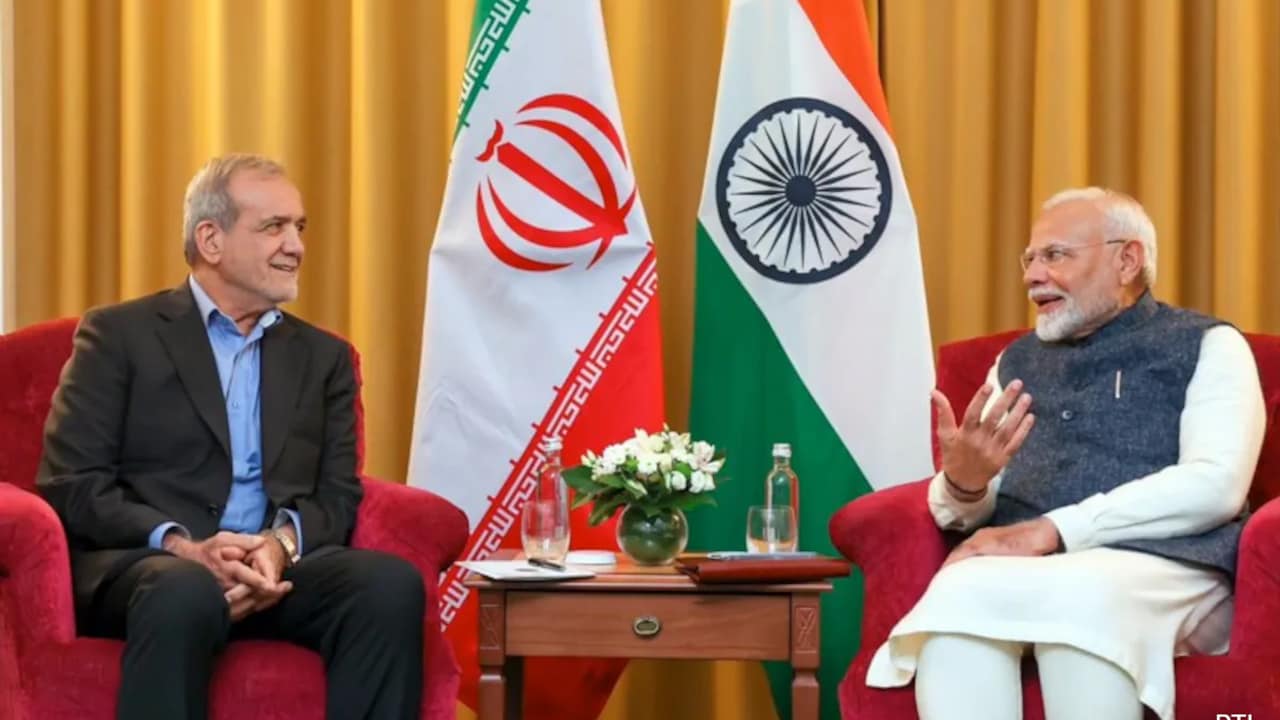
Foreign policy analysis often mistakes diplomatic posturing for structural reality. When commentators evaluate New Delhi’s engagement with Tehran, the commentary typically defaults to superficial binaries: India is either caving to American secondary sanctions or defying Washington to champion non-aligned solidarity. Both narratives misread the mechanics of modern statecraft. India’s posture toward Iran is not governed by sentiment or defiance; it is driven by an unyielding geographical imperative and a strictly calculated cost function.
To understand what New Delhi’s messaging toward Washington and Tehran actually signifies, one must discard diplomatic rhetoric and examine the three structural pillars that dictate India’s western strategy: continental access corridors, energy matrix diversification, and the containment of maritime encirclement.
The Geography Tax and the Chabahar Variable
Geography imposes a permanent tax on Indian foreign policy. Pakistan denies India overland transit rights to Afghanistan and Central Asia, effectively boxing South Asia's largest economy into a maritime cul-de-sac on its western land border. Without a direct northern overland route, India's trade and security footprint in the Eurasian landmass remains severely throttled.
Enter the Chabahar port project on Iran's southeastern coast. Conceived as the anchor of the International North-South Transport Corridor, Chabahar is the sole operational workaround to Pakistan's blockade, offering a direct multimodal freight corridor toward Central Asia, Russia, and Europe.
[India Maritime Access] ---> [Chabahar Port, Iran] ---> [INSTC / Central Asia / Russia]
                                       |
                               (Bypasses Pakistan)
The United States understands the utility of this transit route. Washington previously carved out conditional sanctions exemptions for the port because it recognized Chabahar's role in sustaining a non-dependent alternative for Afghanistan and regional trade. However, the institutional friction introduced by American maximum-pressure campaigns forces New Delhi into constant diplomatic calibration.
When American administrations threaten sweeping tariffs or secondary financial penalties on any entity doing business with Iran, India does not abandon its strategic assets; instead, it utilizes a dual-track mechanism. It secures temporary waivers, negotiates long-term operational leases through state-backed entities, and occasionally hints at tactical divestments to local partners to absorb the shock of Washington's regulatory reach without severing physical continuity. The message to Washington is precise: the United States can threaten financial compliance, but it cannot legislate away India's physical map.
The Balancing Equation of Middle Power Autonomy
The structural constraint facing New Delhi is a textbook illustration of asymmetric interdependence. India maintains an expanding, high-stakes convergence with the United States across Indo-Pacific security, critical technologies, and defense manufacturing. That relationship outweighs the bilateral trade volume with Iran by orders of magnitude.
Yet, complete subordination to Washington's Middle East agenda carries its own strategic penalty. If India completely liquidates its footprint in Iran, two negative externalities immediately occur:
- Tehran permanently re-orients its economic and infrastructural concessions to rival powers, deepening the security dilemma along India's western maritime approaches.
- New Delhi loses its seat at the table in Central Asian connectivity frameworks, neutralizing decades of diplomatic capital invested in the Eurasian theatre.
Strategic autonomy, therefore, is not an abstract ideological stance. It is the mathematical management of trade-offs. New Delhi accepts limits on its banking and energy transactions with Tehran to protect access to Western capital markets and defense supply chains, while simultaneously preserving core infrastructural investments like the 10-year Chabahar operating agreement to keep its continental options open.
Managing the Energy and Security Spillover
Beyond ports and transport corridors, the bilateral friction points intersect directly with macro-economic stability. West Asian volatility and Persian Gulf security directly influence India's domestic inflation, shipping insurance premiums, and oil import bills.
When crude markets experience structural disruptions due to active hostilities or enforcement tightening in the Strait of Hormuz, India absorbs an immediate fiscal shock. Consequently, India's diplomatic messaging toward Tehran and Washington is designed to suppress regional escalation. By using multilateral platforms like the Shanghai Cooperation Organisation and BRICS, New Delhi consistently advocates for dialogue and regional de-escalation, aiming to insulate its diaspora of millions working in the broader Middle East and protect vital energy lanes from systemic choke points.
The friction between Washington and Tehran creates an uncomfortable operating environment, but it also elevates India's value as an indispensable bridge builder. Major powers cannot dictate terms to a sovereign state whose structural requirements demand multi-vector alignment.
Maintain active operational presence at Chabahar through insulated corporate vehicles, leverage conditional compliance windows to absorb American regulatory pressure, and anchor all western connectivity strategies directly to the International North-South Transport Corridor framework.