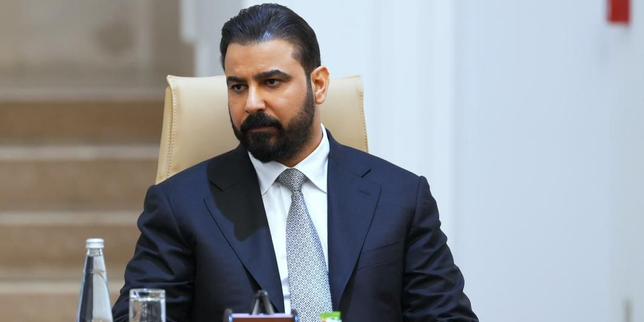
The appointment of Ali Al-Zaïdi as Prime Minister of Iraq represents a fundamental pivot from traditional sectarian-bureaucratic governance toward a model of technocratic state capitalism. This transition is not merely a personnel change but a strategic attempt to resolve the structural paralysis of the Iraqi rentier state. By placing a prominent businessman at the helm, the Iraqi presidency is testing a hypothesis: that the country’s chronic instability—rooted in a 90% reliance on oil revenues for the national budget—can be mitigated through the aggressive integration of private sector logic into public administration.
The Structural Fragility of the Muhasasa Ta’ifia
To understand the Al-Zaïdi appointment, one must first quantify the failure of the Muhasasa Ta’ifia, the ethno-sectarian power-sharing system established post-2003. This system created a fragmented executive branch where ministries functioned as fiefdoms for political parties to extract rent. The result was a bloated public sector payroll that consumes nearly 40% of the GDP, leaving minimal fiscal space for capital expenditure or infrastructure development.
Al-Zaïdi enters this environment as a "disruptor" intended to break the cycle of patronage. However, the efficacy of a businessman in this role is governed by three primary constraints:
- The Sovereignty Gap: The degree to which Al-Zaïdi can exercise executive authority without interference from the Hashd al-Shaabi (Popular Mobilization Forces) or external regional actors.
- Fiscal Absorption Capacity: The ability of the Iraqi bureaucracy to actually deploy capital into non-oil sectors given the current levels of systemic corruption.
- Legislative Bottlenecks: The necessity of securing parliamentary approval for radical economic reforms from the very parties whose patronage networks those reforms would dismantle.
The Triad of Iraqi Economic Stabilization
The Al-Zaïdi administration’s success will be measured by its ability to manage the intersection of energy security, currency stability, and youth unemployment. Each of these variables is linked by a causal chain that currently trends toward volatility.
Energy Diversification as a Security Mandate
Iraq remains one of the world’s most energy-rich yet power-poor nations. The reliance on Iranian gas imports for electricity generation creates a geopolitical vulnerability that Al-Zaïdi is uniquely positioned to address through private-public partnerships (PPPs). The strategy involves shifting the energy mix toward captured flare gas and solar power.
- The Flare Gas Variable: Iraq loses billions of dollars annually by flaring gas associated with oil production.
- The Infrastructure Deficit: Converting this waste into fuel for domestic power plants requires technical expertise that the Ministry of Oil has historically struggled to implement.
By leveraging his background in large-scale project management, Al-Zaïdi's primary objective is to streamline the bidding process for international energy firms, moving away from the "service contract" model toward more attractive "production-sharing" or "hybrid" models that incentivize efficiency.
Currency Volatility and the Parallel Market
The spread between the official Central Bank of Iraq (CBI) exchange rate and the parallel market rate acts as a tax on the Iraqi middle class. This disparity is driven by the U.S. Federal Reserve’s tightening of dollar flows to Iraq to prevent money laundering and sanctions evasion.
Al-Zaïdi’s business acumen suggests a shift toward digital banking and the formalization of the informal economy. The logic is as follows: by increasing the transparency of cross-border transactions, Iraq can regain the trust of international financial institutions, thereby narrowing the exchange rate spread and stabilizing the purchasing power of the Iraqi Dinar. The bottleneck remains the resistance from exchange houses and small banks that profit from the current arbitrage opportunities.
The Risks of the CEO-Statesman Model
The appointment of a high-net-worth individual to the premiership introduces a specific set of risks related to regulatory capture and the "privatization of the state." In a mature democracy, conflict-of-interest laws provide a buffer. In Iraq, where the rule of law is inconsistently applied, the risk of Al-Zaïdi’s former business interests—or those of his associates—receiving preferential treatment is high.
This creates a paradox: the very skills that make Al-Zaïdi an attractive candidate (deal-making, rapid execution, networking) are the same traits that could undermine public trust if not paired with unprecedented transparency. The "Cost Function of Governance" in this context includes the social friction generated by perceived corruption, which can lead to a resurgence of the Tishreen-style protests that have previously toppled Iraqi governments.
Geopolitical Realignment and the Investment Corridor
Al-Zaïdi’s tenure coincides with the "Development Road" project, a $17 billion rail and road link intended to connect the Persian Gulf to Europe via Turkey. This project is the linchpin of Iraq’s strategy to become a transit hub, diversifying away from pure commodity exports.
The project’s success depends on:
- Regional De-escalation: Ensuring that the route is not disrupted by the ongoing friction between regional powers.
- Technical Standardization: Aligning Iraqi rail and logistics standards with those of Turkey and the EU.
- Capital Stack Composition: Securing a mix of sovereign wealth fund investment (from Gulf neighbors) and multilateral development bank loans.
Al-Zaïdi is expected to act as the primary negotiator for these investments. His ability to speak the language of global capital is an asset that his predecessors lacked. He must convince the UAE, Saudi Arabia, and Qatar that Iraq is a stable destination for long-term "sticky" capital, rather than just short-term speculative plays.
Institutional Resistance and the Deep State
The Iraqi civil service, or the "Deep State," consists of over 4 million employees. Any attempt to introduce private-sector efficiency—such as performance-based pay or the elimination of redundant positions—will meet fierce resistance from the labor unions and the political parties that use these jobs as rewards for their base.
Al-Zaïdi’s tactical play will likely involve bypass mechanisms. Rather than attempting a wholesale reform of the existing ministries, he will likely create "specialized commissions" or "delivery units" that report directly to the Prime Minister’s Office. This allows for the execution of key projects outside the standard bureaucratic friction points, though it risks further hollow out existing institutions.
Tactical Execution: The First 100 Days
The immediate priority for Al-Zaïdi is not the passage of a grand national vision, but the resolution of the 2026 budget impasse. The budget must prioritize capital investment in the southern provinces to prevent local unrest, while simultaneously managing the escalating debt obligations to foreign oil companies.
The strategic play for Al-Zaïdi involves a three-pronged approach:
- Debt Restructuring: Renegotiating the payment schedules for International Oil Companies (IOCs) to free up immediate liquidity.
- The Basra Hub: Accelerating the completion of the Grand Faw Port, which serves as the physical entry point for the Development Road.
- Security Professionalization: Decoupling the economic development zones from the control of local militias through the creation of specialized "Economic Protection Zones" guarded by federal forces.
The Al-Zaïdi premiership is a high-stakes gamble on the idea that economic logic can override sectarian identity. If he successfully integrates Iraq into the regional trade network and stabilizes the currency, he provides a blueprint for a post-rentier Iraq. Failure, however, will likely signal that the Iraqi state is unreformable through conventional technocratic means, potentially leading to a more radical fragmentation of the national entity.
The most critical metric to watch over the next six months is the volume of Foreign Direct Investment (FDI) into non-extractive sectors. If Al-Zaïdi can move this number from its current negligible levels, the "CEO-Statesman" experiment will have achieved its first proof of concept. Any delay in the Development Road’s milestones or a widening of the Dinar's black market spread will indicate that the political class has successfully neutralized his reformist agenda.