Hong Kong is resetting the financial bar for its innovation sector by demanding a massive HK$100 million surety bond from bidders eyeing major infrastructure tenders within its technology parks. This stringent fiscal requirement directly favors deeply capitalized, state-backed entities and mega-developers, effectively squeezing out the mid-tier operators and home-grown tech consortiums the city desperately needs to transition from a property-driven economy to an innovation hub. While the policy minimizes the risk of uncompleted public works, it threatens to turn the city's tech infrastructure into a playground reserved exclusively for corporate giants.
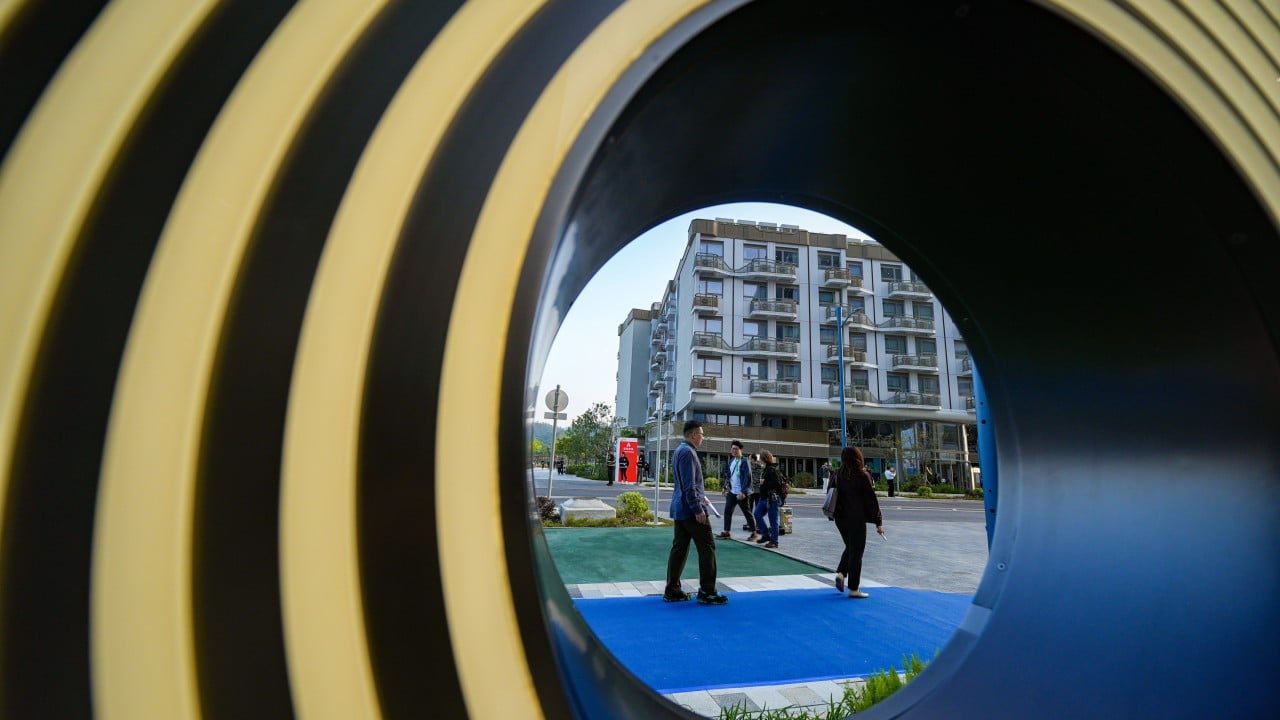
The decision arrives at a crucial inflection point for the territory. The Hong Kong Science and Technology Parks Corporation (HKSTP) is aggressively pushing to develop massive new tranches of land, including the strategically vital Hong Kong-Shenzhen Innovation and Technology Park in the Lok Ma Chau Loop and upcoming clusters within the San Tin Technopole.
Historically, public infrastructure tenders evaluated bids primarily through a combination of upfront land price and basic execution capacity. The new requirement of a nine-figure performance bond shifts the entire landscape toward institutional financial strength, altering who gets to build the physical foundations of Hong Kong’s digital future.
The Mechanistic Reality of the Nine Figure Wall
A HK$100 million bond is not a mere line item on a ledger. It requires a firm to tie up immense liquid capital or exhaust a significant portion of its commercial banking credit lines just to secure a seat at the bidding table.
For large-scale, state-owned enterprises from the Chinese mainland or Hong Kong's legacy property dynasties, providing this financial guarantee is standard operating procedure. Their balance sheets absorb the requirement effortlessly.
For a mid-sized technology developer, an advanced manufacturing consortium, or an specialized operator in semiconductor cleanrooms, the financial mechanism is devastating. These specialized firms operate on different capital cycles than traditional real estate conglomerates.
Consider a hypothetical advanced engineering firm with excellent technical credentials and HK$200 million in free cash flow. If they lock up half of that capital in a static performance bond for a single government tender, they immediately paralyze their operational liquidity, leaving them unable to fund ongoing research and development or hire highly specialized talent.
The financial pressure is intensified by the implementation of a two-envelope bidding system. Under this framework, authorities evaluate a bidder's technical capabilities and their financial offer independently.
[Two-Envelope Evaluation System]
       │
       ├──► Technical Envelope (50-60% Weight)
       │    └── Industry track record, tech ecosystem development, operator expertise
       │
       └──► Financial Envelope (40-50% Weight)
            └── Land premium offer backed by the mandatory HK$100m surety bond
While the technical envelope is designed to ensure that the winner has the competency to build complex facilities like data centers or biomedical laboratories, the financial envelope—now anchored by the mandatory HK$100 million bond—serves as a brutal preliminary filter. If a company cannot easily secure the bond, its superior technical vision never even gets reviewed.
Why Risk Aversion is Overriding Innovation
Government planners are haunted by past ghost projects and delayed infrastructure timelines. The integration of the Greater Bay Area demands rapid, flawless execution of the physical spaces meant to house international artificial intelligence labs and biotechnology startups. From a purely administrative standpoint, demanding a massive financial commitment upfront is the easiest way to insulate a public project against default or bankruptcy.
However, this hyper-cautious approach misdiagnoses the true nature of tech ecosystem development. Real estate developers excel at pouring concrete and erecting glass facades. They do not excel at running specialized incubation programs, managing cleanroom logistics, or attracting highly specific international research talent.
By prioritizing financial safety over operational specialization, the tendering process hazards creating visually stunning tech parks that lack the organic corporate community required to make them functional. The city risks building empty shells that are structurally perfect but strategically vacant.
The Divergent Incentives of Builders and Operators
The core tension lies in a fundamental misalignment of corporate goals. Legacy developers view land through the prism of yield, square footage, and long-term asset appreciation. Conversely, a technology park requires an operator who views land as a platform to support high-risk, high-reward ventures.
- Traditional Developers: Prioritize low-risk tenants, long-term leases, and minimized capital expenditure on internal hardware infrastructure.
- Specialized Tech Operators: Prioritize flexible lab spaces, shared high-performance computing clusters, and high tenant turnover as successful startups scale out and failing ones exit.
When the barrier to entry is set at HK$100 million, the specialized operators are forced to partner with traditional developers as junior entities. In these marriages of convenience, the financial heavyweight almost always dictates the terms. The resulting developments inevitably lean toward traditional office configurations rather than the highly customized, capital-intensive labs required for genuine scientific breakthroughs.
The Mainland Factor and Global Competitiveness
This fiscal barrier accelerates a pre-existing trend: the dominance of mainland Chinese tech giants and state-invested firms in Hong Kong’s public works. Enterprises backed by municipal governments across the border have the scale and political mandate to absorb these massive bonding requirements. They bring immense capital and direct ties to the manufacturing ecosystems of Shenzhen and Dongguan.
The unintended side effect is the potential alienation of international operators. European and American specialized tech-hub managers operate under strict corporate governance and capital allocation models that rarely allow for freezing US$13 million in a single offshore municipal bond just to enter a competitive bid. If Hong Kong wants to maintain its status as an international, cosmopolitan super-connector, its entry requirements must accommodate global corporate structures, not just regional state-backed giants.
Redefining Financial Soundness
The reliance on a blunt HK$100 million instrument exposes a lack of regulatory imagination. Protecting public funds is non-negotiable, but there are more sophisticated financial mechanisms available that achieve security without suppressing competition.
Instead of an absolute, flat-rate cash bond up front, the HKSTP could utilize a tiered bonding structure pegged directly to the specific type of development proposed. A consortium committing to build high-spec, low-margin robotics testing labs could face a lower financial bond in exchange for legally binding operational milestones.
Furthermore, the government could accept parental guarantees from established international research universities or global venture funds as a substitute for raw liquid capital. Security should be measured by a partner's total capacity to deliver an ecosystem, not just their ability to satisfy a bank's collateral checklist.
The physical structures of the Lok Ma Chau Loop and the San Tin Technopole will dictate Hong Kong's economic viability for the next three decades. If the gate to these developments remains locked behind an arbitrary, nine-figure financial wall, the city will successfully build massive business parks while failing entirely to foster a genuine technology revolution. Safety will have been preserved, but the broader future will have been compromised.