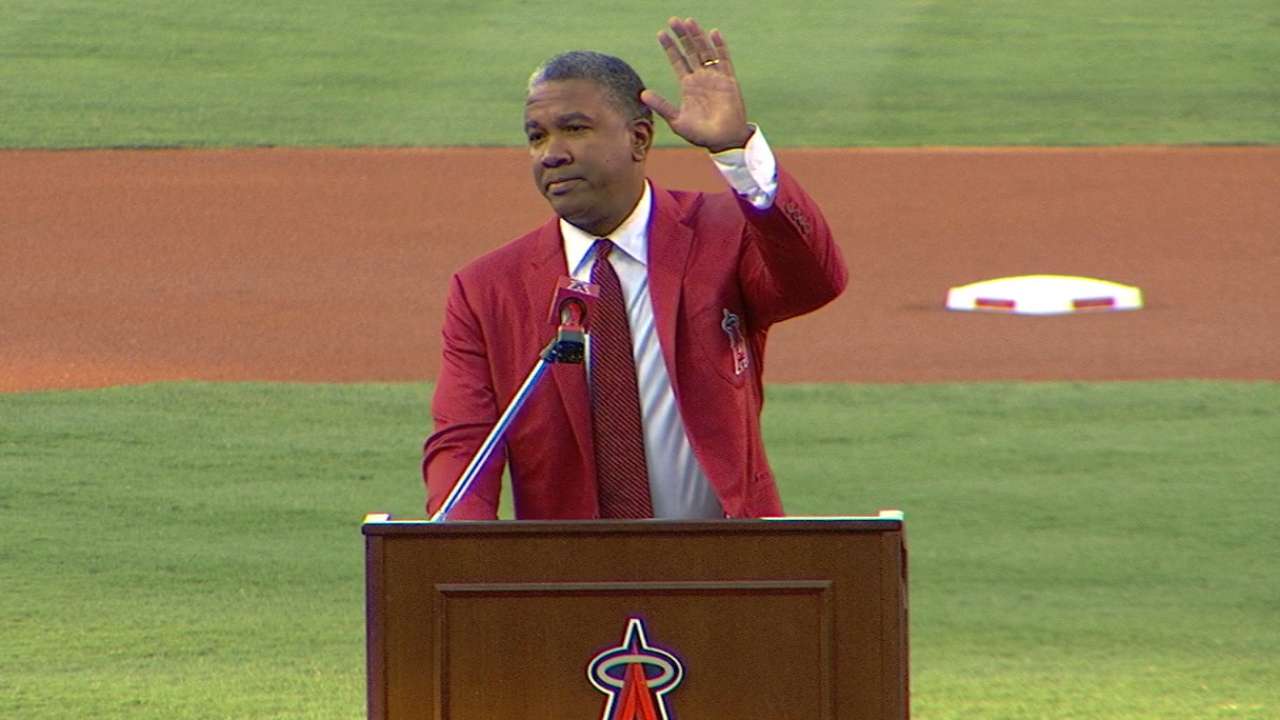
Garret Anderson didn't care if you liked him. He didn't care about the cameras, the bat flips, or the highlight reels that dominated the early 2000s. While guys like Barry Bonds and Sammy Sosa were turning baseball into a pyrotechnics show, Anderson was busy being the most consistent, quiet assassin in the American League. If you look at his Baseball-Reference page today, the numbers scream "very good." But if you actually watched him play every night in Anaheim, you know those numbers don't tell half the story.
Most people get Garret Anderson wrong because they focus on what he wasn't. He wasn't a vocal leader. He wasn't a Gold Glove speedster. He was just a left-handed swing that looked like it was carved out of silk. He made the hardest game in the world look like a Sunday morning walk in the park. That ease is exactly why he's overlooked. We tend to celebrate the players who look like they're struggling, the ones who sweat through their jerseys and grit their teeth. Anderson looked like he hadn't even broken a sweat after a four-hit night.
The mechanical perfection of the GA swing
Ask any pitcher who faced the Angels between 1995 and 2008 about the toughest out in that lineup. They won't always say Vladimir Guerrero. Vlad was a freak of nature who hit balls off the dirt. You could plan for that by throwing way out of the zone. You couldn't plan for Anderson. He stayed inside the ball better than almost anyone of his era.
The swing was short. It was compact. It had zero wasted movement. He didn't have the "loud" hands that modern hitting coaches obsess over. He just put the barrel on the ball. He finished his Angels career with 2,529 hits. That’s more than Hall of Famers like Mickey Mantle or Ted Williams. Let that sink in. While we debate the "greatness" of modern players with high exit velocity, GA was just stacking up knocks.
He hit .300 or better five times. He drove in 100 runs four seasons in a row. He did it all without the theatrical flair that wins MVP awards. In 2002 and 2003, he was arguably the best pure hitter in the league. He won the All-Star Game MVP and the Home Run Derby in the same year. People forgot that. He just showed up, did the job, and went home to his family.
Reliability is a skill we forgot to value
We live in an era of "load management" and "rest days." Anderson was a tank. Between 1996 and 2003, he played fewer than 150 games only once. He was the heartbeat of the most successful era in Angels history. You knew exactly what you were getting. You got a guy who would hit a line drive to left-center, move the runner over, and play a fundamentally sound left field.
The 2002 World Series run is the perfect example. Everyone remembers Troy Glaus winning the MVP. They remember the Rally Monkey and Scott Spiezio’s home run. But look at the box score of Game 7. Who hit the three-run double that effectively broke the San Francisco Giants? It was Garret Anderson. He didn't beat his chest. He didn't point to the sky. He just stood at second base, adjusted his batting gloves, and waited for the next play.
That stoicism worked against him in the Hall of Fame voting. Writers want a narrative. They want a story of struggle or a colorful personality they can write 2,000 words about. Anderson gave them nothing. He gave them hits. He gave them doubles—he led the league in doubles twice. He was a professional in a sport that was becoming a circus.
Why the analytics crowd misses the point on Anderson
If you're a "WAR" (Wins Above Replacement) hawk, you probably think Anderson is overrated. His career WAR sits around 25.6. That's low for a guy with his counting stats. Analytics hate his lack of walks. He was a "bad ball" hitter who trusted his hand-eye coordination more than the umpire’s strike zone.
But WAR doesn't measure "clutch." It doesn't measure the intimidation factor of having a guy in the five-hole who simply refused to strike out. In 2000, he had 643 at-bats and only struck out 73 times. In today's game, guys strike out 73 times by mid-June.
He put the ball in play. He forced the defense to make moves. In the postseason, when pitching gets tighter and the strike zone shrinks, having a guy who can spoil tough pitches is invaluable. He was the ultimate "professional hitter," a term that feels like a lost art in 2026.
The quiet leadership of number 16
People mistaken silence for a lack of passion. I’ve talked to fans who thought GA didn't care because he didn't sprint to first base on a ground out or dive for balls he couldn't reach. That's nonsense. Anderson was a student of the game. He mentored younger players like Chone Figgins and Howie Kendrick by showing them how to prepare.
He didn't lead by giving speeches in the dugout. He led by being the same person every single day. In a 162-game season, the "rah-rah" guys burn out by August. The guys like Anderson are the ones who are still producing when the games actually matter in September.
He holds almost every major offensive record for the Angels. Hits, RBIs, doubles, total bases—it's all him. Mike Trout will eventually pass him in many categories, but Trout is a generational alien. For a "normal" human, Anderson’s records are staggering. He stayed in one place for 15 years. In the free-agency era, that kind of loyalty is rare. He was Anaheim’s guy.
Reevaluating the Hall of Fame case
Is Garret Anderson a Hall of Famer? By the strict "Cooperstown" standards of 3,000 hits or 500 homers, no. But if the Hall is about the story of baseball, you can't tell the story of the late 90s and early 2000s without him. He was the gold standard for consistency.
We need to stop punishing players for making the game look easy. We need to stop acting like a walk is always as good as a hit. A hit moves runners in a way a walk doesn't. A hit demoralizes a pitcher. Anderson was a master of the demoralizing line drive.
If you want to appreciate Garret Anderson, stop looking at the spreadsheets. Go find old footage of his swing. Watch the way his head stays perfectly still. Watch how he keeps his front shoulder tucked. It's a clinic. It’s art.
Next time you’re at the Big A, look up at the Hall of Fame numbers. Mike Trout is the greatest to ever wear the jersey, but Garret Anderson was the one who built the foundation of a winning culture in Anaheim. He didn't need your applause then, and he probably doesn't need it now. But he earned it.
Start valuing the guys who show up. Stop obsessing over the ones who just make the most noise. Go buy a throwback number 16 jersey and wear it with pride. Baseball needs more Garret Andersons.