Cold changes the rules of everything.
When the temperature drops past minus thirty, metal becomes as brittle as glass. Engine oil thickens into something resembling molasses. Rubber tracks crack and snap under the slightest pressure. For a soldier sitting on the northernmost line of Europe, the greatest threat isn't always the adversary across the border. It is the mud, the black ice, and the deep, suffocating snow that swallows multi-ton vehicles whole.
Military planners call this a mobility deficit. The people who actually have to drive through it call it a death trap.
For decades, the defense of Europe's frozen flanks relied on aging fleets of specialized vehicles designed during the height of the Cold War. These machines are tired. Their parts are hard to find. If a crisis happens in the high north or along the eastern swamps, moving a brigade from point A to point B becomes a calculation of luck rather than strategy. Single nations have tried to solve this alone. They failed because the math doesn't work. One country cannot afford to design, test, and build a highly specialized machine meant specifically for the worst conditions on Earth.
That reality forced a quiet but historic shift at the NATO Summit in Ankara.
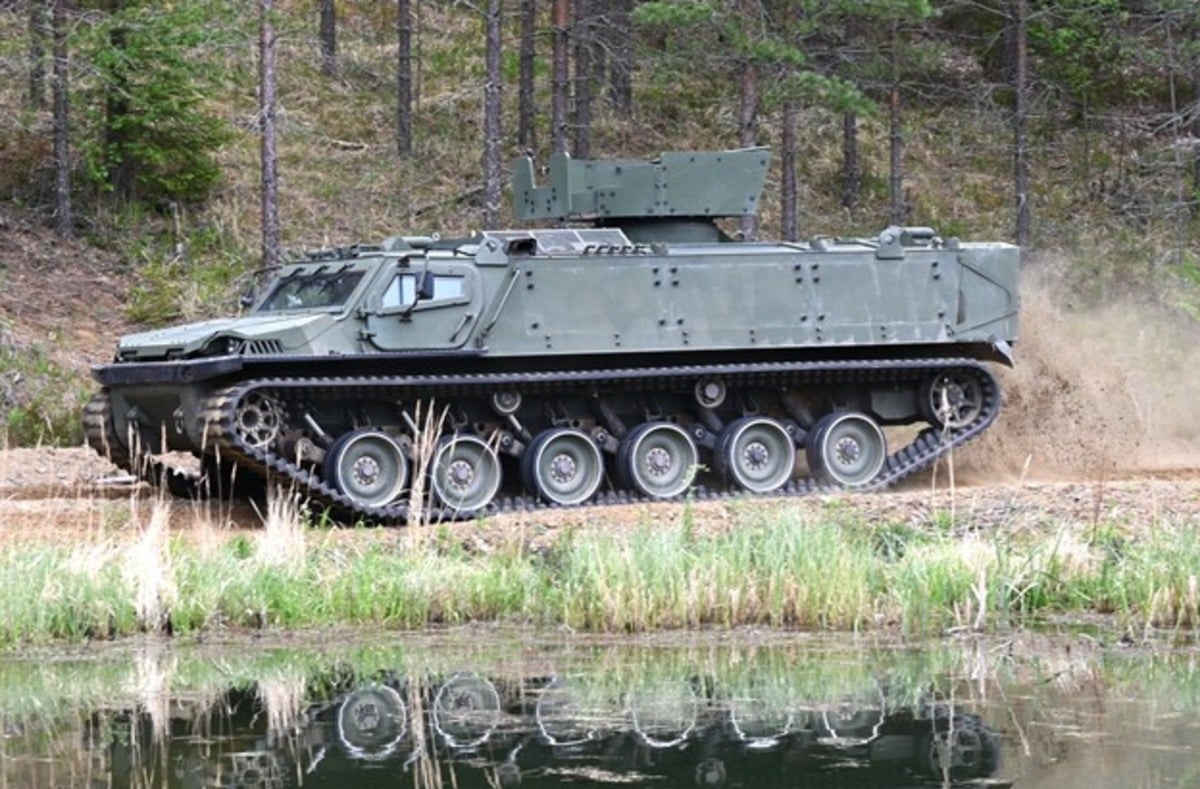
Finland, Norway, and Latvia put pen to paper on a joint agreement. They are teaming up to develop and procure a new type of machine, a next-generation armored tracked vehicle known as the Patria TRACKX.
Consider what happens when the ground thaws. The Arctic is no longer just an empty expanse of ice; it is a crowded corridor of competing interests. The northern frontier of the West is shifting, and the physical terrain is becoming increasingly hostile.
Let us use a hypothetical scenario to understand why this matters. Imagine a mechanic named Janis, stationed at a remote outpost in eastern Latvia. It is late November. The autumn rains have turned the topsoil into a thick, clinging mire that stops standard wheeled personnel carriers in their tracks. Janis knows that if his unit needs to move quickly, they are tethered to the paved roads. On a map, a road is a line. In a conflict, a road is an ambush waiting to happen. To survive, you must be able to go where there are no roads. You need tracks, but not the heavy, destructive tracks of a main battle tank. You need something light enough to float over mud and snow, yet protected enough to shield the human beings inside from shrapnel.
The TRACKX program aims to build exactly that. It is born out of an earlier, highly successful blueprint known as the Common Armoured Vehicle System. That project proved that when European nations pool their engineering and financial resources, they can build vehicles faster and cheaper than working in isolation.
But the real problem lies elsewhere. It is not just about building a better machine; it is about making sure those machines can talk to each other and share the same parts.
If a Norwegian unit moves to support a Finnish platoon in the deep forests of Lapland, they cannot afford to carry two different sets of spare tracks, two different fuel filters, or two different ammunition configurations. Interoperability is a dry word. In practice, it means life or death. It means a mechanic can grab a part from a neighboring country's supply truck and fix a broken vehicle in the dark while the wind howls.
The engineering behind this new vehicle is funded in part by the European Defence Fund through a initiative called the Future Highly Mobile Augmented Armoured Systems program. The goal is to move from testing to serial production by 2027.
This is a confession of vulnerability. For years, European defense was treated as a collection of boutique, national industries. Every country wanted its own factories making its own specific vehicles to protect its own specific jobs. That luxury is gone. The geopolitical temperature has dropped just as fast as the physical one.
The three nations involved are clear-eyed about the risks. The high north is a brutal testing ground. If a vehicle can survive field trials in the sub-zero winters of northern Finland and Norway, it can survive anywhere. It is an environment that punishes compromises.
This joint initiative is a statement that the defense of the West is only as strong as its weakest link in the mud. By sharing data, coordinating field trials, and preparing for massive joint purchases, these three nations are trying to out-build the harsh geography that threatens to isolate them.
The contract signed in Ankara is just paper. The true test will happen when the metal meets the ice, and the first production models roll out into the whiteout conditions of a northern winter.