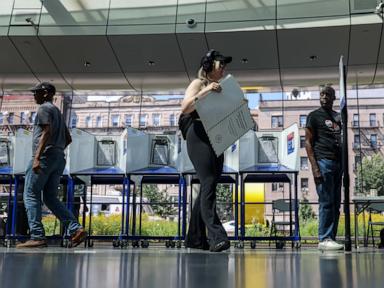
The issuance of uniform warning letters by the Department of Justice Civil Rights Division to election officials across all 50 states and the District of Columbia establishes a highly disruptive regulatory precedent. Signed by Assistant Attorney General Harmeet Dhillon, the directive informs chief election administrators that they face personal criminal prosecution under federal law if they knowingly retain noncitizens on Statewide Voter Registration Lists (SVRLs) or facilitate their receipt or casting of ballots. Superficially, this mechanism serves as a standard statement of statutory compliance. Systemically, however, it operates as an administrative pressure tactic designed to shift the burden of absolute data validation entirely onto state agencies, bypassing recent federal court constraints.
To understand the operational impact of this directive, one must analyze the legal, technological, and bureaucratic friction points it introduces into state election infrastructure.
The Dual-Engine Legal Strategy: Criminal Liability as a Policy Lever
The federal government’s directive rests on an aggressive interpretation of existing statutes, intentionally deployed to counter a string of adverse judicial rulings. Over the past several months, federal district courts dismissed 11 separate DOJ lawsuits seeking unredacted, comprehensive state voter files. The courts ruled that the Civil Rights Act of 1960 does not grant the federal government the authority to compel the bulk transfer of state-held personal identification data, such as partial Social Security and driver's license numbers.
When the structural path to acquiring database access was blocked by the judiciary, the enforcement mechanism pivoted from mandatory data procurement to personal liability. This pivot relies on two distinct legal pillars.
The Knowingly Standard and Affirmative Omission
By introducing the threat of criminal prosecution for "knowingly retaining" ineligible records, the DOJ alters the operational risk profile for state election directors. Under traditional administrative law, list maintenance is governed by civil standards, where clerical errors or slow data processing constitute compliance backlogs rather than criminal actions. By invoking criminal liability, the DOJ attempts to classify systemic administrative delay as an affirmative omission—interpreting a failure to purge an unverified record as a conscious choice to facilitate an illegal vote.
The Expansion of the 90-Day Quiet Period Exception
The National Voter Registration Act (NVRA) mandates a strict 90-day "quiet period" preceding federal elections, prohibiting systematic voter roll purges to prevent eligible citizens from being erroneously disenfranchised when they lack the time to seek recourse. The DOJ's attached legal memorandum introduces a structural carve-out, asserting that the 90-day prohibition does not apply to the removal of noncitizens because individuals who were never eligible to register fall completely outside NVRA procedural protections. This assertion directly challenges established precedent from the Eleventh Circuit Court of Appeals, creating a volatile legal asymmetry across different jurisdictions.
Data Interoperability Failures: The Logic of Flawed Inferences
The primary operational constraint facing state election officials is not a lack of regulatory will, but a structural deficit in cross-agency data interoperability. Determining citizenship status requires matching an SVRL against federal and state datasets that were never designed for real-time voter eligibility verification. The process breaks down across three distinct data layers.
The Department of Homeland Security Systematic Alien Verification for Entitlements Bottleneck
States attempting to verify citizenship typically rely on the DHS SAVE database. The SAVE system is built to verify the immigration status of individuals applying for public benefits, meaning its architecture is fundamentally historical rather than real-time. If a lawful permanent resident naturalizes as a U.S. citizen, the change is recorded in United States Citizenship and Immigration Services files, but the update can take months to propagate through the integrated databases utilized by state Departments of Motor Vehicles (DMVs).
The DMV Data Disconnect
Most state voter registrations are initiated via the National Voter Registration Act’s "Motor Voter" provisions at local DMVs. When a noncitizen legally obtains a driver's license, their noncitizen status is recorded. If that individual subsequently becomes a naturalized citizen, they rarely return to the DMV immediately to update their license profile. Consequently, when a state cross-references its SVRL against historical DMV records, it generates a high volume of false positives—flagging fully eligible naturalized citizens as noncitizens based on stale data.
The Asymmetric Cost Function of List Pruning
The technical reality of data cleanup creates a severe risk imbalance for election administrators. The cost of a false negative (failing to remove an ineligible noncitizen) is now a threatened federal criminal prosecution. The cost of a false positive (accidentally purging an eligible naturalized citizen) is a civil rights lawsuit from voting rights organizations, backed by structural warnings from the Democratic National Committee regarding NVRA violations. Election officials are trapped in an operational bottleneck where minimizing one liability directly accelerates the other.
Strategic Resource Diversion: The 2026 Primary Matrix
The immediate tactical consequence of the DOJ's five-day response window is the forced reallocation of state administrative capital. Rather than optimizing ballot processing infrastructure, security protocols, or language access compliance for the 2026 primary season, state IT and legal teams must divert resources toward constructing comprehensive compliance frameworks to answer the federal inquiry.
Simultaneously, the deployment of federal election monitors to 15 targeted jurisdictions across six states—specifically Arizona, Michigan, Massachusetts, Minnesota, New Hampshire, and Virginia—compounds this localized friction. While the civil rights division frames this monitoring as routine compliance checks for language and disability access, the concurrent timing of the criminal liability notices effectively establishes a dual-track federal presence:
[State Election Infrastructure]
       │
       ├─► Horizontal Friction: Five-Day Explanatory Document Generation
       │
       ├─► Vertical Friction: On-Site Federal Monitors (15 Jurisdictions)
       │
       └─► Operational Gridlock: Defending SVRL Maintenance Policies
This structural environment guarantees that state administrative staff will operate under unprecedented scrutiny, where minor clerical variances can be interpreted through a highly politicized criminal enforcement lens.
The Structural Playbook for State Election Directors
Given the immediate threat of criminal exposure, passive compliance is no longer a viable administrative strategy. State chief election officers must implement a structured, legally defensible framework that insulates their personnel from federal liability while maintaining compliance with state-level statutory protections.
Document an Explicit Data-Matching Protocol: Establish a transparent, algorithmic rule set detailing exactly what constitutes a confirmed match before any record is altered on the SVRL. If a record is flagged by a DMV query but contradicted by a more recent state or federal update, create an explicit administrative holding status rather than executing an immediate purge. This creates a clear paper trail proving that no official "knowingly" retained an ineligible voter, but rather adhered to data-validation queues.
Formulate a Two-Factor Verification Rule for Purges: Never execute an eligibility-based removal based on a single database query. Require a secondary confirming source (such as vital statistics or direct, secure confirmation via the federal SAVE system's secondary verification tier) to mitigate the systemic false-positive rate inherent in historical datasets.
Incorporate Judicial Decisions Directly into Response Documentation: In answering the DOJ’s five-day mandate, states should formally submit their compliance plans while explicitly referencing the binding appellate and district court rulings within their specific geographic circuits. Aligning state list maintenance explicitly with local federal court mandates establishes a robust defensive wall against conflicting executive branch demands.


