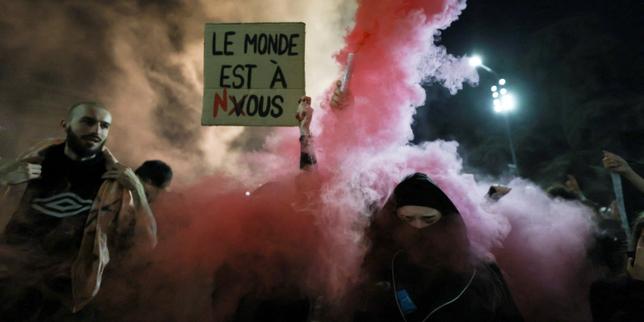
Mainstream coverage of the unrest in France keeps repeating the same simple script. According to standard political reporting, French citizens are taking to the streets because they hate President Emmanuel Macron, resent his top-down governing style, and reject specific policies like pension adjustments or budget cuts.
That narrative is convenient for headline writers, yet it completely misreads the mechanics of the French Fifth Republic. Focusing exclusively on Macron treats a structural, decades-old economic and institutional deadlock as a temporary personality clash. Political scientists and economists studying European labor markets have noted for years that the friction on French streets predates Macron’s presidency and will almost certainly outlast it.
The Structural Trap Behind the Street Mobilizations
To understand why France repeatedly erupts into nationwide strikes, you have to look at the design of the 1958 Constitution and the country's fiscal arithmetic, not just the occupant of the Élysée Palace.
Under the Fifth Republic, the executive branch holds sweeping constitutional authority—including mechanisms like Article 49.3, which allows the government to pass legislation without a direct parliamentary vote unless a motion of no confidence succeeds. Critics and opposition leaders rightly point out that bypassing the National Assembly fuels democratic frustration and makes compromise nearly impossible. When parliament is sidelined, labor unions and street movements naturally step in as the primary check on executive power.
At the same time, supporters of economic reform and fiscal analysts at institutions like the OECD point to an unavoidable demographic reality. France maintains one of the most generous public spending models in the developed world, with social expenditures consistently exceeding 30 percent of GDP. As the ratio of active workers to retirees shrinks, financing pensions, healthcare, and public services without raising already high tax rates becomes mathematically strained.
Two Competing Realities on the Ground
The clash in France is rarely a simple battle between "good" and "bad" actors. Instead, it is a collision between two internally consistent worldviews:
- The Social Contract Perspective: Labor unions, left-leaning economists, and millions of working-class protesters argue that public services and early retirement are hard-won pillars of French equality. From their vantage point, raising the retirement age or tightening unemployment benefits disproportionately punishes blue-collar workers with shorter life expectancies while leaving corporate profits and wealth taxes largely untouched.
- The Fiscal Sustainability Perspective: Centrist policymakers, business groups, and international credit agencies argue that without structural adjustments to labor participation and public debt, France risks losing fiscal sovereignty and hampering long-term growth. In their view, delaying reforms only guarantees harsher austerity measures down the road.
Why Blaming One Leader Distorts the Picture
Viewing every blockade and union march solely through the lens of anti-Macron sentiment obscures the broader European pattern. Similar debates over aging populations, inflation, energy costs, and stagnant real wages are destabilizing governments across the continent—from Berlin to London—regardless of whether the leadership is center-left, center-right, or populist.
Furthermore, France possesses a unique political culture where street mobilization is an established, institutionalized form of negotiation rather than a sign of imminent state collapse. Historically, major social concessions in France—from the 1936 Matignon Agreements to the 1968 Grenelle Accords—were hammered out only after massive strikes forced the state and employers to the bargaining table.
What Observers Should Actually Watch
If you want to gauge whether current protests represent a routine seasonal pressure campaign or a genuine political turning point, ignore the personality polling and watch three concrete indicators instead:
- Private Sector Participation: Public sector strikes in transit, education, and energy disrupt daily life immediately, but sustained economic pressure only occurs when private-sector workers join walkouts in significant numbers.
- Union Unity: The French labor movement is fragmented across rival confederations with competing ideological goals, such as the more reform-minded CFDT and the more confrontational CGT. When these groups maintain a united front, governments are forced to retreat; when they fracture, momentum fades.
- Parliamentary Coalitions: Without an absolute majority in the National Assembly, any French government relies on tacit toleration from opposition blocs to survive no-confidence votes. The real leverage lies in backroom legislative arithmetic, not just crowd sizes in Paris.
Replacing one president will not rewrite France's demographic curve, abolish Article 49.3, or reconcile high public spending expectations with sluggish productivity growth. Until France resolves how it wants to fund its social model and share political power between parliament and the presidency, the streets will remain the country's true arena of negotiation.