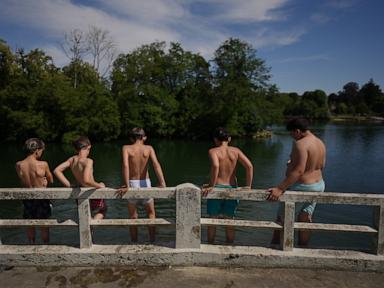
You can't drink a cold beer in public, and your afternoon soccer match is canceled. It sounds like a draconian lockdown, but it's the reality across a third of France right now. As a brutal heat wave pushes temperatures past 40 degrees Celsius, the French government did something unexpected. They targeted public drinking and outdoor physical activities.
If you think this is an overreaction, you don't understand how heat kills.
The national weather agency Meteo France placed 35 departments under a red heatwave alert. This includes Paris and the surrounding Île-de-France region. The timing couldn't be worse. The restrictions hit exactly during the annual Fête de la Musique, the massive midsummer solstice celebration that usually turns every street corner into a packed concert venue with flowing drinks. Prime Minister Sebastien Lecornu called an emergency crisis meeting to enforce these measures. Emergency services are stretched thin. The military is on high alert for wildfires. The government isn't just trying to keep people cool. They are desperately trying to stop a public health disaster.
The Science Behind the Booze Ban
Alcohol and extreme heat are a lethal combination. When the thermometer hits 41 degrees Celsius, your body works overtime to stay cool. It pumps blood to your skin and sweats profusely. This process requires a massive amount of water.
When you drink alcohol, you throw a wrench into this entire survival mechanism. Alcohol is a diuretic. It forces your kidneys to flush out water much faster than normal. You end up severely dehydrated before you even realize what's happening.
On top of that, alcohol tricks your brain. It numbs your perception of heat. You don't feel the warning signs of heat exhaustion because the alcohol makes you feel relaxed. Your internal temperature climbs. Your heart rate skyrockets. By the time you notice something is wrong, you're already sliding into heatstroke.
The French government saw the Fête de la Musique as a ticking time bomb. Thousands of people dancing in cramped, baking village squares while drinking alcohol would have overwhelmed local hospitals within hours. The official decree bans alcohol consumption in public spaces within the red alert zones. For all state-organized events, the instructions are absolute. No alcohol allowed. Medics need to focus on vulnerable people, not on treating heavily dehydrated partygoers who passed out in the street.
Why Outdoor Sports Had to Stop
Stopping people from running or playing sports during a heat wave seems obvious, yet many fitness enthusiasts refuse to stay indoors. That's why local prefects had to step in with mandatory cancellations.
When you exercise in 40-degree weather, your muscles generate immense internal heat. Your body relies almost entirely on the evaporation of sweat to cool down. If the air humidity is high, sweat doesn't evaporate. It just drips off you. Your cooling system fails completely.
Running a 5k or playing a match in these conditions can cause your core temperature to top 40 degrees Celsius in less than an hour. That is the definition of heatstroke. It leads to delirium, organ failure, and death.
The ban on outdoor sports events protects the athletes, but it also protects the emergency infrastructure. Every ambulance deployed to treat a collapsed runner is an ambulance that can't respond to an elderly person suffering a heart attack in an unairconditioned apartment.
The Haunting Shadow of 2003
To understand why French authorities are acting with such intensity, you have to look back to the summer of 2003. That year, a catastrophic heat wave caught France completely unprepared. More than 15,000 people died, mostly isolated elderly citizens left in boiling top-floor apartments while the country went on August vacation.
It was a national trauma. It changed how France views summer weather forever.
The current situation bears terrifying similarities. The urban heat island effect makes cities like Paris feel like literal ovens. The asphalt and concrete soak up the sun all day. At night, the temperature struggles to drop below 20 or 22 degrees Celsius. These tropical nights are dangerous. The human body needs cool night temperatures to recover from daytime heat stress. Without that break, the strain accumulates day after day.
France is simply not built for this. Air conditioning is rare in residential buildings and older schools. People rely on open windows and shutters to manage the indoor climate. When the outside air stays at 38 degrees, opening a window just lets the furnace inside.
Real Steps the Government is Taking Right Now
The restrictions are just one side of the coin. The government is also deploying resources to actively cool the population.
Paris has extended the opening hours of its parks and gardens, keeping them open 24 hours a day to give residents a place to find cooler air. The city activated a network of over 1,400 free cooling spots, including misting stations around the Eiffel Tower, public fountains, air-conditioned museums, and libraries.
A dedicated hotline is up and running to guide vulnerable people to help. Municipal workers are checking in on elderly residents who registered on vulnerable lists.
The economic cost is real too. Bank of France Governor Emmanuel Moulin noted that these prolonged heat waves drag down medium-term economic growth by reducing worker productivity and spiking energy usage. But right now, human lives take priority over the economic numbers.
How to Survive a Modern Heat Wave
If you are living through this heat wave or traveling in Europe right now, you need to change your daily routine immediately. Don't wait for a government decree to tell you how to stay safe.
First, fix your hydration habits. Drink water constantly. Do not wait until you feel thirsty because thirst means you are already dehydrated. Cut out the afternoon coffee, the sugary energy drinks, and definitely the alcohol.
Second, manage your home like a professional. Close your blinds, shutters, and windows the second the sun starts hitting your building in the morning. Keep them shut tight all day. You can hang a wet towel in front of a shaded window or use an indoor fan to blow air across a bowl of ice to create a crude cooling system. Only open the windows late at night when the outside air drops below the indoor temperature.
Third, change your schedule. If you must go outside to buy groceries or walk, do it before 9:00 AM or after 8:00 PM. Stay out of the midday sun entirely.
Finally, watch out for the people around you. Check on your neighbors. Call your older relatives twice a day. If you see someone on the street who looks confused, dizzy, or complains of a severe headache, don't ignore them. Call the emergency services immediately. This intense hot spell is widespread and long-lasting. Treat the weather like the extreme natural hazard that it actually is.