If you thought traditional global car giants were finally reclaiming their ground in China, you fell for a temporary illusion. Early this year, a sudden dip in domestic electric vehicle demand made it look like Volkswagen, Toyota, and other legacy names were staging a dramatic recovery. They weren't. What looked like a comeback was actually just a collective subsidy hangover.
China ended its long-standing purchase tax exemptions and trade-in incentives for new energy vehicles at the close of 2025. This policy shift caught local manufacturers off guard, causing a brief freeze in domestic buying. International brands quickly stepped into the vacuum, claiming a 39.8 percent chunk of the world's largest auto market in the first quarter of this year.
But that window closed fast.
Fresh data from the China Passenger Car Association shows that by April, the combined market share of foreign automakers tumbled back down to 30.3 percent. Local buyers returned to domestic electric options almost the moment new local incentives and massive battery upgrades hit the showrooms. The short-lived surge from legacy brands wasn't a sign of returning structural strength. It was a statistical blip.
The Illusion of the First Quarter
For decades, international marques dominated Chinese roads through massive joint ventures. When domestic EV sales dropped more than 10 percent in the opening months of this year, executive suites in Wolfsburg and Tokyo breathed a sigh of relief. They believed their conventional petrol models and slow-rolling hybrid programs were winning back the pragmatic consumer.
That belief was a mistake.
The decline in domestic EV sales wasn't caused by a sudden change in consumer taste. It was an artificial pause. Buyers simply waited to see how the market would adjust after the government dropped its previous incentive structure. While buyers hesitated, foreign brands cleared out inventory.
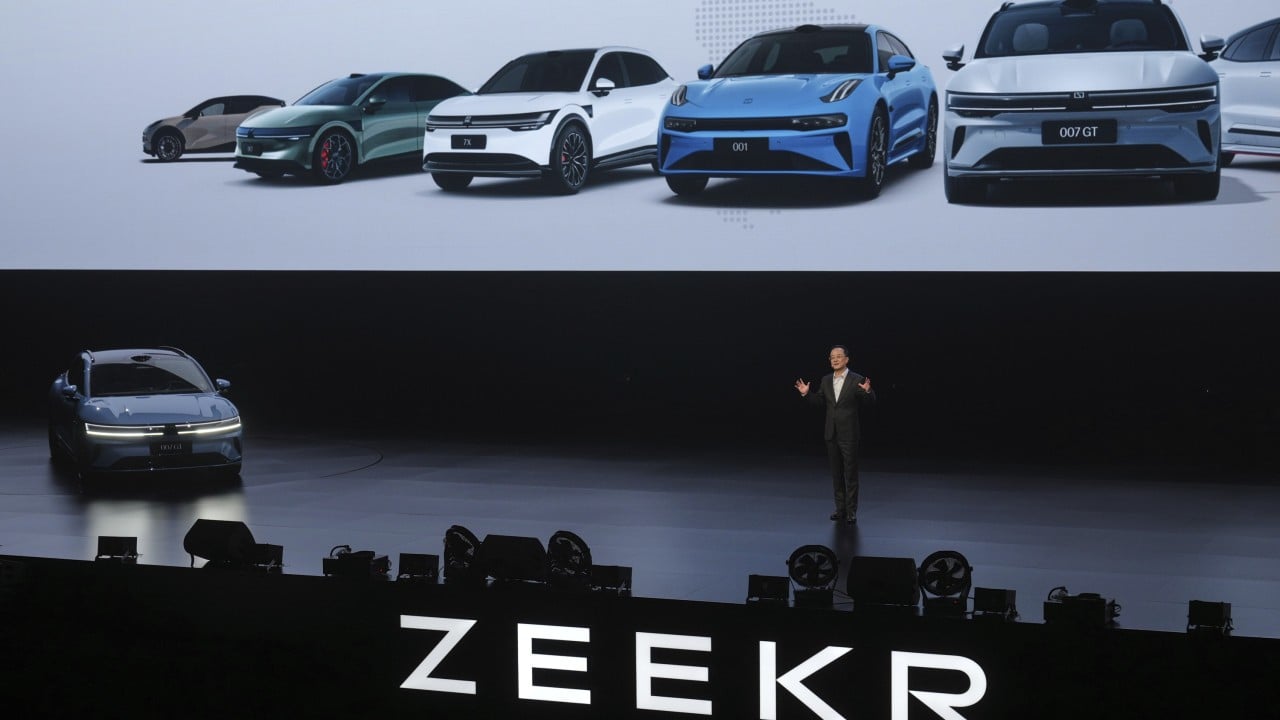
By the time May figures arrived, the reality became undeniable. Local brands surged back with overwhelming force. Zeekr smashed its all-time monthly delivery record, handing over more than 34,000 units. NIO jumped more than 62 percent year-on-year, propelled by its new mass-market sub-brands, Onvo and Firefly. Xiaomi proved its initial automotive success wasn't a fluke by delivering over 30,000 vehicles in May alone.
The brief window where legacy combustion engines looked safe has vanished.
Software Speed vs Legacy Inertia
The core reason international brands are losing this fight comes down to development cycles. Local auto executives don't think like traditional car manufacturers. They think like smartphone developers.
A standard European or Japanese car platform takes four to five years to develop, with mid-cycle refreshes happening every three years. In contrast, Chinese domestic brands iterate on software, in-car artificial intelligence, and autonomous driving features in cycles measured in months.
Consider how autonomous technology is deploying on the ground right now. While legacy companies struggle to integrate basic lane-keeping software across their global fleets, domestic options are moving rapidly into advanced autonomy. BYD has deployed its proprietary God's Eye driving system across more than 2.3 million vehicles. XPeng's latest VLA architecture is already operating under Level 4 pilot permits in major hubs like Guangzhou.
Even global pioneers are hitting localized roadblocks. Tesla still faces restrictions implementing its full autonomous driving package locally, leaving a massive opening that regional players are exploiting with hyper-localized software suites.
Foreign companies realize they can't bridge this gap alone. Instead of trying to out-develop local tech ecosystems, they're settling for becoming junior partners. We are seeing a massive wave of legacy brands partnering directly with regional tech giants for infotainment, battery management, and digital cockpits. They aren't leading the market. They are surviving by outsourcing their tech stacks.
Better Batteries and Fresh Incentives
The quick rebound of domestic brands wasn't just a result of tech features. It was driven by aggressive pricing and massive breakthroughs in battery tech.
Local manufacturers managed to offset the loss of old government subsidies by introducing cheaper, longer-range battery packs. Solid-state and advanced lithium-iron-phosphate chemistries are entering production faster here than anywhere else. These advancements allow companies to slash prices without destroying their margins.
At the same time, regional governments didn't stay quiet for long. New localized trade-in schemes and targeted municipal incentives rolled out across major cities in April and May, targeted specifically at new energy vehicles. This effectively neutralized the cost advantage that foreign petrol cars briefly enjoyed at the start of the year.
When a consumer can buy a highly connected, longer-range domestic EV for less than the price of a basic imported petrol sedan, the choice becomes easy. Product quality is no longer a differentiator that favors the West. Local buyers still respect the manufacturing history of legacy global brands, but they see petrol cars as yesterday's tech.
The Massive Export Safety Valve
The domestic market isn't the only place where global brands are feeling the heat. Because local capacity is so massive, regional manufacturers are utilizing an aggressive export strategy to keep factories running at scale, protecting their cost advantages even when domestic numbers fluctuate.
According to customs data, China exported more than 400,000 electrified vehicles in April alone. That brought the total for the first four months of this year to nearly 1.4 million units, more than double the volume recorded during the same period last year.
Western regulators are trying to stop this flow by building massive tariff walls. The United States put a 100 percent tariff on Chinese EVs and is advancing laws to block them entirely. Europe has hit major players with steep anti-subsidy duties, penalizing companies like SAIC and Geely.
It isn't working the way Western policymakers hoped.
Automakers are simply pivoting to places where barriers don't exist. Look at Brazil. Shipments of Chinese EVs to the country surged 221 percent year-over-year in April, making it the single largest destination for these vehicles. In markets outside Europe and the US, Chinese models now command roughly 55 percent of all EV sales. They are dominating Southeast Asia, Latin America, and the Middle East because they offer unbeatable value in regions where consumers are highly price-sensitive.
Even in protected markets like Australia, the shift is highly visible. In May, the Chinese-made Tesla Model Y took the top sales spot nationwide, while BYD and Chery registered massive volume gains. Meanwhile, traditional market leaders like Toyota saw their year-to-date delivery numbers drop significantly.
How to Navigate the New Reality
If you are trying to understand where the automotive sector goes next, stop looking for a legacy revival in China. The structural advantages of the local ecosystem are too deeply entrenched. The country controls over 80 percent of global battery cell production and holds the vast majority of patents in electric propulsion.
For investors, analysts, and supply chain managers, the actionable path forward requires changing how you evaluate market strength.
First, ignore short-term fluctuations caused by policy shifts or subsidy roll-offs. Look at moving averages over six months rather than month-on-month spikes to judge true structural health.
Second, evaluate legacy car companies based on their partnerships rather than their internal R&D. A foreign brand with a deep, functioning joint venture with a local tech provider has a far better chance of retaining its remaining market share than one trying to build its own software stack from scratch.
Third, watch emerging markets like Brazil, Thailand, and the Gulf states. These regions are the true battlegrounds where global market share is being rewritten. Whichever brand wins the affordable EV race in these developing infrastructure environments will control the global volume charts for the next decade. The era of Western and Japanese dominance in these neutral territories is ending.