Silence.
That is the first thing a planetary geologist notices when she stops staring at telemetry graphs and pictures what is actually happening 22,000 kilometers above a rust-red desert. There is no wind on Phobos. No ocean roar. No rustle of dry grass. Just a lumpy, potato-shaped rock—roughly 27 kilometers across at its widest stretch—hurtling around Mars faster than the red planet spins, dragged inward by gravity at a rate of about two centimeters every year until, tens of millions of years from now, it will either tear apart into a temporary ring or smash into the surface below.
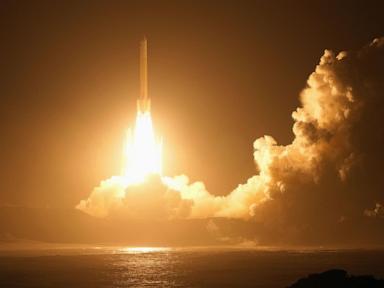
And yet, out of a coastal launch complex in southern Japan, engineers are sending a spacecraft toward this improbable little world to scoop up its dust and bring it home to Earth.
Why? On paper, the answer sounds dry. A sample return mission. Martian moons. Planetary formation. Planetary scientists love clean summaries like that. They make multi-billion-dollar gambles sound like neat entries on a syllabus.
They aren't.
When I first stood inside a cleanroom years ago—not for a Mars moon mission, but watching technicians hover gloved hands over dark, carbon-rich grains brought back from deep space—I felt a sudden, disorienting vertigo. Those specks looked like ordinary charcoal. Nothing glinted. Nothing hummed. Yet locked inside their crystal lattices and organic traces were chemical receipts from billions of years ago, before continents drifted, before oceans settled, before anyone on Earth had eyes to wonder where the water came from.
If you have ever wondered why space agencies spend years and fortunes chasing crumbs of rock instead of sending people straight to the big, dramatic headlines, you are not alone. It can feel counterintuitive, even frustrating, when the news is full of urgent problems right here on the ground. Why chase a pebble around Mars when we still have mysteries on our own doorstep?
Hold onto that skepticism. It is the right place to start.
The Mystery Hiding in Plain Sight
To understand why Japan’s Martian Moons eXploration—known to everyone on the team as MMX—matters, you have to look at two tiny moons that don't quite behave like proper moons at all.
Mars has two of them: Phobos and Deimos. Compared to our own bulky, round Moon, these two are misshapen little drifters. Phobos is scarred by Stickney, a colossal impact crater so wide relative to the moon itself that the blow nearly shattered the body. Grooves streak across its surface like claw marks from an ancient collision or tidal stress.
For decades, scientists have argued over a deceptively simple question: Where did these moons come from?
There are two main competing stories. One says Phobos and Deimos are captured asteroids—wandering space rocks from the main asteroid belt between Mars and Jupiter that got snared by Martian gravity long ago. The other says they were born out of a violent catastrophe: a massive object slammed into young Mars, blasting debris into orbit that clumped together into moons, much like the leading theory for how Earth got its Moon.
Notice that I am using a detective story here as a metaphor for scientific deduction. Real science doesn't wear a trench coat, and it doesn't solve cases in an hour. It collects microscopic clues over decades and waits for the evidence to line up.
Here is why the distinction between "captured asteroid" and "giant impact debris" isn't trivia. If Phobos is a captured asteroid, its soil holds preserved material from the early solar system—possibly rich in water and organic compounds from the outer reaches of space. If it formed from a giant impact on Mars, its surface is a mix of Martian crust and impactor material, offering a backdoor way to sample ancient Mars without fighting through the red planet's thin atmosphere and rough terrain.
Orbiters with cameras and spectrometers can guess at those origins from afar. They can measure reflected light and map craters. They cannot weigh a single grain on a terrestrial balance, slice it with an ion beam, or run the full suite of high-precision lab instruments that only exist back on Earth.
To know for sure, you have to bring pieces home.
A Hypothetical Morning in Sagamihara
Imagine—and here I am stepping into a clearly hypothetical scenario to make the human stakes concrete—a quiet weekday morning at a laboratory in Sagamihara, Japan, years after launch.
Call the lead curator Kenji. Kenji has spent half his career staring at simulations of low-gravity regolith, worrying about how dust behaves when gravity is roughly one-thousandth of Earth's. On Phobos, if you drop a wrench, it doesn't thud to your boots; it drifts lazily toward the ground like a leaf in slow motion. If a spacecraft touches down too hard or fires thrusters at the wrong angle, it can kick up a cloud of abrasive dust or bounce unpredictably.
In our hypothetical scene, the return capsule has already survived atmospheric reentry, touched down safely, and been carried into a sealed curation facility. Kenji sits beside an isolator glovebox, his pulse steady from years of practice, waiting for the first container seal to crack open.
Inside that canister sit tens of grams—or perhaps a little more, depending on how cleanly the sampling mechanism bites into the surface—of Phobos regolith. A handful of dark gray powder.
To anyone walking past the glass window, it looks like sweepings from a gravel driveway. To Kenji, every dark speck is a time capsule. If those grains carry hydrated minerals or carbon compounds, they could reshape how scientists think about ingredients for life moving across the inner solar system. Even if they turn out to be dry and battered, every isotope ratio tells a story about how young planets collide, melt, cool, and shed their early atmospheres.
That is the emotional core that standard press releases flatten out. Space exploration isn't just rockets firing into the dark. It is human patience stretched across years of orbital mechanics, sleepless nights over thermal cycling, and quiet awe when a machine thousands of kilometers away obeys a command sent across millions of kilometers of void.
Why Phobos Is Harder Than It Looks
If you have never worked on a deep-space mission, it is easy to assume that landing on a moon smaller than a city is simpler than landing on a whole planet.
Smaller gravity means gentler landings, right?
Not quite. Low gravity is a double-edged sword. Yes, a spacecraft falls slowly toward Phobos. That gives you time—and also gives tiny errors plenty of room to compound. On a body with such weak gravitational pull, a slight sideways drift or a tiny bounce can send a lander skimming off into space instead of settling firmly onto the surface.
Then there is the environment itself. Phobos orbits so close to Mars—about 6,000 kilometers above the Martian surface, compared to roughly 384,000 kilometers between Earth and our Moon—that it sits squarely inside the Martian neighborhood's complex magnetic and solar-wind interactions. Particles blasted off Mars's upper atmosphere can rain down onto Phobos over geological time, implanting chemical traces of ancient Mars into the moon's top layer.
Think of Phobos as a cosmic windshield sitting in front of Mars. Over millions of years, material escaping from the red planet drifts outward and coats the moon's surface. Bring a sample of Phobos back to Earth, and scientists may get not only the history of the moon itself, but also chemical fingerprints of Mars's past climate and atmosphere—without having to survive a fiery descent through Martian skies and climb back out of Mars's deeper gravity well.
That insight changes the math of exploration. Returning samples directly from the surface of Mars is notoriously difficult and expensive. Sampling Phobos offers a clever, high-value detour: reach out to the Martian system, gather material from an orbiting stepping stone, and head home.
The Quiet Weight of Long Horizons
Modern life trains us to expect instant answers. We tap a screen, wait two seconds, and get a translation, a weather forecast, or a video from the other side of the world.
Space missions operate on a different clock. They demand a kind of cultural stamina that feels almost radical in a hurry-up era. From early concept studies to launch, cruise across interplanetary space, orbital insertion, sample collection, and the long voyage back to Earth, a mission like MMX spans years—and the laboratory analysis of the returned samples continues for decades after that as newer instruments are invented.
I will admit something candidly: when I look at timelines stretching a decade or more into the future, part of me wonders how any team keeps its nerve. Funding shifts. Priorities change. Hardware faces unforgiving physics where there is no tow truck and no second chance on a failed valve.
Yet history shows that this patient craft is one of humanity's most reliable engines of discovery. Japan's space program has already proven it knows how to pull off audacious small-body sample returns, having previously brought back material from asteroids like Ryugu through Hayabusa2. Each mission builds institutional memory—the kind of hard-won engineering wisdom that only comes from trying, adjusting, and trying again.
And there is something deeply human about a country investing in a question whose payoff won't even be fully measured for years. It is an act of faith in curiosity. It says: we are not finished learning how our planetary neighborhood came to be, and we are willing to do the painstaking work required to find out.
What This Journey Really Means for Us
You don't need to be an astrophysicist to feel the pull of a story like this.
At its heart, sending a spacecraft to Phobos and bringing pieces of it back to Earth is about connection. It connects a tiny, doomed moon orbiting a cold desert world to a laboratory bench where human hands can examine it under microscopes. It connects ancient cosmic collisions—events that happened long before any river carved a valley on Earth—to present-day questions about how planets acquire water, how moons form, and how rare or common habitable conditions might be.
Some people will watch this mission for the engineering spectacle: the precision navigation, the rendezvous with a fast-moving target, the choreography of getting a return capsule safely back through Earth's atmosphere. Others will watch for the science—whether Phobos turns out to be a captured asteroid or debris from a giant impact.
Both matter. Together, they remind us that even when we are bound by gravity, bills, deadlines, and everyday worries, our minds are still capable of reaching across millions of kilometers of empty space just to hold a pinch of the past in our hands.
Out there above the red sands of Mars, a quiet, battered moon keeps circling in the dark. Soon, a machine built by human hands will reach out, touch its dust, and turn around for home—carrying a piece of another world back to ours.