November. The Texas wind usually arrives with a sharp edge, rattling the dry grass around the perimeter fences of Fort Hood. For most, it is just a change in season. For the families who keep vigil over memory, November carries the scent of gunsmoke frozen in time.
Fifteen years have passed since the quiet afternoon of November 5, 2009. On that day, the Processing Center at the massive military installation did not sound like a place of administration. It sounded like a war zone. Thirteen lives were extinguished in minutes. Dozens more were altered forever, carrying shrapnel in their flesh and ghosts behind their eyes.
Justice in military jurisprudence moves with a deliberate, agonizing slowness. Appeals are filed. Briefs are stacked. Courtrooms echo with legal arguments about the definition of mental state, religious motivations, and the parameters of capital punishment under the Uniform Code of Military Justice. Yet, beneath the legal filings lies a raw human demand for closure that refuses to quiet down.
Consider what it means to wait for an ending.
When a court martial hands down a death sentence, the public often imagines an immediate finish. Movies have taught us to look for the sudden drop of a gavel, the swift walk down a green-mile corridor. Real life is far more bureaucratic, tangled in endless reviews, presidential signatures, and constitutional safeguards. But recent developments have shifted the horizon. Conversations about the broadcast of executions have moved from theoretical legal journals into the harsh light of public scrutiny. The prospect of a live transmission brings a new, chilling dimension to state-sponsored finality.
Imagine sitting in a living room in Killeen, Texas. The coffee is cold. The television screen is black. The clock ticks forward. You are waiting to watch a man answer for the blood of thirteen people.
Would watching it heal? Or would it simply stretch the wound across millions of glowing screens?
The Anatomy of a Tragedy
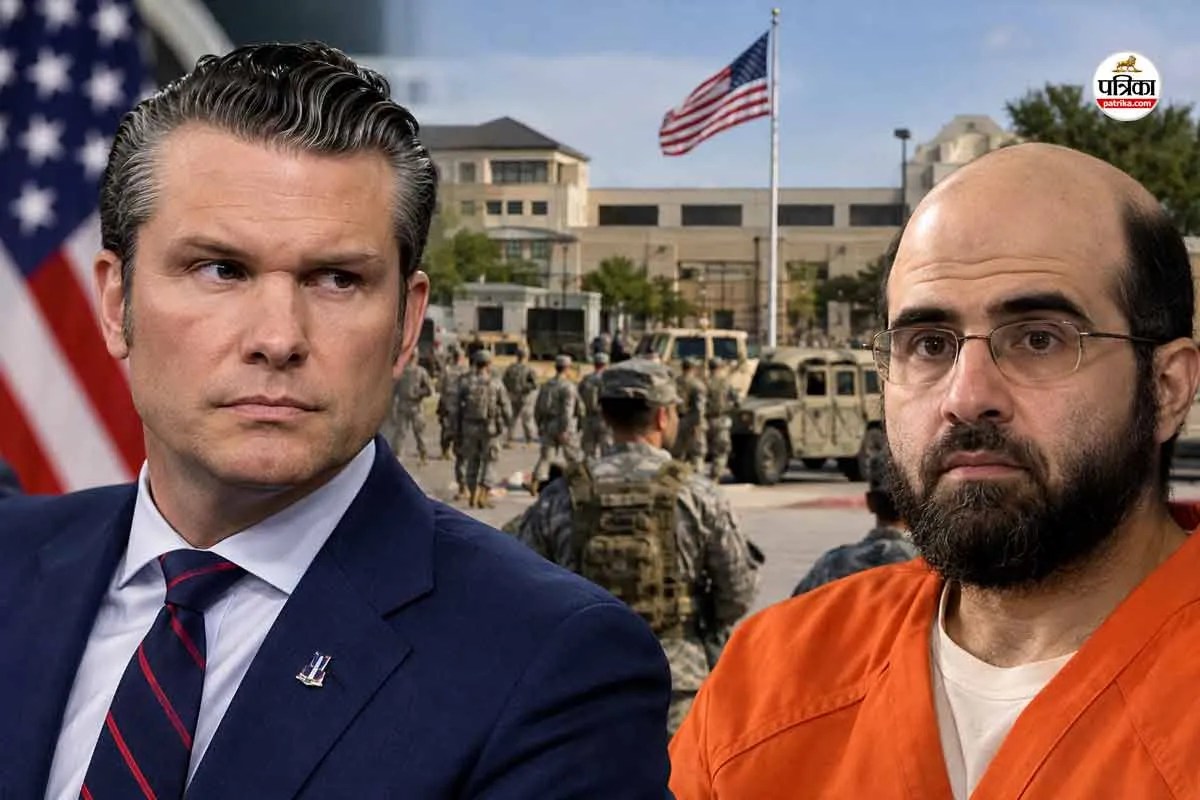
To understand why this moment matters, we have to step back into the chaos of 2009. Nidal Hasan, a U.S. Army Major and psychiatrist, walked into the Soldier Readiness Processing Center wearing his uniform. He carried a customized FN Herstal pistol and two laser-sighted magazines. Within ten minutes, he fired nearly two hundred rounds.
He targeted unarmed soldiers. Men and women preparing to deploy, sitting at desks, clutching paperwork.
Among them was Private Francheska Velez, who was nineteen weeks pregnant. She pleaded for the life of her unborn child before she was struck. There was Michael Cahill, a retired master sergeant who worked as a civilian physician assistant, who charged at the shooter with a chair to buy time for others to escape. There were young privates, seasoned sergeants, and officers who had survived tours in Iraq and Afghanistan, only to fall on domestic soil by the hand of one of their own.
The physical injuries healed for some, but the psychological shrapnel embedded itself deeply into the culture of the United States armed forces. The military prides itself on unit cohesion, on the sacred bond of trust that says your brother or sister in uniform has your back. When that trust is shattered from within, the betrayal cuts deeper than any foreign weapon.
The Machinery of Punishment
The legal battle that followed was unprecedented. Hasan chose to represent himself, turning his trial into a political and ideological platform. He admitted to the shootings, offering a twisted justification rooted in his opposition to American military actions in Muslim-majority nations. In August 2013, a military jury took just two hours to sentence him to death.
Yet, execution in the federal and military systems is a rare and complicated beast. The federal government went through long moratoria. The military death row at the United States Disciplinary Barracks in Fort Leavenworth, Kansas, holds men convicted of heinous crimes, but executions are practically nonexistent. Decades pass between sentence and execution.
This brings us to the modern pivot point. The debate over broadcasting the execution is not merely about logistics; it is about the theater of accountability. Proponents argue that transparency is vital for public trust. If the state takes a life in the name of justice, the public has a right to witness the execution of that mandate. It strips away the anonymity of state violence. It forces society to look directly at the consequences of its laws.
Critics, however, warn of a dangerous descent into spectacle. Turning an execution into a broadcast event risks transforming a solemn act of legal retribution into global entertainment or political theater. It can martyr the guilty in the eyes of extremists or satisfy a collective bloodlust that degrades the moral standing of the justice system.
The Human Cost of Visibility
Step into the shoes of a survivor. Let us call him Marcus. He took three rounds to the shoulder during the rampage. He spent months learning how to lift a cup of coffee with his left hand.
Marcus does not care about the legal debates surrounding broadcast technology. He cares about the silence in his house when his wife and children are asleep. He cares about the nightmares that smell like cordite and cheap linoleum. For Marcus, watching a screen will not bring back his friends. It will not rewrite the afternoon of November 5.
Visibility can often act as a double-edged sword. When trauma is televised, it ceases to belong to the victims. It becomes public property. It is clipped, shared, analyzed, and monetized by algorithms that care nothing for the sanctity of human grief.
When we talk about broadcasting an execution, we are wrestling with our own voyeurism. Are we seeking justice, or are we seeking a cathartic flash that momentarily fills the void left by an unresolved trauma?
The Broader Mirror
Fort Hood was renamed Fort Cavazos in 2023, part of a broader effort to shed Confederate names and reset the cultural identity of the base. Yet, names on a map change faster than the memories etched into the souls of those who served there.
The story of this impending execution is a mirror held up to modern society. It forces us to ask uncomfortable questions about how we handle the worst among us. Can a democratic society maintain its ethical footing while employing the ultimate punishment? Does televising state-wrought death elevate our accountability, or does it drag us down into the mud of vengeance?
There are no easy answers here. The law provides rules, but human emotion defies tidy categorization.
The wind continues to blow across the plains of Texas. Families still gather on anniversaries to read thirteen names aloud, their voices cracking in the autumn chill. They do not need a television screen to remember. They carry the absence every single day.
Justice, when it finally arrives, will not be a moment of triumph. It will be quiet. It will be heavy. And when the switch is pulled or the injection flows, the true test will not be whether the world is watching, but whether the survivors can finally find peace in the quiet that follows.