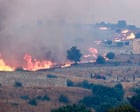
Every summer, the media treats wildfires like a cinematic horror movie. Flames tear across the Greek countryside, tragedy strikes, firefighters lose their lives on Crete and the mainland, and the consensus narrative writes itself: climate change is turning the earth to ash, our heroes are outgunned, and we need more water planes, more personnel, and more emergency funding to hold back the inferno.
It is a comforting narrative because it assigns blame to an abstract enemy—weather—while praising the ultimate sacrifice of the people on the ground.
It is also dangerously wrong.
I have spent decades watching disaster management budgets balloon while local communities grow increasingly helpless. When three more firefighters die in Greece, the collective grief obscures a systemic failure. We are doubling down on an industrial fire-suppression model that has outlived its utility. We treat every spark as a crisis while actively preventing the only mechanism that keeps forests alive: fire itself.
The lazy consensus says we need to suppress harder, faster, and with more force. The reality is that modern wildfire management is a feedback loop of our own destruction.
The Suppression Trap
To understand why firefighters are dying in places like Crete, you have to look at the math of fuel loading.
For a century, institutional wildfire agencies operated under a simple dogma: put every fire out by 10 AM. It sounded smart on paper. In practice, it turned manageable woodlands into powder kegs. When you suppress low-intensity fires year after year, you do not stop fires from happening. You merely defer them. You store up tinder, dead brush, and dense canopy layers until the forest floor is a literal fuel warehouse.
When a spark finally catches in an ecosystem choked by decades of unburned debris, it does not burn like a normal fire. It explodes into a crown fire that moves faster than human legs can run, creates its own weather systems, and reaches temperatures hot enough to melt engine blocks.
This is what killed those firefighters in Greece. They were not outmatched by nature; they were outmatched by an accumulated century of bad policy.
When you send crews into an over-fueled forest with the directive to stop an unstoppable wall of energy, you are not fighting a natural disaster. You are cleaning up the bill for decades of bureaucratic cowardice.
The Wrong Questions
If you look at public discourse surrounding European wildfires, the questions asked by journalists and politicians follow a predictable, useless script.
People ask: How many more aircraft do we need? Why are response times lagging? How do we protect every single structure at the edge of the wildland-urban interface?
These are the wrong questions. They assume the system is fundamentally sound and merely under-resourced.
The honest question is much more uncomfortable: Why are we building homes in high-risk chaparral zones, and why are we legally prohibiting the targeted, low-intensity burns that could clear out the understory before summer hits?
In places like Greece, historical land-use patterns—grazing goats, clearing underbrush, small-scale mosaic burning by local farmers—used to keep fuel loads manageable. Modern centralized governments criminalized or discouraged these traditional practices in favor of a centralized, militarized fire brigade model.
We replaced local stewardship with heavy machinery and water bombers. Then we acted shocked when the forests burned anyway.
The Economics of Disaster
There is a perverse financial incentive at play here. Crisis management pays. Prevention does not.
Governments will happily sign emergency checks for hundreds of millions of euros to lease firefighting aircraft from international vendors during peak season. They will hold press conferences, weep for fallen heroes, and promise upgraded gear.
Try asking that same ministry for a modest budget to fund controlled burns in November, and watch how fast the room clears out. Prescribed burns are politically toxic. If a controlled fire escapes—as happened with the infamous Cerro Grande fire in New Mexico—heads roll, lawsuits fly, and careers end.
So risk-averse bureaucrats choose the path of least immediate resistance: do nothing, let the fuel accumulate, and cross your fingers that the wind blows away from populated areas. When it doesn't, they call it an unprecedented tragedy.
It is not unprecedented. It is actuarial certainty.
Dismantling the Hero Narrative
We need to talk about the human cost of this institutional failure.
Every time a firefighter dies on the line, public mourning masks a deeper exploitation. We wrap structural incompetence in the flag of heroism. We tell young recruits that dying on a ridge in Crete is the ultimate honor, rather than admitting that poor forestry management and bad tactical placement put them there in the first place.
True respect for firefighters means refusing to send them into unwinnable meat-grinders created by systemic policy failures. It means admitting that aggressive suppression in high-risk zones is often counterproductive.
Imagine a scenario where emergency agencies cut their suppression budgets by thirty percent and redirected every cent toward mechanical thinning, pastoral grazing incentives, and aggressive community-level defensible space enforcement. Imagine a landscape where smoke in the spring is welcomed as life support rather than feared as an emergency.
It sounds radical only because we have spent seventy years convincing ourselves that we can conquer ecology with water hoses.
We cannot. The atmosphere does not negotiate. The fuel load does not care about your political platform.
Until we stop treating every fire as an existential enemy and start treating it as an inevitable ecological process, more people will die for our collective refusal to look at the forest through the trees.
Stop buying more planes. Start letting the woods burn on our terms, or pay the price in blood when they burn on theirs.