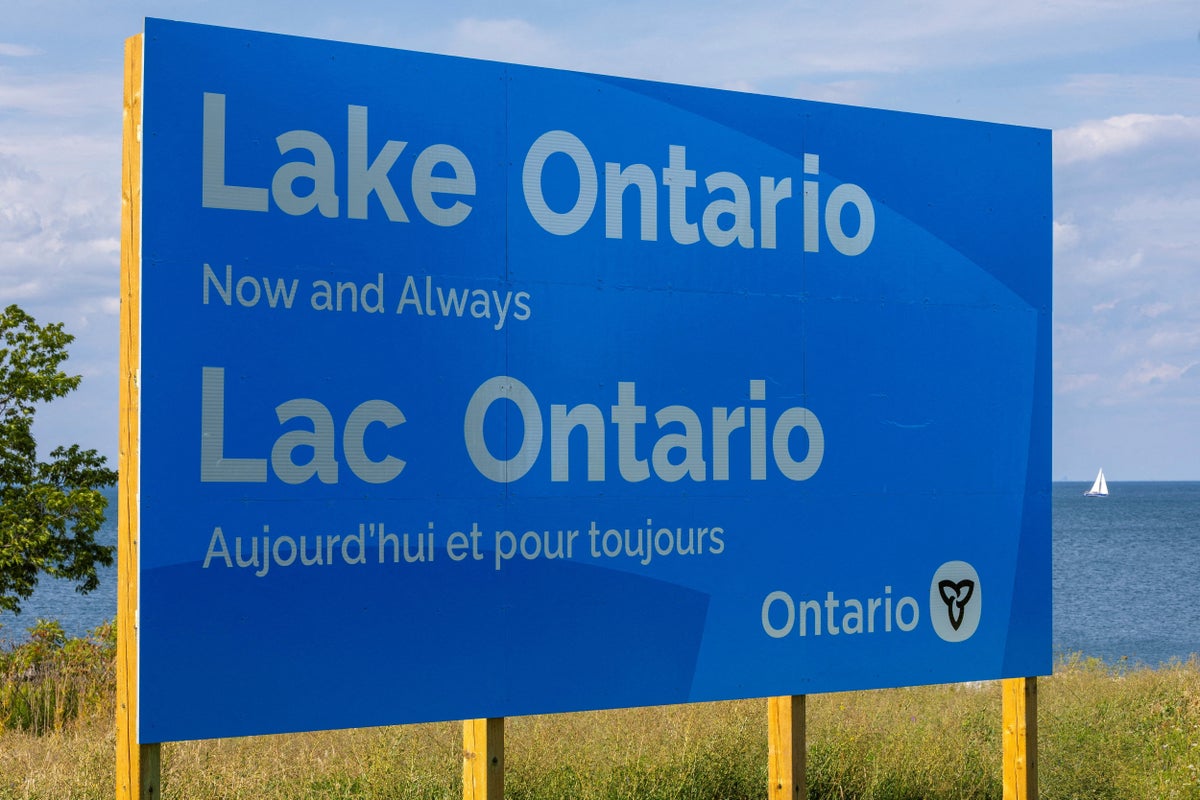
The outrage machine broke its collective ankle this week over a piece of paper signed in the Oval Office. Donald Trump issued an executive order commanding federal agencies to refer to Lake Ontario as Lake America within United States borders. Editorial boards wailed. Canadian politicians scrambled to post historical facts about Indigenous Wendat translations on social media. Pundits declared the move an absurd, toothless stunt destined for the ash heap of bureaucratic irrelevance.
They are missing the point entirely.
Focusing on whether a body of water is officially "Ontario" or "America" treats cartography as a sacred, static artifact carved into stone. It is not. Maps have always been instruments of power, statecraft, and unilateral assertion. Complaining that an executive order cannot rewrite physical reality misunderstands what an executive order is designed to achieve.
The Cartographic Illusion
We grow up believing that maps are objective mirrors of physical terrain. This is a comforting fairy tale. Names on maps are political claims masquerading as consensus. The Geographic Names Information System managed by the United States Geological Survey does not exist to record the universe's objective truths; it exists to standardize federal data.
When the White House orders the Department of the Interior to update its internal databases within thirty days, it is exercising a well-documented domestic legal authority. Sovereign nations rename geographic features within their jurisdiction all the time to suit domestic political or cultural mandates. Mount McKinley became Denali by executive stroke of the pen under the Obama administration in 2015. No mass hysterias erupted demanding Alaska secede over topographical nomenclature.
The double standard isn't that Trump did it. The double standard is that people pretend maps are neutral until a populist weaponizes them for leverage in a trade war over fifty percent tariffs.
Leverage Disguised as Geography
Critics point out that Canada will keep calling it Lake Ontario, that New York's governor refuses to update state-level signs, and that international maritime bodies do not care. Yes. Obviously. That is a feature, not a bug, of the strategy.
Imagine a scenario where a corporate CEO rebrands a shared product line unilaterally to force a recalcitrant supplier back to the negotiating table. It looks petty from the outside. It causes grumbling in the supply chain. But it shifts the psychological center of gravity in negotiations.
Trump’s move is not a geographic masterstroke; it is a tactical distraction grenade paired with economic pressure. While trade analysts spend days debating the linguistic roots of oniatarí:io, the underlying fifty percent tariff on twenty billion dollars of Canadian goods remains firmly anchored in reality. The name change acts as a brilliant, high-visibility anchor that forces adversaries to spend finite political capital reacting to a sign on a map rather than talking strategy.
Why the Counter-Outrage Fails
Canadian Prime Minister Mark Carney and provincial leaders like Doug Ford rushed to microphones to defend the 400-year-old name. They missed the trap. By taking the bait, they validated the premise that this minor administrative tweak poses an existential threat to Canadian sovereignty.
It does not. Private mapmakers like Google or Apple will handle this the same way they handled the previous year's "Gulf of America" rebranding: they will regionalize the data layer. Users inside the United States will see one label; users in Toronto will see another; the rest of the world will see a hyphenated compromise. Digital cartography is infinitely malleable. It is a software feature, not a territorial annexation.
Getting red-faced over a presidential decree changing a federal database entry demonstrates a profound baseline illiteracy regarding how modern administrative states project leverage. Stop screaming about international law when the game being played is psychological warfare.
The map has already changed on your federal weather app. The tariffs are still hitting the docks. And the people losing are the ones still arguing about what to call the water while the ship goes down.
Lake Ontario business owner laughs off Trump's 'Lake America' name change
A local business owner near the lake demonstrates how everyday people navigate political name changes with humor rather than manufactured panic.