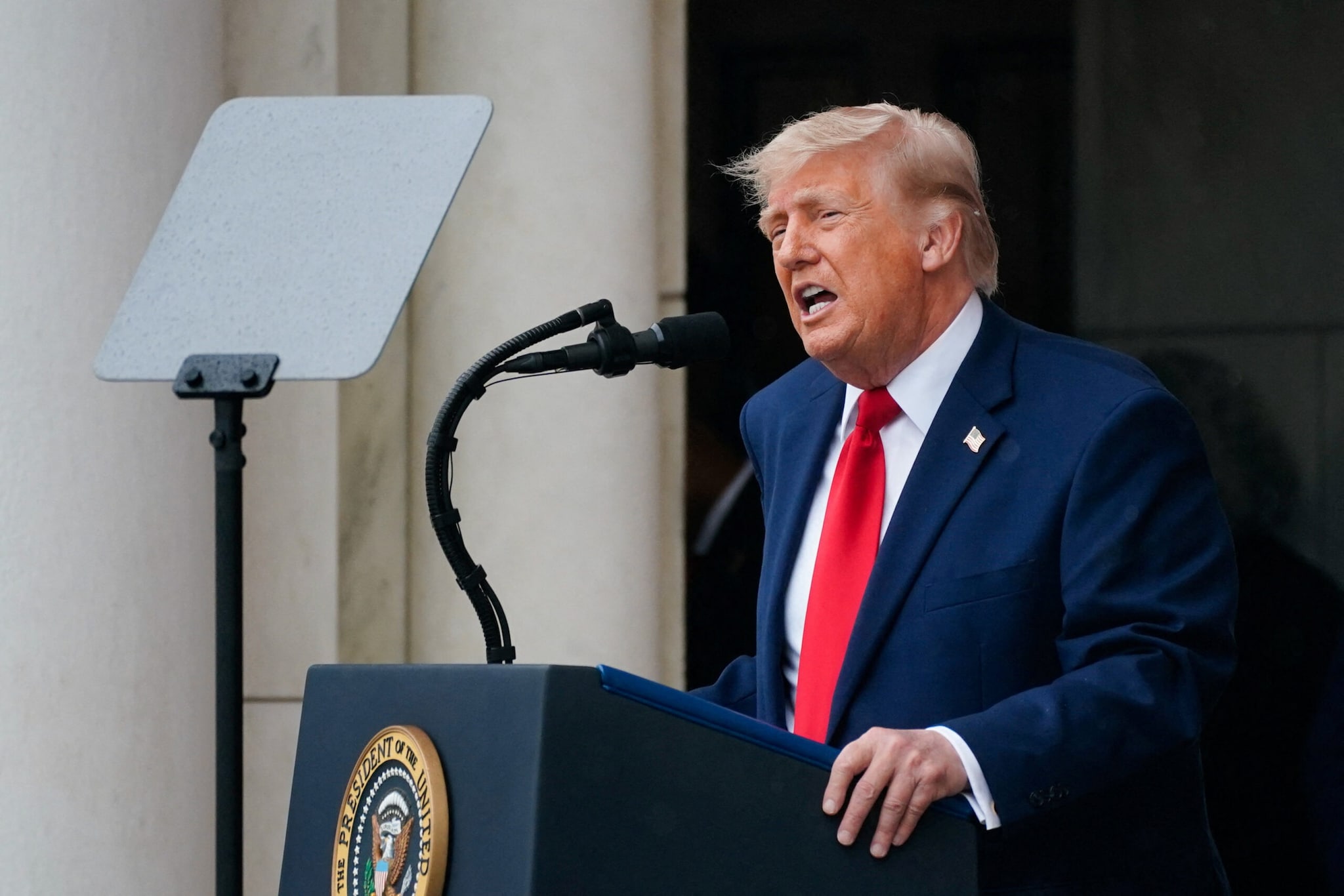
The headlines write themselves every November. A federal prosecutor stands at a podium in Los Angeles, looks grimly into the cameras, and announces that "multiple election fraud investigations are underway." The media goes into a frenzy. Mainstream outlets treat it as smoking-gun proof of a crumbling democracy. Partisan commentators weaponize the soundbite to validate their deepest conspiracies.
Everyone tunes in. Everyone picks a side. And everyone misses the point.
The lazy consensus surrounding these announcements is that headline-grabbing federal investigations signify widespread, systemic vulnerabilities in the voting apparatus. The reality is far more mundane, cynical, and institutional. These public pronouncements are not the opening salvos of a constitutional crisis. They are a masterclass in bureaucratic self-preservation and political theater.
The Mirage of the Active Investigation
When a United States Attorney announces an ongoing probe into election irregularities, the public envisions a team of elite federal agents kicking down doors, seizing hard drives, and unearthing a coordinated underground network of bad actors.
I have spent decades tracking how federal agencies manage public perception and resource allocation. Here is how the machinery actually works: the barrier to opening a federal "investigation" is laughably low.
An investigation can be triggered by a single, unverified tip from a disgruntled partisan, a clerical error by an overworked volunteer in a precinct basement, or a routine data discrepancy that automatically flags a file. Opening a file requires minimal paperwork. It satisfies the institutional mandate to "do something."
To understand why these announcements happen, you have to understand the internal incentives of the Department of Justice. Federal prosecutors operate in an environment where budget allocations, career advancement, and public relevance depend entirely on perceived activity. Announcing an investigation costs nothing, commits the office to nothing, and guarantees front-page coverage. It creates the illusion of vigilance while committing zero actual liability.
The Math of Scale vs. The Myth of the Fraud Syndicate
Let us dismantle the logistics of the "coordinated fraud" myth using basic operational realities.
To swing a federal election through illicit means requires an operation that is simultaneously massive in scale and completely invisible to detection. In the data-heavy environment of modern American voting, those two conditions are mathematically incompatible.
Consider the sheer fragmentation of the American voting system. There is no singular, centralized federal election system to hack or manipulate. Instead, the United States runs fifty distinct state systems, broken down further into more than 3,000 counties, and subdivided into hundreds of thousands of individual precincts. Each jurisdiction utilizes different machinery, different voter registration databases, different auditing protocols, and different physical security measures.
Imagine a scenario where a rogue entity attempts to inject 10,000 fraudulent ballots into a metropolitan area like Los Angeles County. To achieve this without triggering immediate, automated alarms, the perpetrators would need to:
- Acquire valid names and addresses of registered voters who they are certain will not show up to vote.
- Intercept or forge thousands of signatures with enough accuracy to pass automated forensic screening.
- Coordinate hundreds of field operatives to physically submit ballots or infiltrate secure facilities.
- Ensure that none of these hundreds of co-conspirators leaks the plan to the press, brags on social media, or flips under interrogation.
The logistical complexity of executing this far exceeds the operational capabilities of even the most sophisticated intelligence agencies. Yet, the public routinely buys into the narrative that a loose confederation of local political operatives can pull it off over a weekend.
The Brennan Center for Justice has repeatedly analyzed voting data across millions of ballots cast in federal elections. Their findings consistently place the rate of actual, intentional voter impersonation or fraudulent casting at between 0.0003% and 0.0025%. To put that in perspective, an American citizen is more likely to be struck by lightning than to commit actionable federal election fraud.
The "multiple investigations" touted by prosecutors almost always boil down to administrative noise: an elderly citizen inadvertently voting in two states because they moved mid-year, a felon who genuinely believed their voting rights had been restored, or a signature on a mail-in ballot that changed due to arthritis. These are tragedies of bureaucracy, not triumphs of subversion.
The High Cost of Institutional Performance Art
There is a dark side to this contrarian view. While the investigations themselves rarely yield anything more than a handful of misdemeanor plea deals or dismissed charges years after the fact, the damage done by the announcement of the investigation is permanent.
By validating the premise that the system is under existential threat every time a routine check is performed, federal prosecutors actively erode public trust. They trade long-term institutional stability for short-term media relevance.
When the Department of Justice plays into this cycle, they create a feedback loop. The public demands investigations based on rumors. The prosecutors open investigations to appease the public. The media reports on the investigations as proof that the rumors were true. The cycle repeats, the temperature rises, and the actual mechanics of governance grind to a halt.
What the Public Actually Needs to Question
Instead of asking, "Who is stealing the votes?" citizens should be asking entirely different, far more uncomfortable questions about the efficiency of our civic infrastructure.
Why are voting systems structurally inefficient?
The focus on malicious fraud obscures the far more pressing issue of systemic incompetence. Long lines, broken machines, poorly trained poll workers, and outdated voter registration software do far more to disenfranchise voters than any hypothetical foreign hacker or domestic conspirator.
How much public capital is wasted on performative audits?
Millions of taxpayer dollars are routinely diverted into post-election reviews and special investigative units designed to find a needle that does not exist in a haystack that was never built. This is capital that could be used to upgrade physical infrastructure, secure digital databases, and increase poll worker compensation.
Who profits from the narrative of vulnerability?
Follow the money. The political action committees, media networks, and cybersecurity consultants who specialize in "protecting" or "exposing" election systems pull in hundreds of millions of dollars by keeping the populace in a perpetual state of panic. Fear is the most lucrative business model in modern politics.
The next time a federal prosecutor steps up to a microphone in Los Angeles, Chicago, or New York to announce an election fraud probe, do not fall for the bait. Do not panic, do not celebrate, and do not expect a dramatic courtroom showdown. Recognize it for what it is: a bureaucratic press release designed to justify a budget, mask systemic inefficiency, and feed the insatiable appetite of the twenty-four-hour news cycle.
The system isn't broken because it's infiltrated. The system is functioning exactly as intended to keep you looking at the wrong threat.