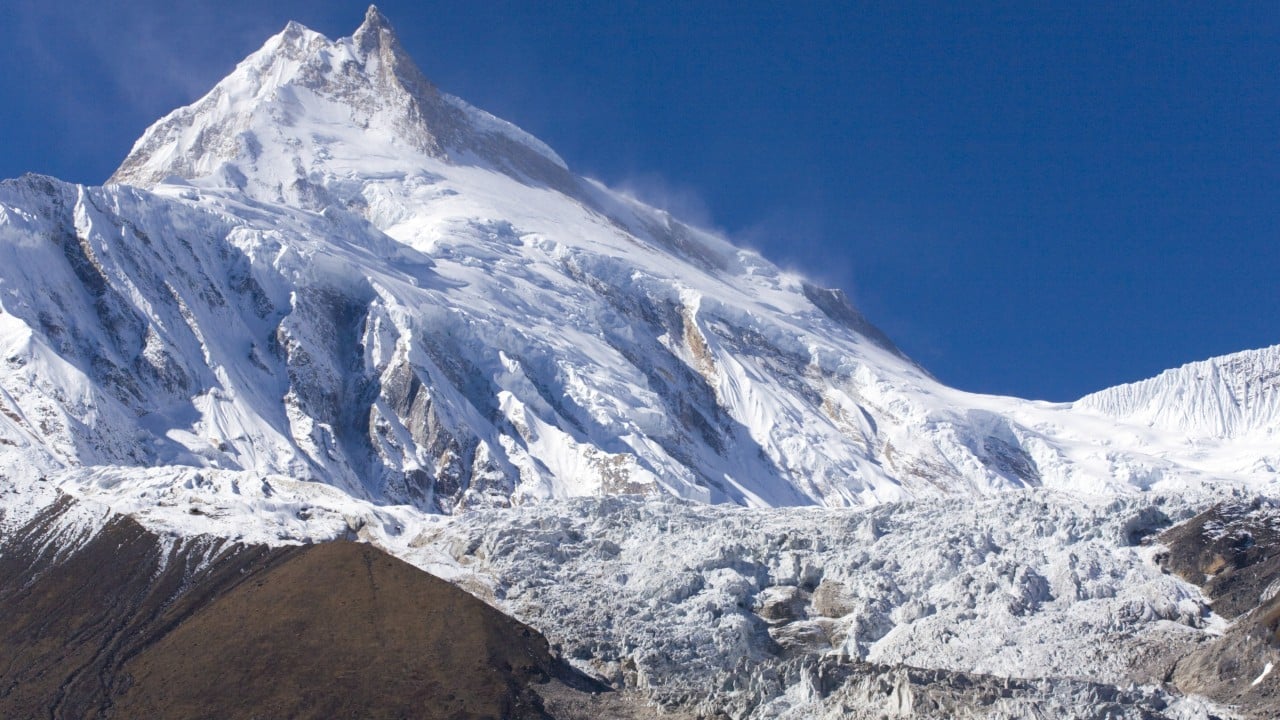
Mount Manaslu claimed another life when a Singaporean climber perished on the mountain slopes, marking the tragic first foreign casualty of the season on the world's eighth-highest peak. This is not just a routine mountaineering tragedy or an isolated stroke of bad luck on a treacherous route. It is the predictable outcome of an industrial-scale commercialization model that treats extreme altitude as a luxury product for affluent amateurs.
Every autumn, hundreds of climbers converge on the 8,163-meter peak in Nepal. They pay tens of thousands of dollars to outfitters who promise safety through brute-force logistics: massive herds of Sherpa guides, heavily stocked oxygen bottles, and fixed ropes running from base camp to the summit ridge. Yet, as the death toll rises year after year, a darker reality becomes impossible to ignore. The commercial apparatus designed to democratize high-altitude mountaineering is actually lowering the threshold of experience required to attempt it, creating a silent hazard for clients and local workers alike.
The Commercial Engine Behind the Danger
The economics of modern Himalayan mountaineering are straightforward. Operating a commercial expedition on peaks like Everest, Manaslu, or Dhaulagiri requires high capital investment, aggressive marketing, and thin profit margins driven by sheer volume. Because Mount Everest has faced intense scrutiny and regulatory pushes—along with skyrocketing permit fees—attention has shifted downstream. Manaslu has emerged as the cash cow for commercial expedition companies based in Kathmandu and abroad.
Operators package Manaslu as an attainable 8,000-meter peak. Marketing materials emphasize that it is technically less demanding than K2 or Annapurna, often omitting the brutal meteorological shifts, avalanche-prone snowfields, and deceptive false summits that define the mountain. Clients sign up with varying degrees of mountaineering competence. Some possess genuine alpine experience on technical peaks in the Alps or the American Rockies. Others have barely spent time on crampons before writing a check for an elite summit package.
The business model relies entirely on probability. If an outfitter runs fifty clients up a mountain, they budget for logistical friction, minor frostbite, and logistical delays. But every inexperienced climber added to a rope-fixing team increases the collective vulnerability. When a bottleneck forms at the bottleneck or the steep couloir below the true summit, climbers spend hours exposed to sub-zero temperatures and hypoxia.
The physical toll of high altitude does not care about marketing brochures or how much money changed hands in a corporate office in Singapore or London. Hypoxia degrades cognitive function within minutes. Decision-making collapses. Exhaustion sets in long before the body realizes its internal organs are failing under partial pressure deficits.
The Hidden Toll on Indigenous Workforce
While international media focuses heavily on the foreign casualties, the invisible backbone of the Himalayan guiding industry absorbs the greatest risk. Sherpa and ethnic Tibetan guides scale these slopes multiple times a season, carrying heavy loads of supplementary oxygen, medical gear, and client luggage.
The commercial race for summits puts immense pressure on local workers to push past safe weather windows. When a client pays fifty thousand dollars for a summit bid, the psychological and financial pressure on the expedition leader to deliver results is immense. Turning back fifty vertical meters below the summit due to gathering clouds or unstable snowpacks is economically punishing for local agencies, even if it preserves life.
This dynamic creates a skewed safety culture. Guides take on disproportionate exposure to secure the summit photograph that guarantees future client bookings. When avalanches sweep through the lower camps or sudden storms trap teams in the death zone, the casualties among high-altitude workers frequently outnumber those of foreign clients, yet their stories rarely command international headlines.
The Illusion of Technological Safety
Modern mountaineering gear creates a dangerous psychological shield. Carbon-fiber poles, advanced Gore-Tex membranes, lightweight satellite communicators, and high-flow oxygen regulators give climbers a false sense of invincibility. People believe that because they are tethered to a commercial expedition backed by weather forecasting services in Europe and the United States, they are insulated from objective danger.
Technology cannot rewrite atmospheric physics. At 8,000 meters, the human body exists in a state of terminal decay. Atmospheric pressure is roughly a third of that at sea level. Even with continuous supplemental oxygen, metabolic processes slow down, muscle tissue wastes away, and the cardiovascular system operates at extreme capacity just to keep the brain functioning.
When a climber encounters pulmonary edema, cerebral edema, or severe exhaustion, no satellite phone or weather app can instantly evacuate them. Helicopter rescues above 7,000 meters are perilous undertakings restricted by wind speeds, cloud cover, and machine lifting capacities. To rely on rescue as a primary safety net in the death zone is a profound miscalculation.
Reforming the High-Altitude Machine
If the climbing community wants to prevent future tragedies, the conversation must move beyond expressions of sorrow and obligatory condolences. Nepal’s Ministry of Tourism has repeatedly discussed implementing stricter qualification requirements for peak permits, such as demanding proof of previous ascents on 6,000-meter or 7,000-meter peaks before issuing an 8,000-meter permit.
Enforcement remains weak. Local economic dependencies on tourism revenue often override regulatory caution. Until international expedition operators, insurance providers, and local authorities establish rigorous, non-negotiable standards of competence and rope-team ratios, the death toll will continue to climb alongside the commercial revenue.
Mountains like Manaslu do not negotiate with ambition. They remain indifferent to commercial contracts, summit certificates, and national pride. Until that brutal truth is factored back into the economics of adventure travel, every climbing season will remain a calculated gamble where the house always wins.