Every media outlet in the territory is hyperventilating over the same exhausted question. Will the rail links for the Northern Metropolis be ready in time? Headline after breathless headline laments labor shortages, tunneling delays, and bureaucratic friction, painting a picture of a grand vision stalling out because concrete cannot be poured fast enough. The consensus is lazy, comforting, and fundamentally wrong.
The panic over whether the trains will run on schedule misses the entire catastrophe unfolding in plain sight. Meanwhile, you can read related events here: Why Shutting Down Steel Plants Is the Smarter Move Than Fighting for Every Brick.
Let us be brutally honest about how Hong Kong builds megaprojects. We do not suffer from a lack of engineering talent or tunneling speed. When the MTR Corporation and the Highways Department want to punch a hole through granite, they do it. The real issue is not whether the Northern Link, the Hung Shui Kiu extension, or the Eastern Corridor will connect San Tin to Central by some arbitrary target year. The real issue is that rushing to lay tracks into an economic vacuum is an expensive exercise in building ghost stations for commuters who do not exist.
I have spent years watching consultants and government bureaus pitch transit-oriented developments as magical spells. Build the station, the narrative goes, and the jobs, tech giants, and residents will magically materialize around it. That fairy tale worked in the nineteen-eighties and nineties when Hong Kong was a demographic rocket ship with explosive organic growth and a manufacturing hinterland begging to scale. Today, treating rail as a speculative leading indicator while ignoring the structural void of actual economic demand is financial arson. To see the bigger picture, we recommend the excellent analysis by The Wall Street Journal.
The Speed Fetish
To understand why the obsession with fast-tracking is dangerous, look at what is actually being promised. The Northern Metropolis is supposed to house two and a half million people and host a high-tech innovation belt rivalling Shenzhen's Nanshan district. That is a grand ambition on paper. But ambitions do not generate freight, commercial tenants, or knowledge-worker density.
When planners hyper-focus on construction velocity, they fall victim to the speed fetish. They believe that shaving twelve months off a tunneling schedule solves systemic planning failures. It does not. If you finish a heavy rail line to a swamp or an empty field three years ahead of schedule, you have not accelerated progress; you have simply accelerated the carrying costs of underutilized capital.
Look at the history of Hong Kong infrastructure cost overruns. We have elite civil engineering firms capable of boring through the most complex geological formations in the world. Yet every time a new railway project is greenlit, it is treated as a race against a political stopwatch rather than an economic asset. Billions are poured into overtime labor, imported machinery, and expedited procurement, driving up capital expenditure to astronomical heights.
The MTR Corporation operates under a unique financial model: the railway-plus-property formula. It works brilliantly when property values soar, land sales fetch astronomical premiums, and apartment buyers line up around the block. But that model is broken when applied to a cross-border frontier zone where cross-border regulatory harmonization is stuck in molasses and commercial property markets are facing a structural reckoning.
If you build the transit links before the zoning, the tax incentives, the visa exemptions, and the industrial anchor tenants are locked down, the trains will run empty. You cannot engineer economic gravity with tunnel boring machines.
The Shenzhen Mirror Fallacy
The entire intellectual foundation of the Northern Metropolis rests on a lazy geographic assumption: if we copy Shenzhen's proximity model, prosperity will follow. This ignores the structural divergence between the two sides of the river.
Shenzhen grew into a technological powerhouse through hyper-flexible municipal governance, aggressive tax arbitrage, direct state venture capital, and the freedom to fail fast. Hong Kong operates under a rigid, risk-averse statutory framework where every land resumption triggers decade-long judicial reviews, environmental impact assessments that span years, and statutory consultation loops designed by lawyers to protect status quo interests.
When commentators ask whether the transport links will be ready, they assume that completing the infrastructure bridges this institutional chasm. It does not. A high-speed commuter train crossing from Lok Ma Chau to Futian in six minutes means nothing if the talent on the Hong Kong side faces archaic professional licensing restrictions, incompatible data governance laws, and a corporate tax regime that cannot compete with mainland incentives.
You can lay dual-track heavy rail with automated signaling systems all you want. If a software engineer or biotech researcher sitting in the San Tin Technopole has to navigate bureaucratic red tape just to share data with a lab two kilometers away across the Shenzhen River, the train is just an expensive pipe carrying disappointed commuters back to their cramped flats in Sha Tin.
The Myth of Transit-Induced Prosperity
Let us dismantle another sacred cow. Transit-oriented development is not a universal law of economics; it is a specific tool that requires pre-existing economic density to function.
In urban cores like Central or Tsim Sha Tsui, transit investment unlocks constrained mobility. The demand is already there, choking the roads, begging for subterranean relief. Adding rail capacity to a congested urban center frees up suppressed economic activity.
Applying that same logic to an unbuilt, semi-rural frontier zone like the New Territories North is cargo cult urbanism. You are building the runway before you have an airline, hoping that the mere presence of asphalt attracts Boeing. History is littered with the carcasses of transit projects built to serve anticipated populations that migrated elsewhere or never materialized because the underlying economic engine sputtered.
Look at the history of new towns in Hong Kong. Tin Shui Wai was once heralded as a magnificent housing frontier. For years, it suffered from severe social isolation, high unemployment, and immense commuting friction precisely because transport links were treated as a substitute for local economic self-sufficiency. People slept there, but they worked everywhere else, turning the area into a sprawling dormitory plagued by high social costs.
Now look at the Northern Metropolis master plan. It repeats the exact same error on an industrial scale. It envisions hundreds of thousands of housing units paired with innovation hubs, yet the commercial execution strategy relies on hoping multinational tech firms will choose high-cost Hong Kong over neighboring Guangdong cities where operating costs are a fraction of the price.
If the government accelerates the rail links without fundamentally restructuring the economic proposition of the Northern Metropolis, they are building a very expensive high-speed pipeline to export local talent directly to Shenzhen employers.
The Zoning and Regulatory Immobilism
Beyond transport timing, the real bottleneck of the Northern Metropolis is statutory paralysis. Land resumption in Hong Kong is bogged down by the Lands Resumption Ordinance, compensation disputes, environmental wrangling, and endless rounds of district consultations.
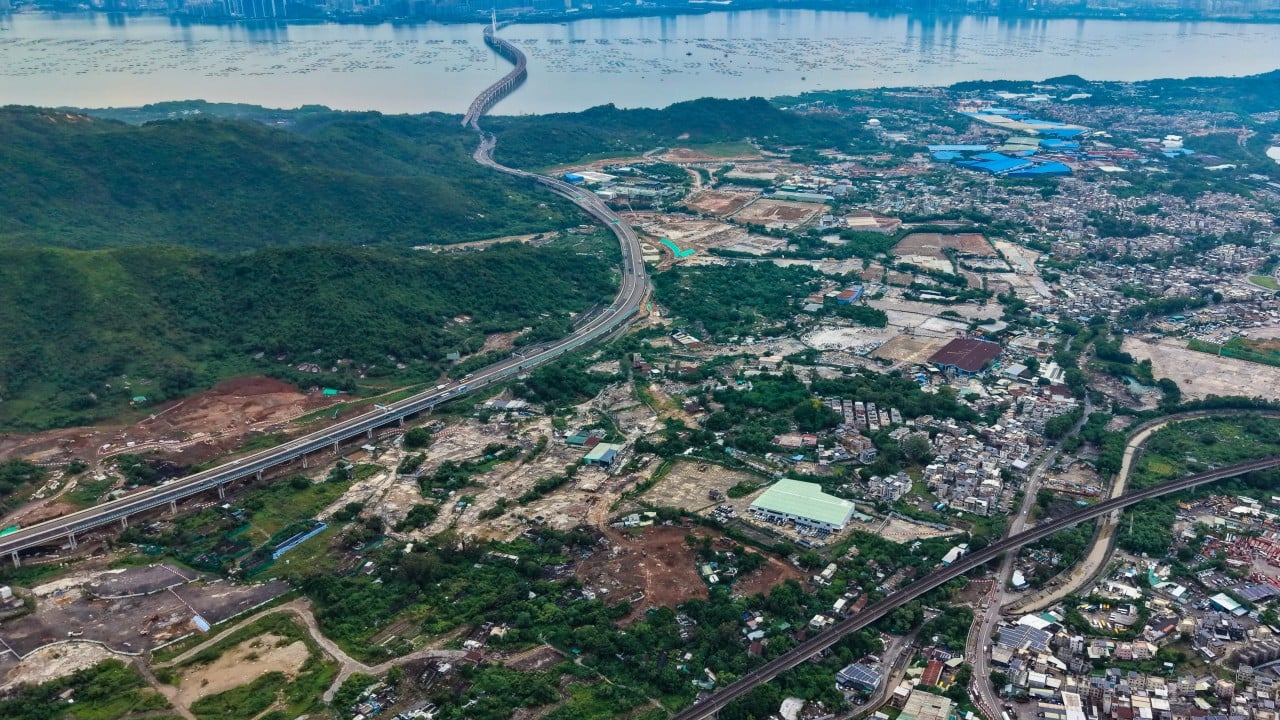
Even if the MTR finishes laying the tracks by the promised year, what will greet passengers when they step out of the station? In many designated development areas, zoning changes take five to seven years before developers can even break ground on superstructure works. You face a surreal mismatch: heavy rail operating on an ultra-modern schedule, disgorging passengers into vacant agricultural lots and brownfield sites waiting for administrative approval.
Furthermore, commercial leasing in government-led tech parks often suffers from bureaucratic over-management. Rigid tenancy clauses, state-backed committee approvals for tenant suitability, and lack of sub-leasing flexibility turn what should be agile innovation clusters into sterile office parks. Tech entrepreneurs do not care about shiny station concourses; they care about speed to market, tax efficiency, and intellectual property protection. If the regulatory environment remains rigid, no amount of rail connectivity will prevent tenants from setting up shop across the border in Nanshan or Qianhai instead.
What Real Execution Looks Like
If we are serious about making the Northern Metropolis viable, we must abandon the obsession with calendar dates and construction milestones. Stop measuring success by how many cubic meters of concrete are poured per month or whether the tunneling machine breaks through ahead of schedule.
First, secure the anchor tenants before laying a single tie. You do not build a heavy rail spur to an industrial park based on a memorandum of understanding signed by a rotating cast of bureaucrats. You demand binding corporate commitments, research facility footprints, and cross-border regulatory agreements that guarantee capital and talent will actually flow across the border. If the tenants will not sign without guaranteed transport, stage the infrastructure buildout to lag slightly behind confirmed tenant milestones rather than charging ahead like a runaway freight train.
Second, decouple transit planning from property subsidization. Relying on the MTR property model to fund frontier infrastructure creates a perverse conflict of interest. The priority shifts from creating an integrated industrial ecosystem to maximizing residential gross floor area around stations to pay for the tracks. That turns an innovation zone into another massive residential suburb, defeating the core economic mandate of the project.
Third, fix the software before upgrading the hardware. No amount of signaling upgrades on the Northern Link will fix a broken cross-border policy framework. Until the legal, tax, and professional credentialing barriers between Hong Kong and Shenzhen are torn down, any transit link is merely a fast route to a bureaucratic dead end.
The Uncomfortable Verdict
The next time you read a breathless report worrying about whether the Northern Metropolis transport links will miss their deadlines, ask yourself what the panic is really masking. It is masking a lack of confidence in the underlying economic thesis.
When a project has a bulletproof economic engine, delays are merely inconvenient speed bumps. When a project is built on hope, political vanity, and bureaucratic wishful thinking, missing a deadline is blamed for failures that were baked into the blueprint from day one.
The trains will get built. Hong Kong engineering has never been the bottleneck. The real tragedy is that when those trains finally start rolling, they might just be carrying passengers to a monument of misplaced optimism, wondering why the jobs never followed the tracks.