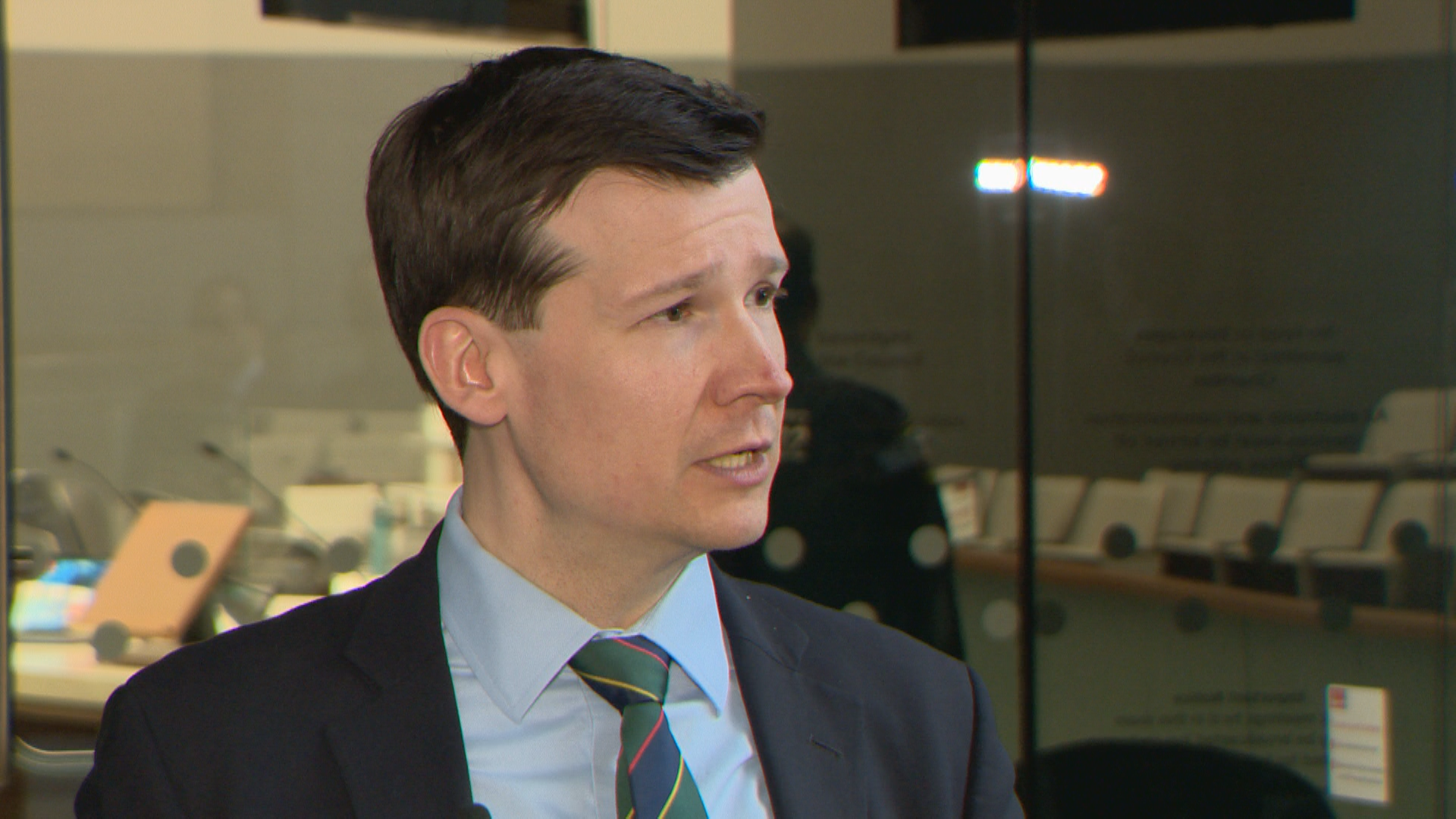
Jeromy Farkas currently holds a 44 percent favorability rating among Calgarians, a figure that suggests a city caught between its populist past and an uncertain municipal future. This data point, emerging from recent polling, reveals a significant recovery for the former mayoral candidate, yet it exposes a massive vacuum in local leadership. While nearly half the city views him through a positive lens, a massive swath of the electorate remains undecided or wary, waiting to see if the "Maverick of Council" has truly traded his combat boots for the diplomat’s loafers. This is not just a story about one man’s approval rating; it is a diagnostic report on a city frustrated by the status quo and looking for a familiar face to lead the way out of a perceived governance crisis.
The 44 percent threshold is a psychological milestone in Canadian municipal politics. It represents a base that, if mobilized, can comfortably win a seat in a multi-candidate race. However, for Farkas, the path back to the top of the municipal ladder is obstructed by the very reputation that built his brand. The poll numbers show that while he has successfully rehabilitated his image through community service and a softer public tone, he has yet to convince the "undecideds" that his transformation is more than a calculated political pivot.
The Mechanics of a Reputation Rebrand
Jeromy Farkas’s journey from the most divisive figure in the 2021 election to a community-focused advocate is a masterclass in image management. During his time as a ward councillor, Farkas was often the lone "no" vote on the floor, a strategy that endeared him to the tax-averse but alienated him from the institutional machinery required to actually run a city.
The current polling data reflects a city that is nostalgic for his fiscal hawkishness but remains scarred by the gridlock of his tenure. We are seeing a "softening" of the opposition. People who once viewed him as a disruptor for the sake of disruption are now looking at his recent initiatives—such as his high-profile work with Big Brothers Big Sisters and his public hiking challenges—and seeing a man who might actually care about the social fabric of the city, not just the bottom line.
However, the "unsure" demographic in this poll is the real story. In political analysis, a high "unsure" count for a known entity usually indicates a "wait and see" approach. These are voters who have rejected the current administration's handling of the Green Line LRT and property tax hikes but aren't yet ready to hand the keys back to the man who once famously sparred with everyone from the Mayor to the city’s administrative staff.
The Policy Vacuum in the Purple City
Calgary is currently navigating a period of profound identity struggle. The "Purple City" experiment—the idea that Calgary could transcend traditional left-right divides—is under immense pressure. Rising property taxes, a housing affordability crisis, and the bungled execution of major infrastructure projects have left a gap that Farkas is currently filling by simply existing as a viable alternative.
The 44 percent favorability is less an endorsement of a specific policy platform and more a condemnation of the current Council’s performance. When the public feels unheard, they return to the names they know. This is a classic "incumbency backlash" scenario.
The Taxpayer Fatigue Factor
Calgarians are feeling the squeeze of a shifting tax burden. For years, the commercial tax base in the downtown core—driven by high-rise oil and gas tenants—subsidized residential property taxes. As those office towers saw vacancies skyrocket following the 2014 crash and the subsequent remote-work shift, the tax burden shifted heavily onto homeowners.
Farkas built his original political career on this specific pain point. His 44 percent rating proves that the "fiscal watchdog" archetype is more relevant now than it was four years ago. The average homeowner isn't interested in the nuances of municipal finance; they are interested in why their monthly bill has jumped by double digits while basic services like snow removal and transit safety seem to be declining.
The Shadow of the 2021 Defeat
To understand why 56 percent of the city isn't yet on board, we have to look back at the 2021 mayoral race. Farkas led most of the way, only to be overtaken by Jyoti Gondek in the final weeks. That loss was attributed to a "ceiling" on his support—a limit to how many people were willing to vote for a candidate perceived as combative.
The new polling indicates that his ceiling has moved, but it hasn't disappeared. The skepticism remains rooted in a fundamental question: Can a disruptor actually govern? It is one thing to point out the flaws in a budget from the back row; it is quite another to build the 8-vote consensus needed on Council to pass a meaningful alternative.
The Problem of the Middle Ground
The 44 percent favorability exists primarily on the right and center-right of the spectrum. To win a general election in Calgary, a candidate needs to capture a significant portion of the moderate center—the people who care about social programs and climate change but are terrified by the current pace of spending.
Farkas’s recent rhetoric has leaned into this middle ground. He has spoken more about community resilience and less about "burning it all down." This shift is reflected in the polling, but it remains a fragile gains. If he leans too far back into his old persona, he loses the moderates; if he stays too "soft," he risks losing the hardline base that fueled his rise.
The Green Line Shadow
Nothing has damaged the credibility of the current Council more than the Green Line LRT project. The massive cost overruns and the recent decision to shrink the line’s scope while increasing the budget have provided a massive opening for any challenger.
Farkas has been vocal about the project's failures, and the 44 percent favorability rating suggests his "I told you so" moment is landing with voters. This project serves as a proxy for a larger debate about competence. When the city’s largest infrastructure project in history becomes a case study in mismanagement, the person who was most critical of the process naturally sees their stock rise.
The danger for Farkas is that he cannot simply be the "Anti-Green Line" candidate. He needs to present a vision for what a functional Calgary looks like in 2030. Opposing a failed project is easy; proposing a viable transit strategy for a city of 1.6 million people is where the real work begins.
The Business Community’s Hesitation
While the public favorability is high, the "City Hall establishment" and the business elite remain cautious. Calgary’s developers and corporate leaders value stability above all else. They need to know that a Mayor Farkas wouldn't turn Council into a four-year ideological battlefield that scares away investment.
The business community is currently split. One faction sees him as the only person capable of reigning in spending. The other sees him as a risk to the collaborative environment needed to lure tech companies and diversify the economy. These power brokers are likely the ones making up a large portion of the "unsure" category. They are waiting for a clear, professionalized policy roadmap that goes beyond 280-character critiques of the current administration.
A City Without a Center
The most alarming takeaway from the poll is the lack of other viable contenders. If 44 percent favorability for a formerly defeated candidate is the high-water mark, it suggests a complete lack of leadership depth within the current Council.
Most sitting councillors are struggling with favorability ratings in the low 20s or 30s. This creates a vacuum. In politics, you can't beat someone with no one. Currently, Farkas is the only "someone" with a profile large enough to command the attention of the entire city. This isn't necessarily because of his own brilliance, but because the current administration has left the door wide open.
The Impact of Provincial Interference
We must also consider the role of the provincial government. The UCP’s moves to introduce political parties at the municipal level could fundamentally change the math for someone like Farkas. In a partisan municipal race, a 44 percent starting point is almost unbeatable.
If the next Calgary election is fought on party lines, Farkas becomes the natural standard-bearer for a conservative-leaning slate. This would allow him to outsource the "combat" to his party colleagues while he maintains the "statesman" persona he has been cultivating. It is a strategic advantage that didn't exist in 2021.
The Hidden Risks of the Undecided
The large number of "unsure" respondents shouldn't be seen as a pool of future supporters for Farkas. In many cases, "unsure" is a polite way for a voter to say "I don't like my options."
If a new, fresh-faced candidate enters the arena—someone with a clean record and a professional background who can speak the language of fiscal responsibility without the baggage of past Council scuffles—Farkas's 44 percent could evaporate. His current strength is largely a byproduct of being the only recognizable alternative to a deeply unpopular incumbent.
The Reality of the "New" Jeromy
Is the new Jeromy Farkas a genuine evolution or a sophisticated rebranding exercise? The answer likely lies somewhere in the middle. He has clearly learned that anger has a shelf life and that a leader must be more than a professional contrarian.
His work with non-profits has given him a level of "street-level" credibility that he lacked as a councillor. He is no longer just the guy in the suit talking about the budget; he is the guy on the trail talking to people about their lives. This is a powerful shift in a city that prides itself on the "Calgary Spirit."
Yet, the core of his appeal remains his willingness to challenge the "City Hall bubble." That bubble is currently perceived as being more opaque and less accountable than ever. As long as the current Council continues to struggle with transparency and fiscal discipline, Farkas’s numbers will continue to climb.
The Path to 51 Percent
To cross the threshold from "well-liked former candidate" to "Mayor-elect," Farkas must solve the problem of the undecided. This requires more than just being "not Jyoti Gondek."
He needs to articulate a specific, granular plan for the city’s major files: housing density, the downtown revitalization, and the eventual completion of the Green Line. He has to prove that he can build a coalition. A mayor in Calgary has only one vote; their power is purely the power of persuasion. If Farkas can’t show that he has the support of at least seven other people on that stage, his favorability rating is a vanity metric, not a political mandate.
The 44 percent mark is a warning shot to the current administration. It shows that the city is looking backward because it is terrified of the path it is currently on. Calgary is a city in search of a steady hand, and right now, it is looking at the one person who previously tried to shake it to its foundations.
The data suggests that the "unsure" voters are looking for an excuse to trust him. Whether he provides that excuse or reverts to the tactics of the past will determine the trajectory of the city for the next decade. The honeymoon of his return to public favor is ending; the hard work of proving he can actually lead a divided city is just beginning.
Stop looking at the 44 percent. Start looking at the people who are waiting for a reason to say yes.