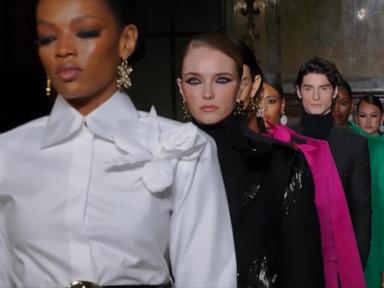
Fashion week highlights reels flood social media feeds every six months, packaged as spontaneous bursts of creative joy and sartorial celebration. Editors post 15-second clips of grand finale walks, celebrities flash manufactured smiles from front row seats, and brands celebrate record-breaking digital engagement metrics.
Beneath the polished veneer
The Hollow Glamour of Fashion Week Is Cracking Under Financial Reality
entertainment, business
The industry still pretends that a fifteen-minute runway presentation dictates what the world will wear six months from now. It is a comforting fiction. For decades, the global circus of fashion week operated as an exclusive club where editors, buyers, and celebrities gathered to sanctify luxury. Today, that machinery is sputtering. Behind the flashbulbs and front-row posturing lies a frantic scramble to justify millions of dollars spent on events that yield diminishing returns in actual consumer demand and bottom-line revenue.
Fashion week highlights are packaged for social media feeds as proof of cultural vitality, yet the core economic model is buckling under the weight of its own excess. Brands pour exorbitant budgets into erecting temporary palaces, flying in global ambassadors, and staging theatrical spectacles that consume resources for a fleeting moment of algorithmic attention. Meanwhile, retail buyers face sluggish consumer spending, excess inventory, and a public that increasingly purchases clothing based on digital peer validation rather than editorial decree.
The Economics of the Tent
To understand why the traditional runway format is losing its grip, follow the money. Putting on a major show in New York, Milan, Paris, or London requires an outlay that can easily range from five hundred thousand to several million dollars. This figure covers venue rental, production design, styling, hair, makeup, security, talent fees, and the PR apparatus required to make the room look important.
For heritage houses with sprawling multi-category conglomerates behind them, this expense is simply a marketing line item. It is a tax they pay to maintain brand equity and feed the luxury narrative. But for independent designers and mid-market labels, financing a seasonal show has become an exercise in financial roulette. They borrow against future orders or dilute equity just to secure a slot on an official calendar, hoping that a splashy review will translate into wholesale accounts that are increasingly difficult to lock down.
Wholesale partners have changed their calculus. Department stores and boutique buyers no longer wait for a runway show to decide what to stock. They analyze data streams, pre-order trends, and digital search volume weeks before a model steps onto a catwalk. The runway has been relegated from a commercial buying instrument to a high-cost marketing stunt. When the primary purpose of a multi-million-dollar presentation is reduced to generating short-lived internet clips, the fiscal equation ceases to make sense.
The Illusion of Digital Reach
The pivot to digital broadcasting was supposed to democratize the experience. Anyone with a smartphone could theoretically front-row stream a collection from Tokyo or New York. The metrics generated by these broadcasts are staggering on paper. Billions of impressions, millions of video views, and spikes in engagement metrics across platforms.
Yet, digital impressions do not automatically translate to sales ledgers. A viral TikTok clip featuring a celebrity in a bizarre sculptural garment drives high immediate visibility, but it rarely moves units of the commercial merchandise hanging on retail racks. The clothes that actually sustain a brand—the trousers, the everyday knitwear, the accessories—are rarely the pieces that make visual waves on a runway.
This creates a dangerous disconnect. Design teams feel compelled to create ever-more theatrical looks for the cameras, driving up production costs for items that will never be produced in commercial quantities. The audience watches the spectacle, hits the heart icon, and moves on to the next piece of digital stimulus. Brand loyalty is replaced by fleeting amusement.
Shifting Consumer Psychology
Consumers have grown weary of the artificial urgency manufactured by the seasonal calendar. The traditional rhythm of spring/summer and autumn/winter collections assumes a world where people wait half a year for clothes to drop into stores. That cadence belongs to a bygone era.
Today's shoppers demand relevance in real-time. If a look catches their eye on a screen, they expect to purchase it immediately or find an accessible alternative within days. The six-month lag between a runway show and retail delivery acts as a vacuum where enthusiasm dies. By the time the collection arrives in boutiques, the cultural moment has shifted, and the consumer's attention has drifted elsewhere.
Independent labels are quietly bypassing the official calendar entirely. They are opting for direct-to-consumer drops, intimate presentations for core clients, or digital-first lookbooks that cost a fraction of a runway production. They realize that holding court in a cavernous industrial warehouse for ten minutes of applause is an inefficient way to build a sustainable business.
The spectacle will not vanish overnight. Too many institutional egos, publishing empires, and hospitality industries rely on the migration of the global style elite twice a year. But the aura of absolute authority is gone. The spotlight still shines bright on the runway, but the shadows behind the staging expose an industry desperately searching for a sustainable way forward.