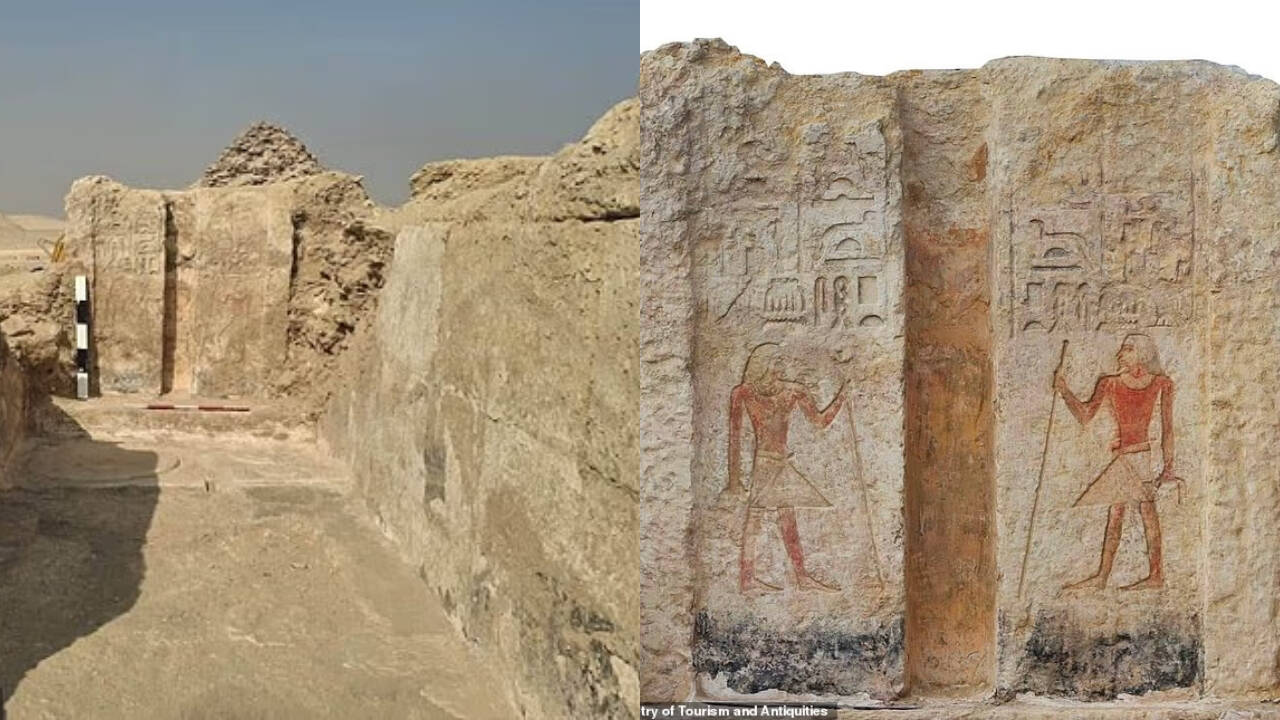
Tomb walls do not tell the truth. They tell the truth the dead man paid for.
Every time a newly uncovered 4,000-year-old Egyptian tomb hits the headlines, the coverage follows the exact same tired script. A powerful royal official gets turned into an open book. His titles get read aloud like a job résumé. His wall reliefs get treated like candid CCTV footage from the Middle Kingdom or the late Old Kingdom.
That reading is lazy. Worse, it is backward.
A tomb from roughly two millennia before the common era is not a neutral archive of ancient Egyptian history. It is a state-approved monument to self-promotion, anxiety management, and resource extraction. When mainstream coverage treats a high official's burial chamber as a straightforward window into royal administration, it mistakes curated prestige for unfiltered reality.
I have spent years watching smart people—both in academic seminars and in media rooms—get seduced by the shiny surface of archaeological discoveries. I have seen institutions pour serious money and prestige into grand narratives built on a single inscription, only to watch those claims collapse once you check the economics, the regional politics, and the epigraphy—the study of inscriptions—behind the stone. Egyptology is packed with brilliant scholars who know better than to take a mortuary boast at face value, yet popular retellings still flatten complex Egyptian burial practices into "secrets revealed."
Real Egyptology starts where the press release stops.
The Lazy Consensus Around "Powerful Royal Officials"
Standard tomb coverage loves a tidy hierarchy. Pharaoh sits at the top. A powerful royal official stands just below him, loyal, competent, and endlessly revealing. When a tomb turns up with long lists of titles—overseer of granaries, seal-bearer of the king, steward of estates—readers assume they are looking at a crisp org chart of ancient Egypt.
They are not. They are looking at an aspiration carved in limestone.
In ancient Egyptian mortuary culture, titles worked like armor and status symbols combined. Some offices reflected real day-to-day authority over grain collection, labor gangs, scribes, or provincial estates. Other titles were honorary, ceremonial, or tied to institutions that had already shifted in power by the time the owner died. Treating every carved title as proof of hands-on executive control is like reading a modern corporate bio and assuming every "Vice President" signs checks and runs a division.
Even bigger is the myth of transparency. A tomb owner wanted to appear pious, orderly, generous, and indispensable to the crown. If he faced political friction, if his province struggled during a low Nile flood, or if royal authority in his region was contested, you will not find a memo about it next to the offering table. You will find smooth prose, ideal harvests, and obedient dependents.
What People Actually Ask—and Why the Premise Is Flawed
When a new burial chamber makes news, searchers tend to ask a predictable set of questions. Most of them point at the wrong target.
- "What secrets of the pharaoh's court does the tomb reveal?" Usually fewer than advertised. Provincial and mid-to-high officials cared deeply about their own local standing, family continuity, and survival in the afterlife. Assuming every high-status burial is a backchannel into the royal palace misses how decentralized parts of Egypt could be—especially around the end of the Old Kingdom and into the Middle Kingdom, when regional governors and local elites often held serious weight on the ground.
- "How rich and powerful was this official in real life?" Tomb scale is a clue, not a bank statement. Wealth could be inherited, granted by patronage, pooled across a family, or poured into a single monumental project at the expense of other priorities. A modest tomb does not automatically mean a weak life, and an elaborate chapel does not guarantee uninterrupted political clout.
- "Are the tomb scenes accurate depictions of daily life?" No. They are ritualized idealizations meant to function magically in eternity. When you see people plowing, baking, brewing, or bringing tribute, you are looking at eternal provisioning and social order—not a sociological snapshot of a Tuesday afternoon.
Imagine a scenario where a modern executive builds a mausoleum covered in awards, glowing client testimonials, and photos of calm board meetings, then seals it for four millennia. If future historians treated that room as an objective history of the company without checking tax records, supply chains, or rival accounts, they would get half the story wrong. Tomb reliefs demand that exact same skepticism.
How Tomb Archaeology Actually Works When You Strip Away the Hype
To understand what a 4,000-year-old Egyptian tomb genuinely offers, you have to separate three layers that popular coverage routinely mashes together: architecture, inscriptions, and material context.
- Architecture shows investment and location. Where a tomb sits—near a royal cemetery, in a provincial cliff face, or beside a local temple—tells you who the patron was trying to stay close to. Rock-cut tombs, mastabas, and shaft burials reflect different stone qualities, labor investments, and local traditions.
- Inscriptions show ideology and network. Names, titles, family members, and offering formulas map out social alliances and cultural expectations. Scholars like Naguib Kanawati, Miroslav Verner, and Hartwig Altenmüller have spent decades showing how closely tomb decoration, administration, and shifting political realities tie together across dynasties, especially in Old Kingdom and Middle Kingdom contexts. When you read hieroglyphs alongside archaeological stratigraphy—the layered record of soil, fill, reuse, and disturbance—you catch things an isolated translation misses.
- Context shows what happened after the funeral. Tombs were rarely static time capsules. Ancient robbers stripped valuables, later generations reused shafts or chapels, water and salt degraded plaster, and modern excavations sometimes re-exposed spaces previously entered centuries ago. A "newly revealed" tomb is often newly documented, newly cleared, or newly analyzed with modern methods rather than untouched since 2000 BCE.
That distinction matters. Calling every find a shocking revelation trains audiences to expect movie-style twists instead of patient detective work. The real drama in archaeology is quieter and sharper: cross-checking a name against known regional records, spotting a recarved sign, tracing pottery types, or noticing how a burial was modified over time.
The Blind Spots of Being Contrarian
Going against the hype has its own traps, and I will not pretend otherwise. If you treat every tomb claim as exaggerated PR, you can overcorrect and miss genuine breakthroughs.
Sometimes a single inscription really does fill a gap in a king's reign or clarify how a local tax district operated. Sometimes an undisturbed burial deposit really does preserve organic materials, tools, or funerary goods that sharpen our picture of craftsmanship and belief. Skepticism should test claims against evidence, not turn into knee-stop cynicism that dismisses real data out of habit.
There is also a practical trade-off in how this information is shared. Nuanced context takes longer to read than a punchy headline. Nuance asks the reader to hold two thoughts at once: that a tomb was designed to flatter its owner, and that its layout, artifacts, and texts still carry vital historical weight when read critically.
How to Read the Next Tomb Headline Without Getting Played
You do not need a PhD to read archaeological discoveries with sharper eyes. Next time a major burial story lands in your feed, run it through a simple filter:
- Check the date range and what it implies. Around 4,000 years ago puts you near the transition from the Old Kingdom into the First Intermediate Period or the Middle Kingdom. Political stability, central control, and provincial autonomy shifted noticeably across that span—do not lump all "ancient Egypt" into one static machine.
- Separate titles from proof of power. Look for concrete evidence of function—administrative records, economic links, institutional roles—rather than assuming every grand title meant unchecked authority.
- Watch for reuse and later history. Ask whether the tomb reflects one person's original plan or multiple phases of use, looting, and later activity.
- Read the visual scenes as ritual, not journalism. Treat painted and carved scenes as symbolic systems built to sustain the deceased and project status, then cross-check them against physical finds.
Stop treating ancient stone like a confession booth. Treat it like a campaign billboard carved by someone who wanted to win eternity.