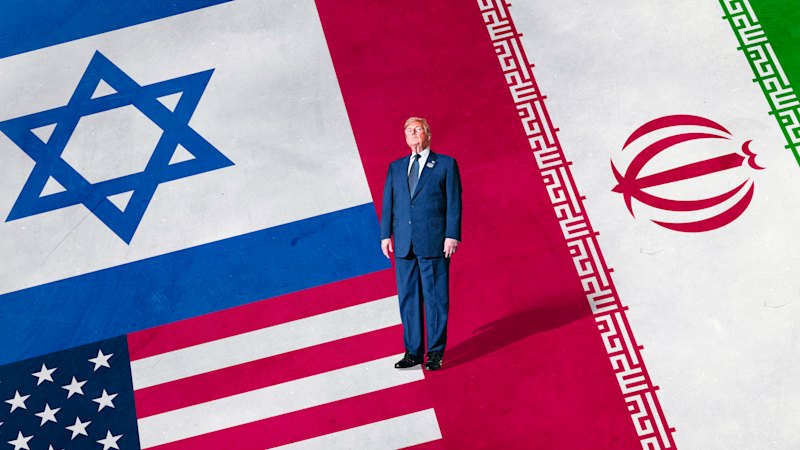
The smoke over the Persian Gulf is finally clearing, and Donald Trump is doing exactly what you expected. He is taking a massive victory lap. On his 80th birthday, the president proudly jumped onto social media to announce that a Memorandum of Understanding (MOU) between the United States and the Islamic Republic of Iran is officially locked in. The war is over. The vital Strait of Hormuz is reopening to global shipping.
But if you look past the flashy headlines and the inevitable promises of a Nobel Peace Prize, the actual reality of this agreement looks vastly different. This wasn't a masterclass in diplomacy. It was a hasty retreat disguised as a triumph.
When the US and Israel teamed up to launch their massive military offensive against Tehran back in February, the stated goal was absolute clarity: collapse the Islamic Republic, wipe out its regional proxy networks, and permanently strip away its nuclear capabilities.
Fast forward to today, and none of those things happened. The rigid theocratic regime in Tehran is still standing. Their deep stockpiles of highly enriched uranium remain safely inside Iranian borders. Trump even performed a stunning policy flip, signaling that Washington won't force Iran to dismantle its ballistic missile program.
So what was this high-stakes military gamble actually for? When you parse through the fine print of the Geneva framework, a harsh reality emerges. The map of Middle Eastern power just got violently redrawn, and the list of who actually won and lost will shake up global politics for years.
The Real Winners Aren't Who You Think
Let's be completely honest about Tehran's current position. Survival is a victory when you just stared down the combined, high-tech military might of Washington and Tel Aviv. The Iranian regime didn't just survive the heavy aerial bombardment; they fundamentally altered the leverage dynamics of the entire region.
Iran effectively used its geographic dominance over the Strait of Hormuz. By choking off a fifth of the world's daily energy supplies, they sent crude prices rocketing past $100 a barrel. That single economic move inflicted massive financial pain across Western economies and forced Trump's hand.
Tehran walked away from the negotiating table with massive concessions that seemed unthinkable a few months ago. They secured the immediate release of $24 billion in frozen financial assets, with state media floating the possibility of up to $300 billion more earmarked for national reconstruction.
More importantly, Iran won a temporary lifting of sanctions on its oil and petrochemical exports. They achieved all of this without giving up their core nuclear infrastructure or abandoning their ballistic missiles.
Outside of Iran, the absolute cleanest diplomatic victory belongs to Pakistan. Acting as the primary intermediary alongside countries like Qatar, Islamabad quietly managed to steer the two warring nations toward the peace table. China also reaped massive benefits without firing a single shot. Beijing watched the US drain billions in military hardware, stepped in to applaud the ceasefire, and reinforced its growing reputation as the adult in the geopolitical room.
Why Benjamin Netanyahu Is Facing His Darkest Hour
If Tehran is quietly celebrating, the mood in Jerusalem is pure fury. Israeli Prime Minister Benjamin Netanyahu gambled his entire political career on this conflict. For decades, destroying Iran's nuclear infrastructure and breaking the back of Hezbollah in Lebanon was his ultimate strategic obsession.
When Trump won re-election, Netanyahu believed his moment had finally arrived. The joint military strikes on February 28 felt like the culmination of that dream.
Instead, the interim deal leaves Israel completely isolated and deeply vulnerable. Trump didn't even bother to consult Israeli leadership before finalizing the MOU. Even worse for Jerusalem, the deal directly ropes in Lebanon, a core demand that Iran refused to drop. The agreement effectively blocks Israel from continuing its aggressive military operations against Hezbollah inside Lebanese territory. In exchange, Iran promised to restrain its proxy groups, but Israel has zero faith in those guarantees.
The internal backlash inside Israel was instantaneous and severe. Former Prime Minister Ehud Barak openly blasted the outcome, stating that Israel is paying a heavy price for Netanyahu's hubris and blindness. Opposition leader Yair Lapid went further, calling the agreement one of the most shocking structural failures in the history of Israeli foreign policy.
With national elections looming just four months away, Netanyahu is left standing with empty hands. He has no tangible military achievements to sell to an exhausted public, and his once-unshakeable relationship with Trump is visibly fractured.
The Brutal Math for Everyday People
While political elites in Washington and Tehran exchange self-congratulatory statements, the actual citizens of both nations got absolutely crushed by this war. The conflict was an economic disaster for regular people.
According to estimates from prominent economists like Mark Zandi, the short-lived war drained at least $100 billion directly from American taxpayers in military spending. That is on top of the punishingly high gasoline prices that US families endured at the pump while the Strait of Hormuz was locked down. Trump watched his domestic approval ratings sink as the economic fallout widened, creating a massive political liability just months before the critical midterm elections.
But the 90 million citizens living inside Iran faced the worst of the horror. The initial Washington strategy centered heavily on sparking internal regime change by piling immense pressure on an already struggling population.
Instead, the high-profile assassinations of Iran's top leadership, including Supreme Leader Ayatollah Ali Khamenei, produced the exact opposite result. The vacuum didn't open the door for a moderate democracy. It instantly empowered the most ruthless, battle-hardened veterans of the Islamic Revolutionary Guard Corps (IRGC). This new ruling faction is distinctly less risk-averse and far more repressive than the leaders they replaced. The Iranian public remains trapped under a brutal domestic security apparatus, now paired with a heavily damaged civilian infrastructure.
Navigating the Volatile New Middle East
The global energy sector is already moving at breakneck speed to adapt to this fragile peace. If you are managing corporate supply chains, trading energy commodities, or tracking international security risks, you can't afford to take Trump's victory speeches at face value. The regional landscape has fundamentally shifted, and businesses must adjust immediately.
First, expect an immediate, short-term dip in global oil prices as the Strait of Hormuz reopens and Iranian crude legally enters the commercial market. However, this stability is incredibly fragile. Treat this current drop as a temporary window to lock in long-term energy hedges rather than a permanent return to low-cost fuel.
Second, closely monitor the movements of the Israeli Defense Forces along the northern border. The interim agreement is explicitly designed to freeze Israeli actions inside Lebanon, but Jerusalem views this restriction as a direct threat to national survival. The risk of an uncoordinated, unilateral Israeli strike in south Beirut or the Bekaa Valley remains dangerously high. Any sudden military move by Israel could instantly shatter the US-Iran MOU.
Finally, diversify logistical supply lines entirely away from the Persian Gulf corridors wherever possible. Iran just proved to the world that it can successfully weaponize its geography to hold the global economy hostage. Relying on seamless transit through the region is no longer a viable business strategy. Build permanent supply redundancies through overland rail networks or alternative maritime routes to shield your operations from the next inevitable flare-up.