The final patch of ice on Slovenia's Triglav glacier vanished in October 2026, and most coverage of the event misses the real story. News reports frame it as a sudden, tragic casualty of Europe's scorching summer.
That's only half true.
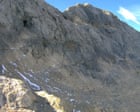
Yes, extreme summer heat delivered the final blow. Photos captured by the Anton Melik Geographical Institute on October 19, 2026—taken before and after early autumn snowfall—confirmed that bare limestone now sits where ancient ice once clung to the Julian Alps. Yet if you look at the actual glaciological data, the Triglav glacier didn't suddenly die in 2026. It spent more than two decades living on borrowed time, defying scientific predictions while shrinking into a ghost of its former self.
Why the Triglav Glacier Actually Survived Until 2026
People hear "glacier collapse" and picture a massive wall of blue ice crashing into a valley overnight. Reality is much quieter, and honestly, much stranger.
Back in the late 19th century, during the tail end of the Little Ice Age, the Triglav glacier sprawled across more than 40 hectares beneath Slovenia's highest peak. By 1946, when Slovenian researchers launched systematic monitoring from the nearby Kredarica mountain hut, the ice had already retreated to roughly 14 hectares. Still, up until the 1950s, it behaved like a true living glacier, complete with deep crevasses and slow, grinding movement down the slope.
Then the climate math flipped.
Between 1983 and 2003, the glacier lost an astonishing 93% of its surface area. By 2003, it covered just 0.6 hectares—less than a single soccer pitch. Glaciologists at the time assumed it would be completely gone within a few years.
Instead, it hung on for 23 more years.
How did a tiny, low-elevation ice apron sitting at roughly 2,500 meters survive two decades of warming? Microclimate and luck. Heavy winter snowfalls periodically insulated the remaining ice through mild summers, and the steep northeast-facing rock wall of Mount Triglav cast long shadows that shielded the last remnants from direct afternoon sun. Researchers even stopped calling it a moving glacier in the traditional sense; it had become a stationary ice patch, a stagnant relic trapped in a rock hollow.
Eventually, the luck ran out. Repeated European heatwaves—including three of the continent's hottest years on record occurring within a five-year span—stripped away its protective winter snowpack earlier and earlier each spring. Once dark rock and scree poked through the ice, they absorbed solar radiation like a frying pan, melting the remaining fragments from the edges inward.
A National Symbol Stripped of Its White Crown
To understand why Slovenians are genuinely grieving a patch of ice smaller than a city block, you have to understand what Mount Triglav means to the country.
Standing at 2,864 meters, Triglav isn't just Slovenia's tallest mountain. Its three-headed silhouette sits dead center on the Slovenian national flag and coat of arms. In a nation of die-hard hikers and skiers, climbing Triglav is an unwritten civic duty—a rite of passage every Slovenian is expected to complete at least once in their lifetime.
For generations, reaching the summit ridge meant looking down across the white expanse of the glacier. It was a permanent fixture of the national psyche.
Miha Pavšek, a glaciologist and mountain guide who keeps a 1957 photograph of his parents standing on the glacier, put the emotional whiplash into blunt terms after the October 2026 confirmation. He noted that losing the ice felt like losing a part of himself, pointing out that humans assume certain features of the earth are eternal until they vanish right in front of us.
Scientists working on the mountain felt that speed firsthand. Matija Zorn, director of the Anton Melik Geographical Institute, began measuring the ice back in 2001. He recalled extracting a five-meter-deep ice core for geochemical analysis in 2022, only to return the very next year and find himself standing on bare rock in that exact same spot. Five meters of ancient ice—gone in twelve months.
In 2022, Slovenian researchers even transported a physical block of the Triglav glacier to the Beijing Winter Olympics as a stark, melting warning to the world. As the ice dripped away during the Games, it was collected and returned to the Slovenian Alpine Museum in Mojstrana, preserved in a vessel as meltwater. Today, that bottled water is practically all that's left of it.
What Happens to Slovenia and the Alps Now
If you're wondering whether Slovenia is now completely glacier-free, the technical answer is no—though barely.
A second tiny ice mass still clings to the shaded slopes of Mount Skuta, located at roughly 2,000 meters in the Kamnik-Savinja Alps. Because Skuta sits in a deep, heavily shaded cirque that traps windblown snow and blocks direct sunlight, researchers believe it might survive for a few more years. Let's be honest, though: Skuta is on life support, too.
The loss of Triglav isn't an isolated curiosity; it's a preview of what's happening across the entire European Alpine chain. Low-altitude glaciers across Austria, Italy, Germany, and Switzerland are crossing the exact same threshold. When winter snowfall fails to compensate for brutal summer melt, glaciers don't just shrink—they lose their ability to reflect sunlight, triggering a feedback loop that accelerates warming across surrounding valleys.
For hikers, climbers, and local communities, the disappearance of Alpine ice brings immediate, practical headaches that go far beyond scenery:
- Unstable rockfall zones: Glacier ice acts like mortar holding fractured alpine rock walls together. As permafrost and ice vanish, high-altitude climbing routes become significantly more dangerous due to sudden rockslides.
- Disrupted summer water supplies: Alpine glaciers act as natural reservoirs that release cold meltwater during the driest months of late summer. Without that steady trickle, downstream rivers and agricultural regions—such as Slovenia's Drava and Ptuj fields—face sharper seasonal water deficits.
- Vanishing climate archives: As researcher Matej Lipar and colleagues have noted, ancient mountain and cave ice traps chemical records of past atmospheres. Once it melts, centuries of unread environmental history drain into the soil forever.
How to Witness and Support Alpine Conservation Responsibly
If you plan to hike the Julian Alps or visit Triglav National Park, you won't see a glacier anymore, and you shouldn't treat the mountain like a disaster-tourism backdrop. You can, however, engage with the landscape in ways that actually help.
First, stop at the Slovenian Alpine Museum in Mojstrana before you head up the trail. Seeing the historical photographic archives from the Anton Melik Geographical Institute—comparing the sweeping 1897 ice fields to the barren limestone of 2026—gives you context you simply can't get from looking at empty rock.
Second, adjust your high-altitude trekking habits. Without snowfields and ice aprons buffering the upper slopes around Kredarica, trails are steeper, looser, and more exposed to rockfall. Wear a climbing helmet on the upper approaches, stick strictly to marked via ferrata routes, and carry your own water rather than assuming you'll find reliable meltwater streams near the huts.
Finally, pay attention to the research institutions tracking these shifts on the ground. Organizations like the Research Centre of the Slovenian Academy of Sciences and Arts (ZRC SAZU) and the World Glacier Monitoring Service (WGMS) rely on continuous public backing and open data sharing to map how fast Europe's water towers are emptying. Support local alpine clubs that maintain trail safety in rapidly destabilizing terrain, and treat the bare rock on Triglav for what it really is—a permanent baseline shift in Europe's highest mountains.