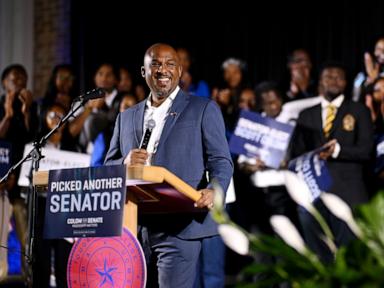
Political pundits love a clean narrative. Give them an upset—or even a competitive statewide race in the Deep South—and they immediately reach for the same worn-out playbook. They declare a permanent shift. They announce that the old guard is dead. They start drawing arrows on electoral maps as if one election cycle suddenly erased decades of structural, demographic, and institutional gravity.
The mainstream analysis surrounding Scott Colom’s Senate run and the broader conversation about Mississippi’s political trajectory falls straight into this trap. The prevailing consensus treats a single breakthrough moment as proof that Mississippi’s political foundation is fundamentally cracking. According to this view, changing demographics, suburban shifts, and energized voter coalitions are on the verge of turning a reliably red state into a genuine battleground.
That reading isn't just premature. It misunderstands how Southern political power actually works.
When commentators look at a high-profile candidate like Scott Colom—a district attorney from Mississippi’s Golden Triangle who built a reputation on criminal justice reform and pragmatic coalition-building—they see a template. They assume that what works in a specific judicial district or in a uniquely polarized national cycle can be scaled effortlessly across eighty-two counties. In doing so, they confuse candidate-specific appeal with structural realignment.
The Difference Between an Exception and a Trend
In politics, anomalies happen all the time. A charismatic prosecutor with crossover appeal runs a disciplined campaign. An incumbent stumbles. National headwinds depress turnout on one side while energizing the other. None of those factors, on their own, constitute a systemic shift.
Political scientists who study Southern electorates—scholars like Earl and Merle Black, or more recently, researchers examining precinct-level polarization in the Deep South—have consistently demonstrated that partisan alignment in states like Mississippi is remarkably sticky. Unlike Sun Belt states such as Georgia or North Carolina, Mississippi has not experienced massive waves of domestic in-migration bringing millions of new, suburban, college-educated voters into expanding metro areas.
Let's look at the actual mechanics of Mississippi's electorate:
- Demographic stability: Mississippi’s population growth has remained largely flat over the past two decades. The state is not importing a new electorate from the Midwest or the Northeast.
- Racial polarization in voting: Voting patterns in Mississippi remain among the most racially polarized in the United States. When the electorate’s total size stays relatively static and voting behavior stays tightly correlated with existing demographic lines, dramatic swings require massive shifts in turnout rather than persuasion.
- Down-ballot insulation: Even when a statewide candidate outperforms expectations at the top of the ticket, county-level offices, legislative seats, and judicial posts frequently remain untouched due to straight-ticket voting habits and entrenched local networks.
Pundits who point to a single Senate race as evidence of an impending transformation rarely account for the sheer mathematical hurdle of statewide mobilization in a low-growth state. Winning a competitive district in Columbus or Starkville is an exercise in retail politics and local trust. Winning statewide in Mississippi requires overcoming an institutional deficit that spans rural counties, state-level fundraising apparatus, and decades of party infrastructure.
The "Golden Triangle" Illusion
To understand why the consensus narrative is flawed, you have to look closely at where candidates like Colom build their base. Northeast Mississippi’s Golden Triangle—anchored by Columbus, Starkville, and West Point—is an economic and cultural outlier within the state. Bolstered by Mississippi State University, advanced manufacturing investments, and a relatively diverse civic leadership, the region operates differently from the Delta, the Pine Belt, or the Gulf Coast.
Analysts sitting in Washington or New York often treat local successes in places like the Sixteenth Circuit Court District as proof of a statewide awakening. They see a progressive-leaning prosecutor winning elections in a region that includes conservative rural counties, and they assume the secret code has been cracked.
I have watched political strategists burn through millions of dollars across the South chasing this exact mirage. They take a candidate who succeeded because of deep, personal roots in a specific community, package their biography into thirty-second television spots, and expect voters four hours away on the Gulf Coast to respond the same way. It almost never works. Local credibility is not a transferable asset. Voters in Pascagoula or Tupelo do not automatically grant a candidate the benefit of the doubt just because voters in Lowndes County did.
Furthermore, the nationalization of federal races actively punishes the exact brand of retail politics that makes local upsets possible. In a local district attorney race, voters care about courtroom competence, local crime rates, and whether they know the candidate's family. In a United States Senate race, every ballot is a referendum on national party brands, Senate control, and national media narratives. The space for a nuanced, independent profile shrinks to almost nothing the moment national money enters the fray.
What the Conventional Wisdom Gets Wrong About Turnout
Whenever a pundit predicts a political realignment in Mississippi, the argument almost always rests on one magic phrase: untapped turnout.
The theory goes like this: Mississippi has the highest percentage of Black residents of any state in the country, yet statewide offices remain overwhelmingly controlled by Republicans. Therefore, if a campaign can simply register and mobilize enough non-voters, the math flips overnight.
On paper, the arithmetic looks compelling. In practice, treating turnout as an infinite reservoir waiting to be tapped ignores why turnout lags in the first place.
- Structural friction: Mississippi’s registration rules, lack of online voter registration, and strict absentee ballot requirements create persistent barriers that cannot be solved by a single charismatic candidate in a single election cycle.
- Organizational atrophy: State party infrastructure in Mississippi has suffered from decades of underinvestment between presidential cycles. You cannot build a turnout machine in six months that competes with networks operating year-round through churches, civic clubs, and local business associations.
- Voter skepticism: Voters who have been told every four years that this election will finally change their economic reality develop a rational immunity to campaign promises. When material conditions in neglected counties remain unchanged regardless of who holds a Senate seat, enthusiasm becomes harder to manufacture.
Assuming that one historic candidacy automatically solves a generational mobilization problem is wishful thinking disguised as political analysis. Turnout is a lagging indicator of organizational health, not a switch a candidate flips with a good speech.
The Real Story Nobody Wants to Tell
If a competitive Senate race doesn't mean Mississippi is turning purple, then what does it actually signify?
The real shift isn't partisan—it is generational and stylistic. Across the Deep South, a younger cohort of leaders is abandoning the defensive, cautious posture that defined previous eras of state politics. Instead of running away from their biographies or trying to mimic conservative talking points, candidates like Colom lean into pragmatic governance, economic modernization, and institutional reform.
At the same time, the state’s entrenched political establishment faces genuine internal friction. Disputes over healthcare access, hospital closures in rural counties, public education funding, and infrastructure allocation have created real policy vulnerabilities. When rural hospitals shut their doors and young graduates leave the state for Atlanta, Nashville, or Dallas, voters notice—even if they aren't ready to switch party registration.
Here is the nuance that conventional commentary misses entirely: voters can be deeply dissatisfied with the status quo without being ready to realign.
Discontent in Mississippi frequently manifests as primary challenges, ballot initiative battles, or split-ticket protest votes rather than a wholesale abandonment of partisan identity. When analysts interpret every crack in the establishment's armor as an ideological conversion, they misdiagnose the patient.
How to Actually Read Southern Political Shifts
If you want to know whether Mississippi’s political foundation is truly moving, stop watching cable news panels and stop over-interpreting single federal races. Look instead at three concrete indicators:
- Municipal and county-level bench building: Real political change grows from the bottom up. Watch whether younger, reform-minded candidates are winning city council seats, school boards, and county supervisor races in mid-sized towns—not just in college towns or major metro areas.
- Sustained off-year investment: Track whether donor networks and civic organizations remain active in odd-numbered years when state legislative seats are on the ballot. Federal races attract national vanity money; state legislative races determine actual power.
- Economic retention: Follow census migration data and business formation rates. Until Mississippi stops exporting its college-educated workforce to neighboring states, its electorate will remain demographically static.
To be clear, dismissing the realignment hype does not mean nothing is changing. History rarely announces itself cleanly, and persistent pressure on an entrenched system eventually forces concessions—whether through policy shifts by incumbents trying to survive or through incremental gains in competitive districts. Even an unsuccessful or narrow statewide campaign can force issues like rural healthcare and criminal justice reform onto the legislative agenda.
But calling every competitive moment a revolution does a disservice to readers who want to understand how power actually operates. Real estate in politics is won inch by inch, precinct by precinct, over decades of unglamorous organizational grind. One historic race doesn't rewrite the map—it just proves the map isn't laminated.