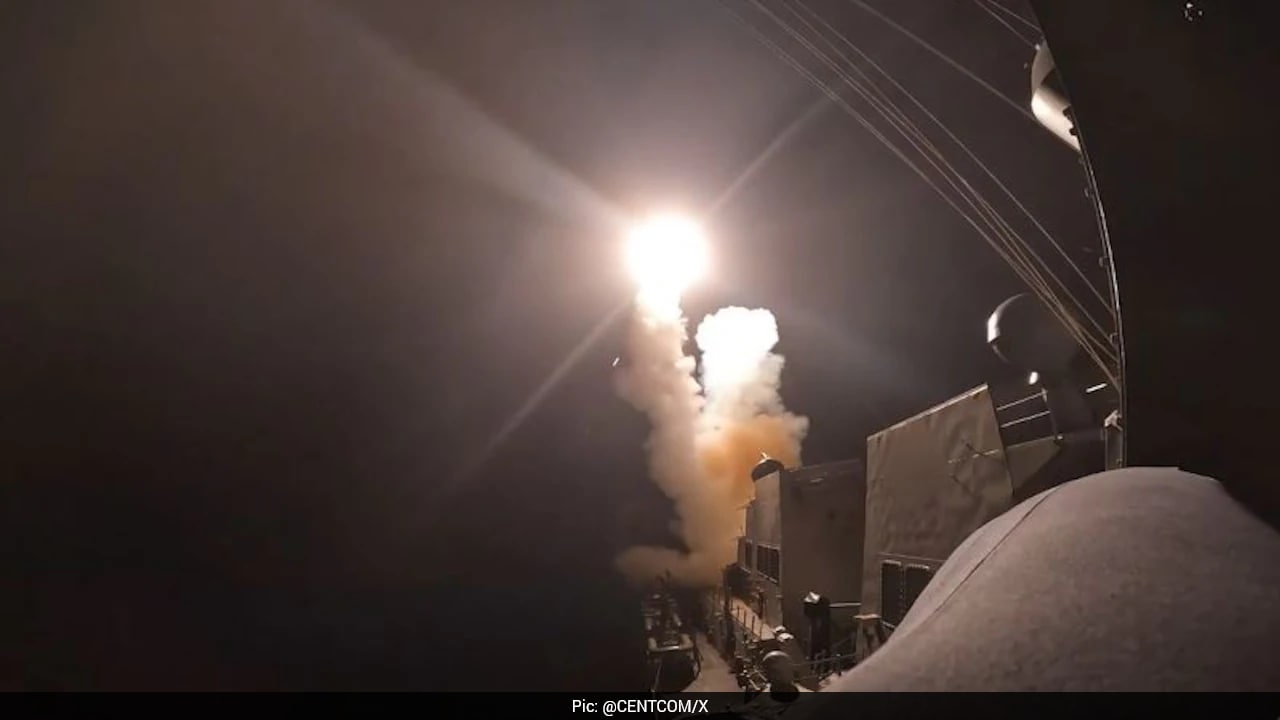
Every time Washington announces a synchronized wave of kinetic messaging against Iranian-backed proxies or infrastructure, the cable news industrial complex treats it like the opening weekend of a blockbuster franchise. We get the predictable graphics of stealth bombers, the solemn voiceovers about sending a message, and the institutional sigh of relief that America is projecting strength.
It is all a dangerous delusion.
I have spent two decades watching defense budgets swell while strategic clarity evaporates. We are treating systemic political and ideological friction like a plumbing problem that can be fixed with enough precision-guided munitions. The lazy consensus in every mainstream defense assessment is that dropping ordnance on concrete bunkers in the Middle East changes the calculation of a regime that has spent forty years optimizing for asymmetric attrition.
It does not.
Let us look at the actual math of these operations. When a carrier strike group launches sorties or long-range bombers fly thirty-hour round trips from continental airbases to drop multi-million dollar precision munitions on low-value warehouses, radar sites, or makeshift drone assembly points, we are engaging in a financial and strategic mismatch of historic proportions. You are using a scalpel that costs the price of a suburban elementary school to sever a weed that costs ten dollars to grow back.
The Iranian security apparatus does not measure success in square footage of standing buildings or undamaged logistics hubs. They measure success in endurance, narrative control, and the steady, compounding exhaustion of Western patience. When the Pentagon declares a successful wave of strikes, they are measuring output, not outcome. They count the sorties flown, the bombs dropped, and the secondary explosions captured on thermal imaging. They rarely count the strategic drift, the localized radicalization, or the economic drain on a Treasury already drowning in debt.
To understand why this strategy fails on contact with reality, you have to stop looking at military power as a blunt instrument of persuasion and start looking at it as an accounting ledger.
The Economics of Attrition That No One Wants to Discuss
The core fallacy of modern power projection is the belief that technological supremacy equals strategic deterrence. We assume that because we can hit a target with millimeter accuracy from six thousand miles away, the adversary will look at the smoking crater and decide to change their foreign policy.
That logic worked when adversaries were conventional nation-states with centralized industrial bases that took decades to rebuild. It fails catastrophically against decentralized, ideological networks funded by state actors who view physical infrastructure as entirely disposable.
Imagine a scenario where a convenience store owner tries to stop a swarm of hornets by shooting expensive glass-cutting lasers at the walls of his own shop. He hits the target every single time. The laser technology is magnificent. The targeting systems are state-of-the-art. But the hornets keep stinging because their nest is in the neighbor's yard, and the owner is just destroying his own drywall while the hornets reproduce faster than he can recharge his batteries.
That is the current state of defense policy.
When the US military executes a strike package, the cost equation heavily favors the defender. A single Tomahawk cruise missile costs roughly two million dollars. Intercepting cheap loitering munitions with high-end surface-to-air missiles burns through defense stockpiles at a rate that outpaces domestic manufacturing capacity. When you multiply that by a sustained campaign of retaliatory waves, you are not bleeding the adversary; you are bleeding yourself dry while teaching them how to adapt their signatures for the next iteration.
Defense analysts love to talk about sending a deterrent signal. Deterrence is not a broadcast; it is a reception. If the recipient does not care about the things you are breaking, your signal is just white noise.
The Myth of Decapitation and Tactical Theater
We keep falling for the myth that destroying command nodes alters the behavior of networked organizations. The structure of modern proxy warfare is deliberately cellular. Leaders are placeholders, and supply chains are redundant.
When a strike takes out a regional logistics hub, the network does not fold; it reroutes. It finds a new basement, a new smuggler route, a new front company in a neighboring jurisdiction. Meanwhile, defense contractors cheer because every smoking ruin means a fresh procurement contract to restock the depleted magazines.
I have sat in briefings where senior officials convinced themselves that a well-placed salvo would permanently alter the strategic posture of a adversary that views time as a weapon. They confuse motion with progress. They confuse tactical execution with strategic victory.
The real danger of these symbolic strikes is that they create a false sense of security among civilian leadership. They provide a release valve for domestic political pressure. The administration of the day can look at the cameras and declare that swift and decisive action was taken against aggression, satisfying the pundit class without having to make the hard, unglamorous choices required for actual statecraft.
It substitutes pyrotechnics for policy.
What Genuine Strategic Competence Looks Like
If you want to break the cycle instead of just funding the loop, you have to abandon the addiction to kinetic theater. That means accepting three uncomfortable truths.
First, tactical superiority cannot bail out strategic bankruptcy. If your diplomatic channels are dead, your regional alliances are transactional and hollow, and your domestic political will is fragile, no amount of ordnance will construct a stable security architecture.
Second, you must fight asymmetry with asymmetry, not with expensive symmetry. Pouring billions into exquisite platforms to swat down cheap threats is a slow-motion trap. The future belongs to low-cost attrition resilience, distributed sensing, and economic denial, not floating multi-billion-dollar airfields that are increasingly vulnerable to hypersonic saturation.
Third, you have to measure deterrence by what doesn't happen, not by how many tons of high explosives you manage to drop in a midnight raid. If your strikes require constant repetition every few months to achieve the exact same baseline of hostility, your strategy is not working. It is a treadmill disguised as a policy.
Stop cheering for the footage of midnight explosions. Start asking who benefits from a permanent state of expensive, low-yield escalation. The answer will not come from a press briefing at the Pentagon. It will come from looking at the balance sheet of an empire mistaking noise for authority.