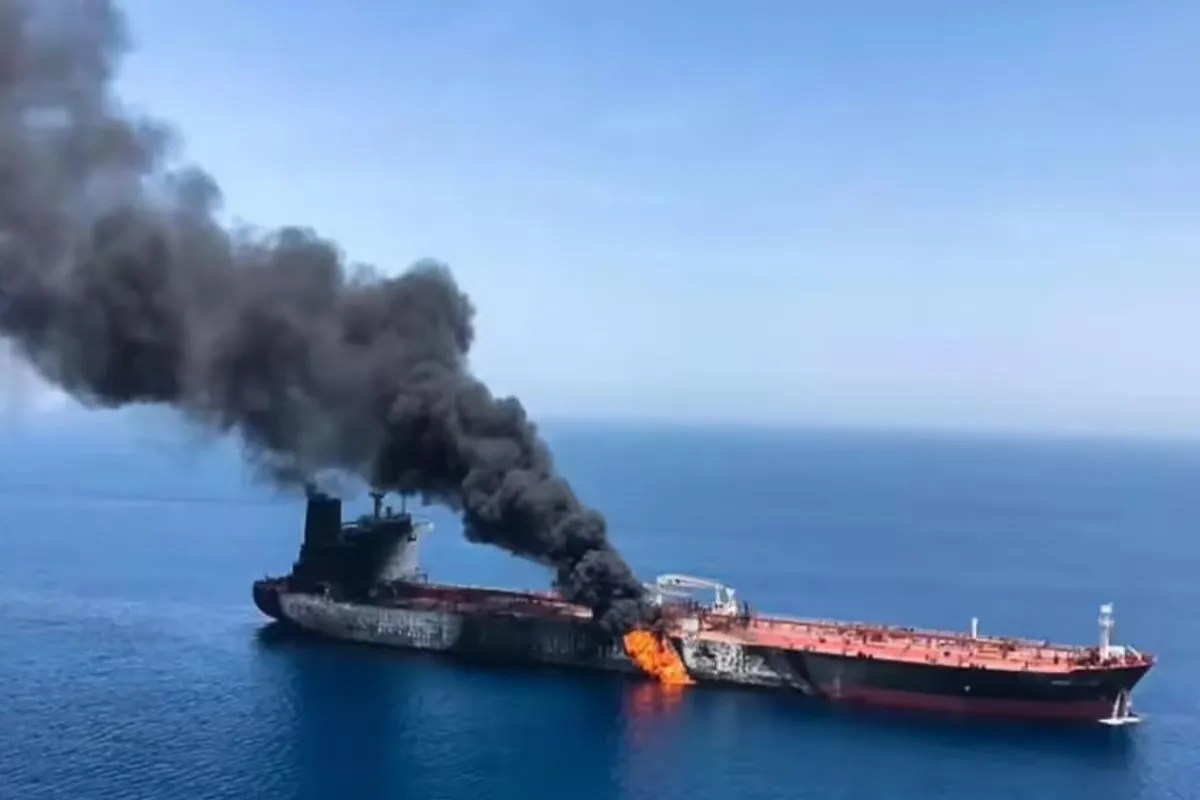
Every time a rust-bucket tanker gets clipped by a stray projectile near the Strait of Hormuz, the mainstream media rolls out the exact same tired script. Sirens blare across cable news. Pundits with zero maritime logistics experience scream about imminent global energy collapse. Crude prices jump three bucks a barrel by lunch, and armchair strategists start dusting off their Cold War maps to predict World War Three.
It is predictable. It is lazy. And it is completely detached from reality.
I have spent twenty years watching markets overreact to ghost stories in the Persian Gulf. I have seen desks panic-buy futures contracts based on grainy cellphone footage of smoke billowing off a minor chemical barge, only to watch those same positions bleed out a week later when everyone realizes nothing fundamentally changed.
The lazy consensus says that a pinch point in the Middle East equals an immediate chokehold on global commerce. That narrative ignores how modern supply chains actually operate.
Let us look past the headline panic and dismantle why the standard US-Iran tanker crisis narrative is built on sand.
The Anatomy of a Manufactured Shock
When two tankers carrying Saudi crude take minor hits, the knee-jerk reaction is to assume the arteries of global energy are bleeding out. That is bad analysis.
The Strait of Hormuz is narrow, yes. Roughly twenty-one miles wide at its absolute tightest point, with inbound and outbound shipping lanes just two miles wide each. It looks vulnerable on a flat map. But physical geography does not dictate economic vulnerability in the twenty-first century the way it did in 1973.
Insurance markets price these risks with cold, deadpan math. War risk premiums tick up a fraction of a percent. Tanker charter rates adjust. Ships reroute slightly or slow steam. The system absorbs the shock because global logistics are vastly more resilient than cable news producers understand.
Reality Check: A minor maritime skirmish does not destroy physical infrastructure. It changes the insurance spreadsheet for a fortnight.
When analysts claim that a closed Hormuz spells instant doom for industrialized nations, they conveniently forget about strategic petroleum reserves, North American shale elasticity, and the quiet pipelines running overland that bypass the Gulf entirely. Saudi Arabia and the United Arab Emirates did not spend billions building bypass pipelines like Petroline and Habshan-Fujairah just to let a few regional skirmishes hold their economies hostage.
Follow the Incentive Structure
Who actually benefits when crude spikes on phantom Persian Gulf threats?
Not the shipowners, who pay higher hull insurance. Not the end consumers, who pay more at the pump. The winners are algorithmic traders, hedge fund macro desks positioned long on futures, and state actors who survive entirely on high petroleum rents.
When you see breathless reporting about maritime blockades, ask yourself who is shorting what.
The geopolitical posture of Tehran is predictable. Rattling sabres in narrow waterways is cheap asymmetrical deterrence. It costs next to nothing to launch a drone or drop a limpet mine, and the psychological payout is massive because Western media amplifies every ripple into a tidal wave.
By biting on every provocation, Washington and regional capitals play right into a theatrical loop. We treat every minor scuffle as the opening salvo of Armageddon because panic sells advertising and justifies defense budgets.
The Logistics Reality Nobody Wants to Admit
Let us talk about the actual mechanics of moving crude across oceans.
A Very Large Crude Carrier, or VLCC, is a floating skyscraper. These vessels do not turn on a dime, but they also do not stop moving just because a regional power makes aggressive gestures.
During past escalations, tracking data consistently shows that traffic through the Gulf dips temporarily and then normalizes within days. Cargo owners calculate the risk-adjusted return and keep sailing. The economic cost of sitting idle in port vastly outweighs the marginal risk of transiting a contested corridor.
I have watched risk committees panic over theoretical closures while ignoring actual bottlenecks elsewhere, like Panama Canal draft restrictions caused by regional weather patterns that permanently altered more global tonnage in a month than a dozen tanker skirmishes ever could.
If you want to understand energy security, stop looking at naval destroyers and start looking at refinery crack spreads, storage inventories in Cushing, Oklahoma, and pipeline capacity utilization rates. Those are the metrics that actually matter. The rest is just noise designed to separate retail investors from their capital.
Stop Trading the Headlines
The single worst thing you can do during a Middle East maritime crisis is react to the initial flash.
When the market spikes on fear, the institutional money is usually already scaling into the opposite trade. They know the geopolitical risk premium is ephemeral unless a physical refinery goes up in smoke or a sustained, multi-month military blockade actually takes effect—neither of which is served by a random tanker grazing.
Treat these events for what they are: volatility events engineered by a toxic mix of regional posturing and media sensationalism.
Ignore the panic. Read the logistics manifests. Watch the pipeline flows.
The strait is open, the oil is moving, and the sky is right where it has always been.