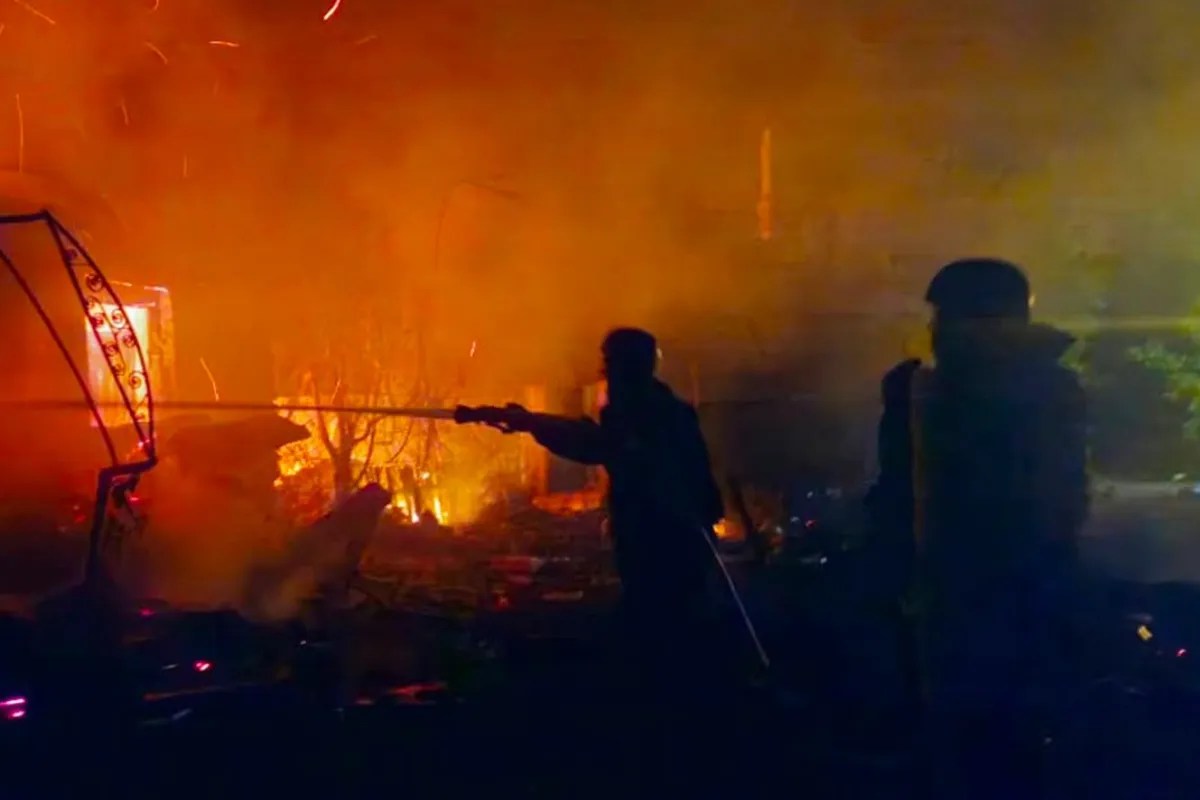
Every time a shell lands near Zaporizhzhia, the global media performs the exact same tired ritual. Sirens wail in the headlines. Pundits dust off Chernobyl comparisons, warning of an imminent nuclear apocalypse. Politicians in Kyiv demand more air defense, while Moscow shrugs off responsibility. The public reads these frantic alerts, pictures a mushroom cloud rising over the Dnipro River, and shudders.
Stop panicking. And more importantly, stop believing the lazy narrative that a reactor core meltdown is the primary threat hanging over Europe's largest nuclear plant.
I have spent years tracking critical infrastructure security, analyzing grid vulnerabilities, and watching how warfare evolves past traditional doctrines. I have seen governments blow millions preparing for the wrong disaster because a dramatic story sells better than dry, technical reality. The standard reporting on Zaporizhzhia relies on a fundamental misunderstanding of modern nuclear engineering, weapon design, and tactical military incentives.
The real danger has never been a sudden, catastrophic blast tearing open a containment dome. The real danger is much quieter, far more deliberate, and entirely ignored by the daily casualty ticker.
The Myth of the Cinematic Catastrophe
Let us clear up the physics immediately. Commercial nuclear reactors are not glass test tubes waiting to be smashed by artillery. The primary containment structures at Zaporizhzhia are multi-layered shields of reinforced concrete up to two meters thick, designed to withstand the impact of a crashing commercial airliner.
An ordinary artillery shell or a standard loitering munition scratching the exterior of a reactor building looks terrifying on a smartphone screen, but structurally, it is the equivalent of throwing a pebble at a tank. The core itself is submerged in massive pools of water, encased in steel, and engineered to shut down automatically upon the loss of external power.
When a headline screams that six people died in a strike near the facility, it is a tragedy. Human life is irreplaceable. But mixing urban casualties with nuclear scaremongering is a manipulation of the audience. It conflates conventional warfare on the perimeter with a nonexistent nuclear detonation scenario.
By hyper-focusing on the physical shells hitting the dirt outside, the media misses the actual war being waged over the facility.
The Quiet Weaponization of Grid Infrastructure
If you want to understand what is actually happening at Zaporizhzhia, forget about the reactor vessels. Look at the high-voltage transmission lines.
Nuclear plants are energy monsters. Even when the reactors are fully scrammed and shut down, they require a continuous, uninterrupted supply of external electricity to run the cooling pumps for the spent fuel pools. Without active cooling, the water boils away, zirconium cladding reacts with steam, and you get a localized radiological release—not a nuclear explosion, but a severe contamination event.
This is where the tactical reality diverges completely from popular panic. Nobody needs to blow up a containment dome to cause a crisis. You simply cut the external power lines. You starve the cooling systems of electricity.
We have watched this play out repeatedly. The facility has been forced onto emergency diesel generators multiple times throughout the conflict. Each transition from grid power to diesel backup is a high-stakes tightrope walk. The vulnerability is not the reactor wall; it is the fragile web of transformers, switchyards, and power corridors linking the plant to the national grid.
Yet, the news cycles rarely dwell on substation architecture or the redundancy of backup diesel fuel supplies. Those topics do not generate immediate clicks. Instead, we get endless speculation about direct hits to reactor cores, a scenario that betrays a total ignorance of basic nuclear physics.
The Strategic Detachment of Both Sides
To understand why the plant remains a flashpoint, we have to look past the moral posturing of both belligerents and examine cold, calculated strategy.
Kyiv uses the precarious status of the plant as an international tripwire. Every escalation around the perimeter is broadcast to the world to demand stricter sanctions, more advanced air defense batteries, and deeper western involvement. For Ukraine, the station is a constant, bleeding reminder that the conflict threatens the entire continent's ecological security.
Moscow, meanwhile, uses the facility as an unconventional shield and a strategic anchor. Holding Europe's largest nuclear plant grants a psychological veto. It alters the calculus of counter-offensive operations in the south because no military commander wants to risk heavy kinetic action immediately adjacent to a cluster of active and shut-down reactors.
Admitting this truth requires confronting an uncomfortable downside to my own analysis: pointing out that the plant is structurally resilient does not mean it is safe. It means the danger is political and operational, not cinematic. When two armies play high-stakes chicken around a complex industrial site dependent on delicate power balances, catastrophe does not arrive with a Hollywood explosion. It arrives through a cascade of small, neglected failures.
The Questions We Should Be Asking
When readers encounter updates about Zaporizhzhia, they are usually fed a diet of fear-mongering questions. Will the plant blow up today? Is Europe about to glow in the dark?
These are the wrong questions. They assume a binary outcome: either everything is fine, or we face total annihilation. Reality operates in the gray, messy middle.
The correct questions require looking at logistics and engineering:
- How many days of diesel fuel remain on-site if the last backup transmission line fails permanently?
- What is the condition of the maintenance crews operating under armed occupation, and how is cognitive fatigue affecting their ability to manage emergency responses?
- How resilient are the alternative water sources once the primary reservoir levels fluctuate due to upstream disruptions?
These are not easy questions to answer with a flashy headline. They require patience, technical literacy, and a willingness to abandon sensationalism.
Stop waiting for the reactor dome to crack. That is not how this story ends, if it ends badly. The real vulnerability is the slow, grinding erosion of the support systems that keep the monster asleep. Pay attention to the power lines, not the smoke on the horizon.


