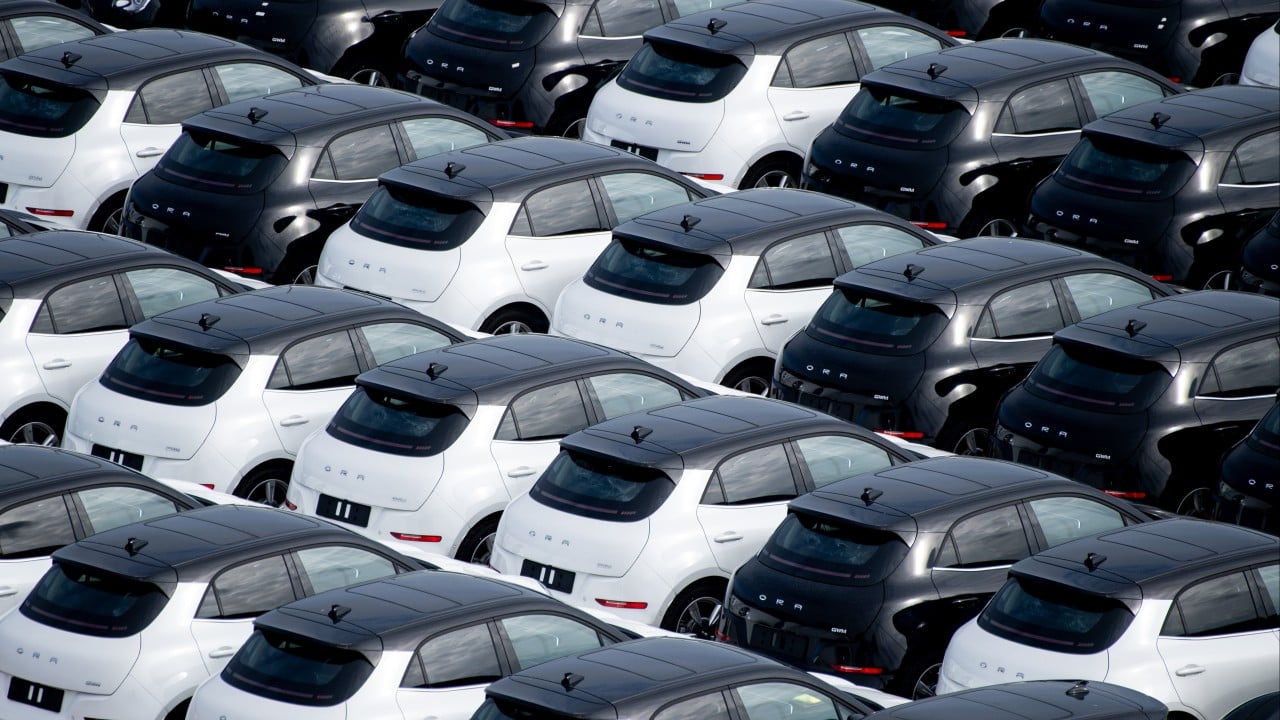
Brussels is having another collective panic attack over its trade deficit. Bureaucrats in glass offices are staring down an arbitrary autumn deadline, hyperventilating about a billion-euro daily imbalance, and drafting emergency import curbs that belong in a mid-century protectionist playbook. The lazy consensus across mainstream financial commentary is that Europe faces an existential industrial apocalypse unless Beijing bends the knee and agrees to buy more European luxury cars, wine, and chemicals to balance the books.
This framing is entirely backwards.
I have watched corporate executives and trade consultants blow millions of euros trying to optimize supply chains for a geopolitical reality that stopped existing years ago. The obsession with trade deficits is an economic superstition left over from the gold standard era. Money is not water in a pipe; it is a ledger of capital allocation. When European consumers buy Chinese electric vehicles, advanced batteries, and solar panels, they are not suffering from some predatory extraction mechanism. They are engaging in the rational arbitrage of buying superior, cheaper decarbonization tools that their own domestic industrial base failed to produce at scale.
By treating this commercial reality as a hostile act of economic warfare, European leadership is masking a deeper, more uncomfortable truth: the continent is suffering from structural sclerosis, high energy costs self-inflicted by regulatory overreach, and a corporate addiction to short-term dividends over long-term capital expenditure.
To understand why the impending deadline for tangible results is a paper tiger, look at how modern manufacturing actually functions. Beijing does not need to cave to European demands because European industry is fundamentally dependent on Chinese intermediate inputs. Jens Eskelund, head of the European Chamber of Commerce in China, put it bluntly when he noted that European firms are becoming more reliant on Beijing, not less. You cannot slap punitive tariffs on the entities keeping your own automotive and chemical lines operational without committing economic self-harm.
Imagine a scenario where Brussels actually follows through on its bravado, slaps prohibitive tariffs across the board, and forces a decoupling. European factories would stall within quarters, not because of a lack of consumer demand, but because alternative supply chains do not exist. You cannot magic a chemical processing facility or a rare earth refinery out of thin air simply because a trade commissioner set a date on a calendar.
The real threat to Europe is not that China exports too much cheap product. The real threat is that Europe is legislating its own industrial irrelevance while hiding behind trade defense instruments that act as a tax on its own citizens. When governments protect legacy sectors from creative destruction, they freeze capital in dying business models instead of redirecting it toward the next frontier of productivity.
Look closely at the data coming out of major financial institutions. While analysts love to point fingers at the headline trade gap, Europe’s underlying growth drag has far more to do with internal structural bottlenecks—fragmented capital markets, sluggish digital adoption, and an expensive transition to green energy executed without a reliable baseload power strategy. Blaming Beijing for the fact that a German factory pays multiples more for electricity than its Asian competitor is a convenient political deflection. It is much easier to point to a villain in the East than to admit that your internal economic architecture is creaking under the weight of excessive bureaucracy.
So what happens when the deadline arrives and the numbers do not magically balance? Nothing catastrophic. There will be compromise communiques, face-saving joint monitoring mechanisms, and a quiet backing away from the cliff edge because neither side can afford a full-scale commercial rupture.
Stop worrying about the bilateral trade deficit. Start worrying about an industrial strategy built on denial. Europe does not need a trade war to fix its economy. It needs to stop pretending it can legislate away global competition.