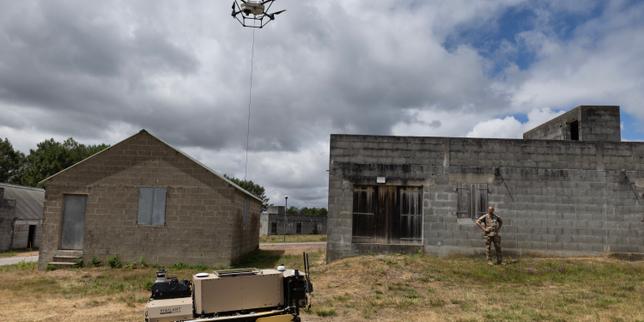
The current defense discourse is obsessed with a comfortable, high-minded paradox: how to weaponize artificial intelligence while maintaining an immaculate moral compass. European defense ministers and think-tank experts love to gather on panels, furrow their brows, and declare that our greatest challenge is fighting malicious AI without compromising our democratic values.
It is a beautiful sentiment. It is also an existential threat.
The comforting consensus assumes that warfare is a debate where the side with the cleanest hands wins. It assumes our adversaries are sitting around waiting for Western ethicists to define the acceptable parameters of algorithmic warfare before they deploy their own models. They are not. By tying our defense systems in knots over hypothetical moral failures, we are handed a guaranteed recipe for strategic obsolescence.
Ethics are a luxury of the victorious. If you lose the algorithmic arms race because your validation process required a twelve-month human-in-the-loop ethical review, your values won't survive the aftermath anyway.
The Flawed Premise of Symmetric Restraint
The core mistake of modern defense strategy is treating AI like a traditional weapon system, subject to standard non-proliferation treaties and rules of engagement. Traditional deterrence works because hardware is visible, measurable, and slow to produce. A nuclear silo or an aircraft carrier cannot be hidden in a line of code.
AI is different. It is invisible, highly asymmetric, and infinitely replicable.
When defensive doctrines insist on "values-first" AI development, they create a dangerous asymmetric vulnerability. Consider the reality of autonomous drone swarms. A defensive system operating under strict Western ethical constraints might require real-time human verification before initiating a kinetic strike to eliminate an incoming threat. In contrast, an adversarial system operating on pure optimization will execute commands in milliseconds.
In algorithmic warfare, speed is not an advantage; it is the only variable that matters. If your OODA loop (Observe, Orient, Decide, Act) is throttled by bureaucratic compliance checks, you are dead before your model even finishes rendering its confidence score.
I have watched defense tech primes burn millions of dollars trying to build "explainable AI" for battlefield command and control. They want a deep neural network that can explain exactly why it flagged a specific target in a dense urban environment. It sounds reasonable until you realize that demanding absolute interpretability fundamentally cripples the machine's capacity to find non-linear patterns that human brains cannot comprehend. If we limit our AI to only what humans can easily understand and approve, we aren't building advanced intelligence—we are just building faster bureaucracy.
The Myth of the "Clean" Defensive AI
Let’s dismantle the premise of the popular question often found in defense forums: How can democracies ensure AI is only used defensively?
The question itself is structurally flawed. In computer science and network security, there is no functional difference between offensive and defensive capabilities. The exact same generative models used to detect deepfakes are used to create them. The same reinforcement learning algorithms used to optimize missile defense grids can be flipped to map out saturation strikes against those very grids.
Trying to build a purely "ethical, defensive AI" is like trying to invent gunpowder that only explodes when it's being shot at.
+------------------------------------+------------------------------------+
| The Bureaucratic Fantasy           | The Algorithmic Reality            |
+------------------------------------+------------------------------------+
| AI as a slow, predictable tool     | AI as a fluid, autonomous system   |
| Humans verifying every decision    | Machine-speed execution            |
| Geopolitics governed by treaties   | Geopolitics governed by compute    |
+------------------------------------+------------------------------------+
By prioritizing restraint over capability, we aren't actually preventing the weaponization of AI. We are simply ensuring that the dominant models dictating global security will be trained on the data sets and values of authoritarian regimes.
The True Cost of Algorithmic Purism
There is a massive downside to taking a pragmatist, capability-first approach to military AI. It means accepting a higher tolerance for systemic unpredictability. Deep learning models can fail in unexpected ways, a phenomenon known as distributional shift, where a model encounters data outside its training set and hallucinates or misclassifies targets.
But here is the brutal truth nobody wants to say out loud: an occasional algorithmic failure is mathematically preferable to systemic defeat.
We accept human error in warfare constantly. We accept that commanders make wrong calls under pressure, that intelligence is imperfect, and that friendly fire happens. Yet, we demand 100% perfection from machine systems before they are allowed in the field. This double standard is a psychological coping mechanism, not a rational defense policy.
If an adversary deploys a million fully autonomous micro-drones guided by a cheap, unaligned model that hits its targets with 85% accuracy, they will overwhelm a defensive force utilizing an ethically vetted, 99.9% accurate system that takes ten times longer to deploy and costs twenty times more to validate. Quantity and speed have a quality all their own.
Shift the Paradigm from Verification to Resilience
Instead of wasting intellectual capital on defining what AI shouldn't do, the defense apparatus needs to pivot toward systemic resilience. We must accept that adversarial AI will be malicious, unaligned, and completely unconstrained by Western philosophy.
Stop trying to fix the ethics of the code. Fix the architecture of the defense.
- Decentralize the Infrastructure: Centralized command centers are massive targets for algorithmic poisoning and cyber-kinetic strikes. Edge computing must be prioritized, allowing localized systems to operate completely autonomously when communications are severed.
- Embrace Synthetic Training Environments: Western forces are terrified of training AI on real-world edge cases due to political blowback. We must utilize hyper-realistic synthetic environments to train models on brutal, unconstrained scenarios without regulatory friction.
- Optimize for Compute, Not Consensus: The nation with the most efficient hardware and the largest pipeline of clean data wins. The focus must shift from writing policy documents to securing the semiconductor supply chain and building massive localized data centers.
The moral high ground is a useless position if it is targeted by an autonomous hypersonic missile running on an unvetted, unaligned neural network. If we continue to treat AI development as an ethical philosophy seminar rather than a technical arms race, we will find ourselves with perfectly preserved values inside a broken civilization.
Stop hand-wringing. Build the systems. Win the race.