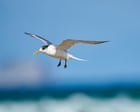
The geographic buffer that protected Australia for years from the world’s most devastating wildlife disease has finally collapsed. Laboratory testing has confirmed that highly pathogenic H5N1 bird flu has infected a greater crested tern in Robe, South Australia. This is not just another statistic. It represents the first time the lethal strain has breached local, non-migratory wildlife populations on the Australian mainland, shifting the nature of the threat from an external risk to an internal emergency.
For years, biosecurity officials relied on the continent's extreme isolation and the specific migration patterns of waterfowl to hold the line. That strategy is now obsolete. While early cases detected since mid-2026 were confined to vagrant migratory species like the brown skua and southern giant petrel, the virus has now jumped the species barrier into residential coastal birds. The greater crested tern shares overlapping feeding and roosting zones with these ocean-roaming carriers, turning Australia's pristine coastlines into transmission zones.
Government officials are projecting a calm front, emphasizing that no mass mortality events have been recorded on the mainland yet. But ecology experts recognize this as the quiet before an exponential curve.
The Anatomy of an Incursion
The virus did not arrive overnight. It crept across the Southern Ocean via sub-Antarctic islands where it left a trail of immense destruction. During the 2025–2026 summer, an estimated 13,000 elephant seal pups perished from the virus on Heard Island, a remote Australian territory. The sheer scale of that die-off should have triggered immediate, aggressive local interventions on the mainland rather than standard passive surveillance.
Instead, the response relied heavily on the historical anomaly that Australia lacks duck species migrating directly from virus-endemic regions in Asia. This biological quirk created a false sense of security. What authorities overlooked was the adaptability of pelagic scavengers. Skuas and petrels regularly track thousands of kilometers across the freezing waters of the Southern Ocean, acting as highly efficient biological vectors that transport the pathogen directly into Australian waters during the winter months.
When a sick brown skua was pulled from Cape Le Grand National Park in Western Australia, the countdown began. Within weeks, additional cases popped up across multiple states, culminating in the Robe detection. The greater crested tern is a sentinel for a much wider ecosystem collapse because these birds nest in dense, highly social colonies where virus transmission occurs through simple proximity and shared water sources.
The Broken Promise of Passive Surveillance
Enhanced surveillance has been deployed in South Australia, but tracking dead bodies is a post-mortem diagnostic tool, not a preventative strategy. The current framework relies almost entirely on citizens and field rangers reporting clusters of dead birds via emergency hotlines.
This approach contains an inherent blind spot. By the time five or six dead birds are noticed on a public beach, the virus has likely cycled through hundreds of sub-clinical hosts. The unique composition of Australian wildlife makes this delay dangerous. Nearly half of the nation's wild birds and over 80 percent of its mammals exist nowhere else on Earth. Species already hovering on the brink, such as the critically endangered orange-bellied parrot, have no natural immunity to clade 2.3.4.4b.
Conservation groups are demanding a shift from observation to active ecological defense. Passive monitoring will not save colonial seabirds or the unique mammalian scavengers like the Tasmanian devil, which could easily ingest infected carcasses.
The Economic Shadow Over Agriculture
While the current narrative isolates this as a conservation issue, the commercial stakes are high. Poultry industries remain free from the H5 strain, but the international precedent is grim. In overseas markets, the introduction of this specific lineage led to the culling of over 140 million domestic birds between 2025 and 2026 alone.
The virus has also demonstrated an affinity for dairy cattle and domestic mammals abroad. Australia’s agricultural sector cannot afford to treat this as an isolated wildlife incident. If the virus establishes a permanent reservoir in local coastal birds, the interface between wild ecosystems and commercial farms will become highly volatile.
Realities of Wildlife Vaccination
Aggressive intervention is controversial. Experts argue that attempting to vaccinate wild populations is a logistical nightmare with limited returns. Capturing thousands of wild terns or migratory shorebirds to administer multiple doses is impossible on a continental scale.
However, targeted deployment for critically endangered species in localized sanctuaries is viable. It requires immediate funding and immediate regulatory approval for modern wildlife vaccines. Waiting for widespread agricultural infections before deploying these tools ensures that unique wild species will bear the brunt of the damage.
The South Australian state government continues to monitor the coastline near Robe. Every week without a recorded mass die-off is a grace period, not an exemption. The presence of the virus in a local native bird confirms that the geographic moat has dried up.
For a visual breakdown of how the national emergency response is handling these initial mainland detections, watch this report on the First Suspected Mainland Bird Flu Case, which details the early stages of the incursion before the virus spread to local native populations.
Federal and state authorities must transition from recording the arrival of this ecological crisis to actively mitigating its spread, beginning with strict biosecurity perimeters around vulnerable wildlife sanctuaries and immediate, mandatory testing protocols across all coastal bird colonies.