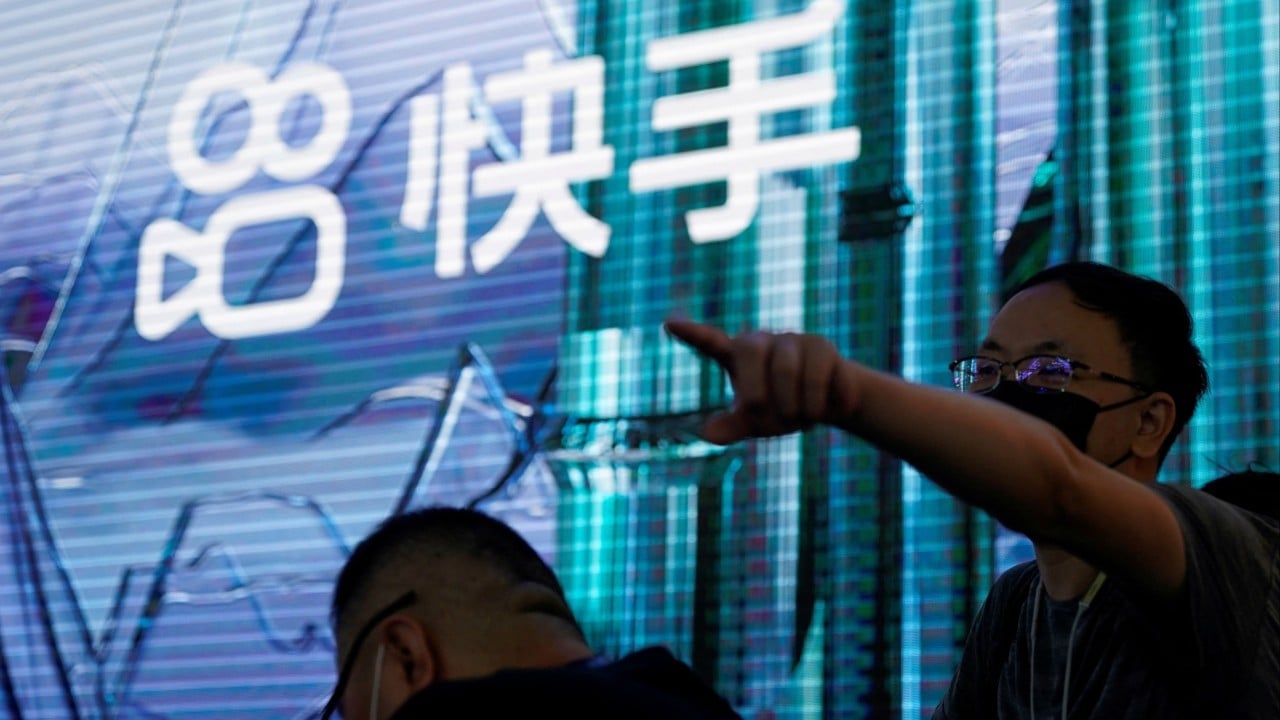
The trading floor in Hong Kong does not care about your childhood memories. It does not care about the late-night scrolling, the digital communities built in rural villages, or the quiet, multi-year war fought between tech empires for the fleeting attention of a nation. It cares about numbers. And on a humid Tuesday morning, the numbers for Kuaishou Technology were bleeding.
A 6% drop. Then a stumble toward a deeper loss. To the casual observer tracking tickers, it was just another day of market volatility, another tech stock taking a bruising. But look closer, past the glowing red digits on the monitor, and you see the shattering of a decade-long alliance. If you enjoyed this piece, you might want to check out: this related article.
Tencent Holdings, the titan that had long acted as Kuaishou’s financial big brother, anchor, and primary shield against the ruthless expansion of ByteDance, had quietly stepped away from the main table. By offloading 273 million Class B shares through an off-market block trade, Tencent sliced its stake from 15.68% down to 9.37%. With one multi-billion-dollar stroke, the giant ceased to be a substantial shareholder.
It felt like a betrayal. But in the cold math of the current tech gold rush, it was something entirely different. It was a relocation. For another perspective on this development, refer to the recent coverage from ZDNet.
To understand why a company would sell off $1.6 billion of its longest-running bet while the stock is scraping a low point, you have to look at what happened just days prior. Behind closed doors, Kuaishou had finalized an independent spin-off financing round for its crown jewel, Kling AI. The valuation was pinned at a staggering $18 billion. The funding cap? A cool $3 billion.
And sitting there, right among the buyers, was Tencent. Alongside rivals Alibaba and Baidu, they had formed a rare, unified front to pump cash into Kling.
Consider the paradox. Tencent is actively abandoning the house that Kuaishou built, yet eagerly buying up the bricks of Kuaishou’s basement laboratory. It is a calculated, almost brutal migration. The old world—the world of algorithms optimizing human attention through short-form videos, dances, and micro-dramas—is a mature, crowded room. The growth has leveled off. The margins are thin.
The new world is hungry. It consumes cash like oxygen. Kling AI, for all its technical brilliance and ability to generate hyper-realistic video from a single text prompt, is a financial furnace. It lost $73.6 million in 2024. By 2025, that annual hemorrhage widened to nearly $280 million. Two years. More than $353 million gone, evaporated into cloud computing bills and elite engineering salaries.
Every great tech migration requires a sacrifice. Imagine a colonial fleet realizing its flagship is too heavy to cross the shallow reef toward the new continent. You don't sink the ship; you unload the cargo, sell the excess timber, and use the gold to build nimble scouting vessels. Kuaishou’s core business is that heavy flagship. Kling is the scout.
The market's initial panic is easy to diagnose. When the smartest money in the room starts selling, the instinct is to run for the exits. But this wasn't a liquidation born of fear. It was a pivot born of necessity. Tencent didn't leave the game. It just changed seats to get a better view of the screen.
The true anxiety for investors lies elsewhere. It is the realization that the cost of admission to the artificial intelligence era is far higher than anyone anticipated. It demands cash flows that even the most profitable short-video platforms struggle to maintain on their own. By pulling $1.6 billion out of the equity market, Tencent secured the dry powder it needs to fund its own infrastructure, including massive domestic hardware agreements, while keeping its foot firmly in Kling’s door.
For Kuaishou’s leadership, the sting of the sell-down is real, but it is cushioned by an undeniable validation. The world's most aggressive tech firms just verified that their AI experiment is worth billions. They have retained absolute control of Kling, keeping over 68% of the entity under their corporate umbrella. They are buying back their own stock to stabilize the ship.
The story of this market tumble isn't about failure. It is about the expiration date of an era. The age of social media apps as the ultimate destination for capital is drawing to a close. The pioneers are packing up, leaving the comfortable valleys of user-growth metrics, and climbing into the cold, unpredictable heights of generative intelligence. It is a journey where only the well-capitalized survive, and where old friendships are easily traded for a better position on the launchpad.