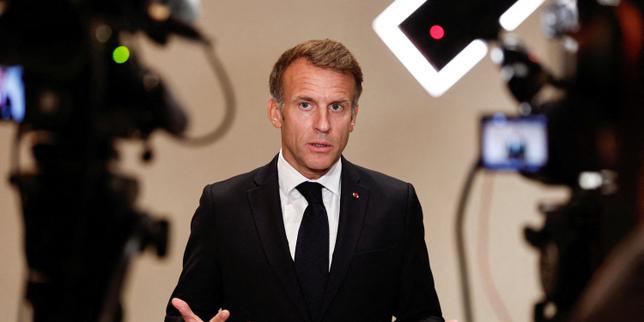
International politics has long operated on a quiet understanding. Leaders posture for domestic audiences, throw rhetorical red meat to their bases, and occasionally trade barbs across borders. But recent years have witnessed a sharp deterioration in diplomatic decorum. Foreign officials increasingly find that invoking France, or targeting its sitting president, offers a convenient shortcut to domestic political gain. Emmanuel Macron has chosen to break his silence on this phenomenon, calling out foreign counterparts who build domestic political campaigns on the back of France.
This dynamic is not merely a matter of bruised diplomatic egos. It represents a calculated strategy by external actors to export their own domestic instability by manufacturing external antagonists. When leaders facing plummeting approval ratings or legislative gridlock pivot toward attacking Paris, they are exploiting structural vulnerabilities in European governance. Understanding why this happens requires examining the intersection of modern political communication, declining multilateral trust, and the specific role France occupies in the European imaginary.
The Mechanics of External Scapegoating
Political survival often demands an enemy. In tightly integrated geopolitical blocs like the European Union, direct conflict between member states carries a heavy economic and political price. Open trade wars or treaty violations trigger immediate institutional retaliation. Consequently, ambitious politicians seeking a frictionless target look for a state that is prominent enough to matter to their voters, yet structurally constrained enough to avoid devastating counter-attacks.
France fits this profile precisely. As an unapologetic nuclear power with a permanent seat on the United Nations Security Council and an independent foreign policy tradition often termed Gaullism, Paris frequently charts its own course. This assertiveness makes it an easy target for populist or nationalist politicians abroad. When a foreign leader accuses Paris of overreach, arrogance, or economic sabotage, they are tapping into historical anxieties while deflecting attention from domestic policy failures.
Consider how this manifests in practice. A government struggling with inflation, public sector strikes, or parliamentary stalemate can quickly shift media narratives by picking a fight with French regulations or presidential declarations. The domestic media cycle shifts from local economic malaise to a defense of national sovereignty against perceived French paternalism. The cost is negligible for the instigator, while the electoral return can be immediate.
The French Exception and European Friction
To understand why France is uniquely positioned for this treatment, one must look at how the country views its own global role. French political culture places an immense premium on universalism and intellectual leadership. From the perspective of the Élysée Palace, proposing ambitious European reforms or strategic autonomy is an act of continental stewardship. From the perspective of smaller member states or populist movements elsewhere, those same proposals often look like French arrogance dressed up in European rhetoric.
This tension creates an opening for opportunistic actors. When Macron champions European defense integration or stricter fiscal discipline, he provides a tangible face for abstract anxieties about globalization and centralization. Foreign politicians seize upon these initiatives, twisting them to claim that France intends to dictate terms to its neighbors.
The strategy relies on a distortion of diplomatic realities. Macron's speeches are routinely stripped of their nuance, transformed into soundbites designed to outrage foreign electorates. By framing bilateral policy disagreements as a clash of civilizations or an existential struggle for national dignity, foreign politicians elevate minor regulatory disputes into major cultural flashpoints.
The Domestic Trap for the Élysée
Responding to these external provocations presents a severe tactical dilemma for the French presidency. Ignoring the attacks risks allowing foreign narratives to harden unchecked, projecting weakness both at home and abroad. Yet, dignifying every opportunistic swipe with a formal rebuttal elevates fringe foreign actors and grants legitimacy to bad-faith criticisms.
Macron’s recent interventions signal a shift in this calculus. By directly calling out the practice, the French administration is attempting to change the rules of engagement. The message to foreign capitals is straightforward: Paris will no longer absorb friendly fire from politicians seeking an easy electoral bump without pushing back in the public sphere.
However, this assertive posture carries its own risks. It can be weaponized in reverse by the very critics who provoked it, allowing them to claim that France is thin-skinned and obsessed with its own prestige. Navigating this diplomatic minefield requires surgical precision, separating genuine policy disagreements from manufactured political theater.
The Broader Cost to Multilateralism
The casual weaponization of diplomatic relations for domestic electoral gain ultimately erodes the architecture of international cooperation. When foreign policy becomes an extension of domestic campaign strategy, long-term strategic alignment fractures. Trust between allies takes decades to build and mere months to dismantle.
As long as populist and nationalist movements continue to find electoral utility in anti-French rhetoric, this friction will persist. The European project relies on a baseline of mutual respect and institutional stability, both of which are undermined when leaders treat international partners as electoral punching bags. Macron's critique is a warning shot, highlighting a corrosive trend that threatens to hollow out traditional diplomacy long after the next round of foreign elections has passed.

