On a Tuesday night in San Francisco, the air smells faintly of ozone and expensive espresso. Inside a glass tower that cuts into the low-hanging fog, a twenty-six-year-old engineer named Marcus watches a progress bar. It crawls from 98% to 99%. When it hits 100%, a cluster of thousands of liquid-cooled graphics processing units spread across three states hums a fraction quieter.
Marcus is not building a medical breakthrough. He is training a model to write corporate compliance emails slightly faster than a human can.
To fund those few percentage points of efficiency, a venture capital firm poured forty million dollars into Marcus’s company last month. To keep those chips running, a data center in Iowa consumed enough water to fill three Olympic-sized swimming pools. Everyone involved is betting on a future where this specific flavor of mathematics becomes the oxygen of the global economy.
But out in the hallway, away from the glow of the monitors, the conversation changes. The whispers aren't about the technology. They are about the math that keeps the lights on. The financial kind.
We have stood on this exact precipice before.
The Ghost of 1999
Walk into any boardroom today, and you will hear a familiar gospel. Artificial intelligence will reinvent productivity. It will automate the mundane. It will spark a multi-trillion-dollar supercycle of economic growth.
The people selling this vision are not lying, but they are omitting something crucial. History does not repeat, but it does echo with terrifying clarity.
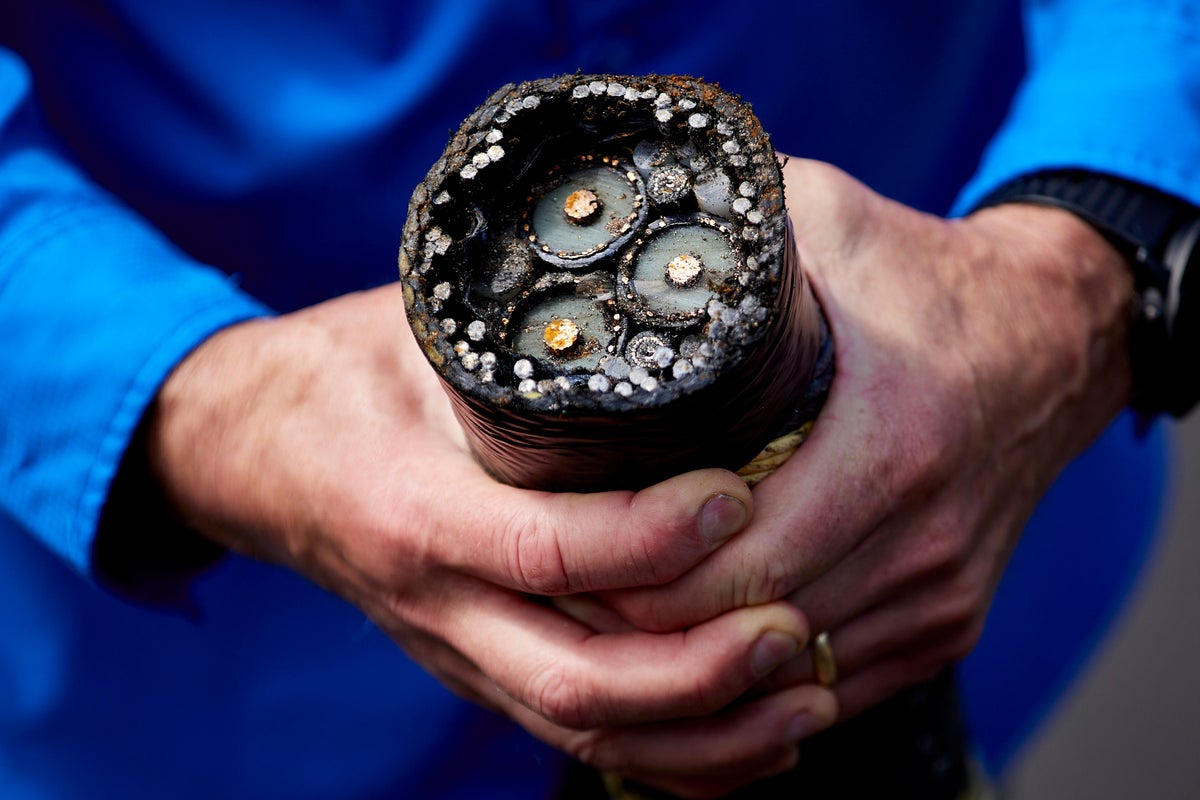
Consider the late 1990s. The internet was changing the world. Telecom companies looked at the exploding traffic and came to a logical conclusion: we need fiber-optic cables. Miles of them. Oceans of them. Companies like WorldCom and Global Crossing spent tens of billions of dollars burying glass cables beneath the earth, anticipating a tidal wave of data.
The data came. The internet did indeed change civilization.
Yet, the companies that built the infrastructure went bankrupt. They built for a future that arrived five years too late for their balance sheets. The sheer volume of supply crushed the price of bandwidth. The boom became a bubble, the bubble burst, and the physical foundations of the digital age were bought for pennies on the dollar by the survivors.
Today, the infrastructure is different, but the behavior is identical.
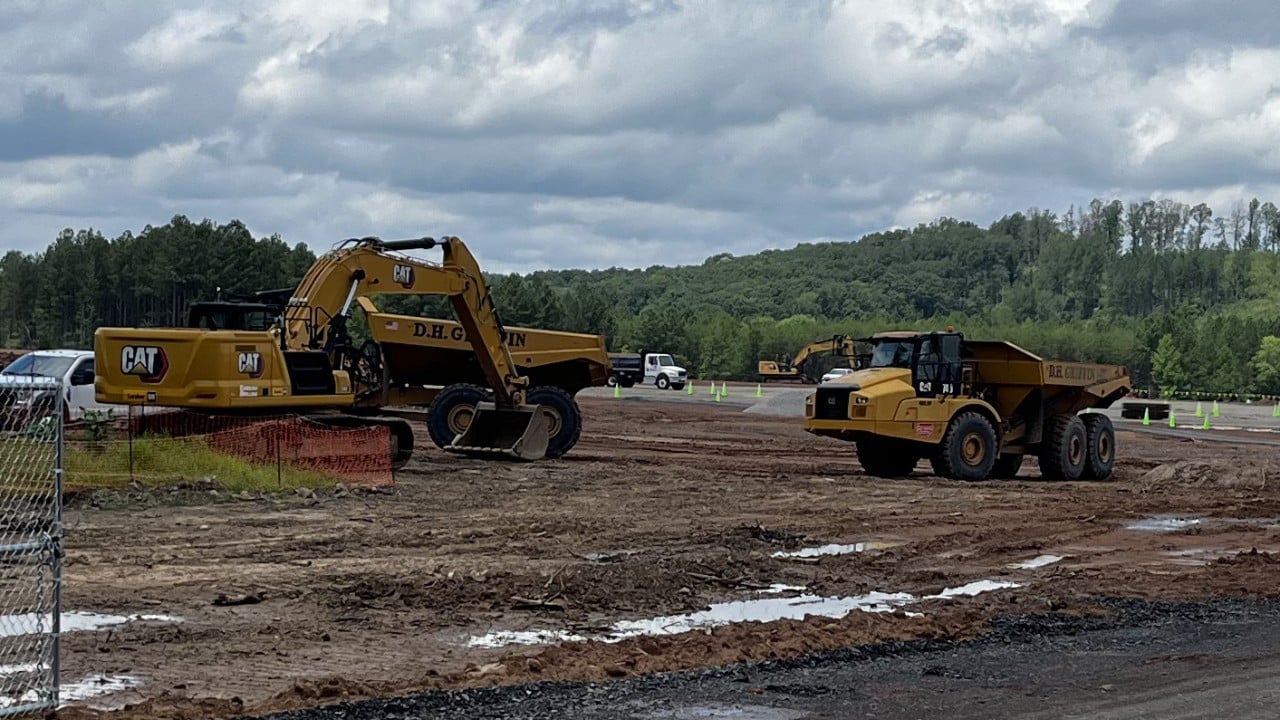
Instead of glass cables, we are hoarding silicon. The tech giants are spending an estimated one hundred billion dollars a year on data centers and chips. They are buying energy rights from nuclear plants. They are securing land. Every quarterly earnings report features a CEO promising that the risk of underinvesting is far greater than the risk of overspending.
It is a terrifying game of chicken. If you stop buying chips, your competitor might build the god-machine first. So, you keep buying.
But look at the cash flows. The revenue generated by these models—mostly from corporate subscriptions and coding assistants—remains a tiny fraction of the capital being thrown into the furnace. Right now, the AI industry needs to generate roughly six hundred billion dollars a year just to pay for the hardware it is buying.
Currently, it makes nowhere near that.
The Customer at the End of the Hall
To understand why this gap exists, you have to leave Silicon Valley and travel to a mid-sized insurance firm in Ohio.
Meet Sarah. She manages a team of forty claims adjusters. Six months ago, her company bought an enterprise license for a cutting-edge AI assistant. The pitch was simple: the software would read medical records, summarize accident reports, and save each employee two hours a day.
Sarah was thrilled. She envisioned her team focusing on complex cases, human empathy, and strategic growth.
Then the reality settled in.
The AI was fast. It was also occasionally delusional. It hallucinated dates. It mixed up claimant names. It summarized a three-page document brilliantly but missed a single, legally binding sentence on page four.
"It's like having an incredibly eager, brilliant intern who is also a pathological liar," Sarah told me over coffee.
Because the stakes are high—a single mistake can trigger a multi-million-dollar lawsuit—Sarah had to implement a new policy. Every single AI summary must be verified by a human being against the original document. The two hours saved by the software are now spent auditing the software.
The net productivity gain? Zero.
The software costs thirty dollars per user per month. Multiply that by thousands of employees across the enterprise, and you get a massive line item on the corporate budget with no measurable return on investment.
This is the quiet crisis brewing beneath the hype. The technology is magnificent at demonstrations. It is breathtaking at generating concept art or writing poetry. But the enterprise world runs on accuracy, predictability, and legal compliance. When a tool is 95% accurate, it feels miraculous. When that same tool is 5% wrong in a financial audit, it is a liability.
If corporate buyers like Sarah do not see their bottom lines improve by next year, they will cancel the subscriptions. If the subscriptions are canceled, the revenue vanishes. If the revenue vanishes, the tech giants cannot justify buying one hundred billion dollars worth of chips every year.
That is how a boom turns into a hollow shell.
The Invisible Toll
The debate over whether this is a sustainable expansion or a speculative mania usually stays confined to spreadsheet cells. We talk about price-to-earnings ratios and capital expenditure.
We rarely talk about the physical weight of abstract code.
Every time Marcus runs his model, a massive physical apparatus responds. A turbine spins. Carbon is emitted. A river loses a fraction of its volume to cooling systems. We are transforming tangible, finite planetary resources into probabilistic text strings.
There is a profound disconnect between the ethereal language of "the cloud" and the brutal reality of the concrete structures housing these machines. They require their own power substations. In some regions, data centers are consuming so much electricity that local utilities are delaying the retirement of coal-fired power plants just to keep the grid from collapsing.
We are borrowing against our physical reality to finance a digital possibility.
If this expenditure yields a technology that cures cancer or solves fusion energy, the trade is worth it. The boom justifies the cost. But if we are burning through our energy reserves merely to generate better advertising copy or to automate customer service lines with synthetic voices that frustrate consumers, we are participating in a collective delusion.
It is terrifying to admit how little we know about where this ends.
Even the researchers inside the top laboratories are quietly whispering about the law of diminishing returns. For years, the rule was simple: make the model bigger, feed it more data, and it will get smarter. But the internet is running out of clean data. The models are now being fed text generated by other models, leading to a strange, incestuous degradation of quality.
The scaling laws are hitting a wall of physics and linguistics.
The Survivors of the Crash
Let us assume the worst happens.
Let us assume the skeptics are right, the enterprise revenue fails to materialize, and Wall Street realizes the AI emperor has no clothes. The stocks plummet. The startups that raised billions on nothing but a pitch deck and a .ai domain name evaporate overnight. The glitzy offices in San Francisco go dark.
What happens the day after the bubble bursts?
Something beautiful, actually.
When the dot-com crash happened, it felt like the end of the world. Thousands of people lost their jobs. Paper fortunes disappeared. But the fiber-optic cables stayed in the ground. Because that infrastructure was cheap and plentiful, it became the foundation for everything that followed. YouTube, Netflix, Spotify, and the entire mobile app economy were only possible because the previous generation overbuilt the network at a loss.
If the AI bubble bursts, the data centers will not disappear. The millions of advanced chips will still exist. The infrastructure will become commoditized, cheap, and accessible to everyone.
The real innovation rarely happens during the gold rush. It happens when the miners leave, the equipment is sold for scrap, and the true builders get to work without the noise of the hype machine.
Marcus still sits at his desk. The fog has completely swallowed the city outside his window. His model is finished training. He types a prompt into the interface, asking it to solve a complex, nuanced logic puzzle that has stumped his team for weeks.
The cursor blinks. Once. Twice.
The output appears. It is elegant. It is structured.
It is also completely wrong.
Marcus sighs, deletes the text, and begins to type the code by hand, his fingers clicking softly in the quiet room, the human engineer fixing the machine, waiting for a future that is taking its own sweet time to arrive.