Eighteen.
To a headline writer sitting in a quiet newsroom thousands of miles away, eighteen is a clean, manageable digit—a figure that fits neatly into a breaking-news banner before the ticker scrolls on to weather updates and market closings. When Ukrainian President Volodymyr Zelensky announced that Russian bombardments had killed eighteen people across the Zaporizhzhia oblast, the global machinery of journalism did what it always does: it logged the toll, updated the running tally of a war grinding past its fourth year, and moved on.
Numbers have a strange, anesthetic quality. They protect us from the weight of what they represent.
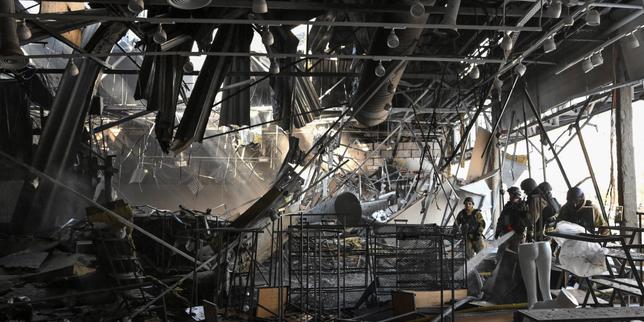
If you have ever walked down a residential street in southern Ukraine twenty minutes after a guided aerial bomb or a barrage of heavy artillery hits, you know that nothing about eighteen is clean. The air does not smell like history or geopolitics. It smells like pulverized concrete, burnt wiring, wet plaster, and copper. Your boots crunch over millions of tiny, diamond-shaped shards of window glass that catch the gray light like frost. Somewhere behind a collapsed brick wall, a kettle might still be sitting on a cold stove, untouched, while three feet away a ceiling has caved into a child’s bedroom.
To understand what happened in the Zaporizhzhia region, we have to refuse the comfort of the statistic. We have to look at the geography of a province split down the middle by steel and fire, and we have to sit inside the ordinary mornings that ended when the sky fell in.
The Anatomy of a Divided Heartland
Zaporizhzhia is not merely a dot on a military map. Before the full-scale invasion tore Europe’s eastern flank apart, this was Ukraine’s industrial and agricultural engine—a land of wide steppe, massive hydroelectric turbines spanning the Dnipro River, fertile black soil, and sprawling factory towns where generations built aircraft engines, steel, and aluminum.
Today, the oblast is an open wound.
Roughly seventy percent of the region remains under Russian occupation, including the Zaporizhzhia Nuclear Power Plant in Enerhodar—the largest atomic facility in Europe, sitting like a loaded gun on the southern bank of a drained reservoir. The remaining thirty percent, anchored by the regional capital of Zaporizhzhia city and dozens of battered frontline villages like Orikhiv, Huliaipole, and Stepnohirsk, lives under a permanent shadow.
Consider what geography means when you live thirty kilometers from Russian artillery positions.
In a major capital far from the front, an air raid siren gives you ten, fifteen, sometimes thirty minutes to grab your coat, wake your children, and descend into a metro station. In Zaporizhzhia, distance collapses time. An S-300 surface-to-air missile repurposed for ground attack, a heavy MLRS rocket volley, or a Soviet-era FAB glide bomb fitted with pop-out wings covers the distance from occupied territory in less than sixty seconds.
Often, the explosion arrives before the siren even finishes its first wail.
Think of living in a house where a stray bullet could pierce your living room wall at any random second of any random Tuesday, except the bullet weighs five hundred kilograms and levels the entire block. That is not an exaggeration; it is the exact physical equation governing daily life across the free towns and villages of Zaporizhzhia.
Eighteen Lives, Hypothetically Drawn
Because military security and the immediate chaos of rescue operations often delay the release of full victim rosters, the world initially meets the dead as a single collective noun. Yet every person inside that count of eighteen possessed a specific, irreplaceable architecture of habits, memories, and unfinished plans.
To bring those numbers down to earth, imagine three people who represent the real demographics of those consistently caught in Zaporizhzhia’s crossfire—hypothetical portraits drawn directly from the documented patterns of casualties in the region.
First, picture Olena, sixty-eight years old, a retired schoolteacher living in a single-story brick home in a village ten miles from the zero line. Her children evacuated to western Ukraine in 2022, begging her to come with them. She refused, not out of political defiance, but because she had buried her husband in the local cemetery, kept twelve chickens in the yard, and tended an apricot orchard she had planted with her own hands thirty years ago. At seven in the morning, she was sweeping fallen leaves off her concrete porch when the shockwave turned her garden wall into shrapnel.
Next, picture Dmytro, forty-two, an electrical technician who worked shifts repairing power substations torn apart by previous strikes. He stayed in Zaporizhzhia because someone has to keep the water pumps running and the hospital generators fed when winter creeps across the steppe. He was driving his battered Lada sedan down an avenue lined with Soviet-era apartment blocks, carrying a thermos of sweet black tea and a bag of groceries for his elderly mother, when a strike hit the intersection fifty yards ahead.
Finally, picture a young family—parents in their early thirties, a toddler asleep under a fleece blanket—living on the fourth floor of a panel-block building in the regional capital. They had taped their windows with masking tape in large X-patterns, a universal, heartbreakingly fragile ritual across Ukraine meant to keep shattered glass from flying like knives across the room. Tape does nothing against a direct hit from a glide bomb.
None of these people were soldiers. None of them held a rifle, manned a trench, or coordinated drone strikes. They were the civilian fabric of an industrial province, erased in the span of a single news cycle.
Why Bombardment Escalates When the Front Stalls
Whenever news breaks of mass civilian deaths in Zaporizhzhia, a predictable question surfaces among observers watching from abroad: Why target residential neighborhoods and frontline villages that hold no immediate tactical breakthrough?
The answer lies in a brutal, well-documented doctrine of attrition that military historians recognize immediately.
When mechanized assaults bog down in mud, minefields, and swarms of first-person-view drones, aerial bombardment ceases to be purely a tool for clearing trenches. It becomes a weapon of psychological and infrastructural exhaustion. The objective shifts from capturing terrain to making that terrain uninhabitable.
Look at how the strategy operates on the ground in Zaporizhzhia:
- Depopulation by terror: Every strike on a market, a post office, or an apartment block forces surviving families to weigh a terrifying calculation. Stay and risk dying in your sleep, or abandon your home, your livelihood, and your community to become an internally displaced person with two suitcases and dwindling savings.
- Stretching emergency capacity: Eighteen dead almost always means dozens more wounded—people pulled from rubble with crush injuries, severe burns, and traumatic amputations. Every ambulance rushing to a bombed apartment building, every surgeon operating under backup generator light, and every firefighter digging through smoking concrete is a resource pulled away from the broader war effort.
- Weaponizing winter: Across southern Ukraine, autumn inevitably gives way to freezing winds off the steppe. Bombardments in Zaporizhzhia repeatedly coincide with strikes on transformers, heating plants, and gas distribution nodes. Depriving a city of electricity is not a mere inconvenience; in sub-zero temperatures, it means frozen pipes, darkened operating rooms, and elderly residents shivering in high-rise apartments without elevators or heat.
President Zelensky’s announcement of the eighteen fatalities was accompanied by the same urgent plea Kyiv has repeated for years: air defense. Not abstract political solidarity, not statements of deep concern from diplomatic podiums, but Patriot batteries, IRIS-T systems, NASAMS, and the interceptor missiles required to shoot down incoming threats before they reach rooftops.
The Invisible Stakes of Normalization
There is a danger in this story that reaches far beyond the borders of Zaporizhzhia, and if we are honest with ourselves, it is a danger happening inside our own heads.
Call it compassion fatigue. Call it the numbing effect of a multi-year conflict competing for attention against economic anxiety, domestic elections, and crises in other hemispheres. Whatever label we attach to it, the result is the same: the extraordinary becomes routine.
In early 2022, the death of eighteen civilians in a single day of shelling would have triggered days of wall-to-wall international coverage, emergency parliamentary debates, and visceral public outrage. Years later, as the war grinds on, a headline noting eighteen killed in Zaporizhzhia risks sliding past our eyes with barely a pause in our thumb-scroll.
I have felt that numbness creep in myself, and it is deeply unsettling to admit. You read a dispatch from southern Ukraine over morning coffee, register the grim numbers, feel a brief, hollow ache in your chest, and ten minutes later you are answering emails or arguing about traffic. The human nervous system simply wasn't engineered to hold continuous grief for strangers thousands of miles away.
Yet that exact numbness is what perpetrators of sustained bombardment count on.
When a democratic world grows accustomed to mass civilian casualties in Europe’s breadbasket, the moral threshold shifts. What was once unthinkable becomes background noise. And once background noise sets in, the political urgency to supply air defenses, enforce sanctions on missile components, and hold war crimes accountable begins to erode.
What Survives Beneath the Rubble
If you spend time talking to residents of Zaporizhzhia—volunteer drivers who ferry bread into shelled villages under netting meant to catch kamikaze drones, nurses who sleep in hospital basements during heavy bombardments, teachers conducting lessons via smartphones from damp cellars—you encounter a resilience that refuses to be romanticized.
They are tired. They are angry. Many of them are terrified every single night when the wind picks up and the distant rumble of artillery begins rolling across the river. Courage in Zaporizhzhia does not look like a movie poster; it looks like a woman sweeping glass off a sidewalk at seven in the morning because she refuses to let her street look abandoned. It looks like neighbors forming a human chain to pass buckets of broken brick out of a collapsed stairwell before the rescuers even arrive.
When Volodymyr Zelensky stood before cameras to confirm that eighteen lives had been cut short in Zaporizhzhia, he was reading out the latest ledger of an ongoing human catastrophe. Behind that single sentence in a brief wire report are eighteen families who will never sit down to dinner together again, eighteen voices gone silent, and a region standing on the edge of the abyss, still holding on.
Tonight, somewhere in Zaporizhzhia, someone is laying a piece of plywood over a blown-out window frame, taping the edges against the autumn chill, and listening to the dark sky for the next sound.


