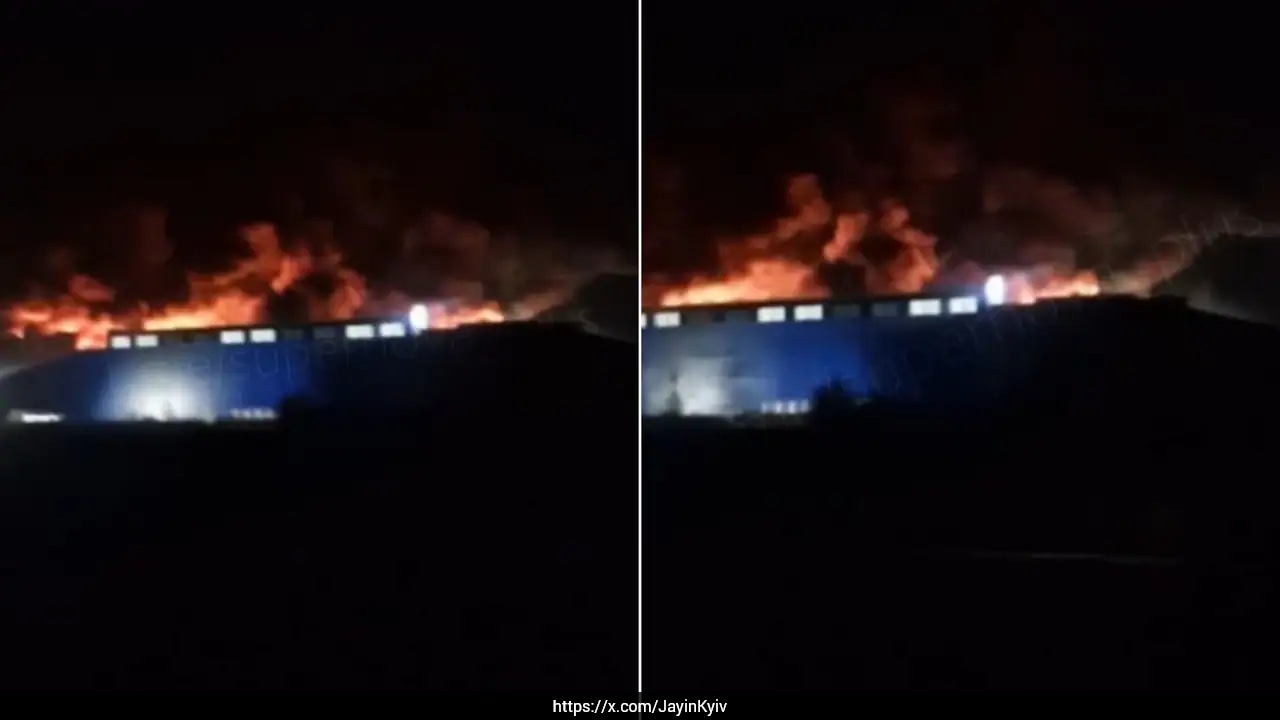
We spent years worrying about code vulnerabilities, software bugs, and sophisticated state-sponsored malware campaigns. It turns out that the single biggest threat to modern artificial intelligence infrastructure is a flying metal frame carrying an explosive payload. Recent drone strikes hitting major data hubs and supercomputer facilities operated by Russia's leading tech giants like Yandex and Sberbank have completely changed how security experts look at cloud computing. This isn't just a localized geopolitical conflict anymore. It's a brutal wake-up call about the physical reality of the digital age.
The Vulnerable Physics of High-Performance Computing
People forget that the cloud isn't floating in some ethereal cyberspace. It lives in massive, power-hungry concrete boxes packed with expensive silicon, cooling systems, and humming transformers. When Ukrainian long-range drones started hitting key facilities inside Russia, they didn't just smash drywall. They targeted the heavy machinery powering Russia's domestic artificial intelligence ambitions.
Take the supercomputers used to train models like YandexGPT and Sberbank's GigaChat. Training these large language models requires massive clusters of specialized graphics processing units running continuously for weeks or months. When a facility loses power, suffers direct physical damage, or loses its backup cooling systems, the consequences are catastrophic. Yandex later admitted that roughly 2.84 percent of unbacked customer data was lost forever because equipment damage and missing backups made recovery impossible.
Why Sanctions Made These Physical Hits Hurt Worse
If you think hardware can just be easily replaced off a store shelf, you haven't looked at the supply chain restrictions choking Russia's tech sector. Sanctions have made importing high-end data center equipment extraordinarily difficult and expensive. Companies are forced to rely on indirect trade routes, inflated prices, and whatever domestic alternatives they can scrounge up.
Domestic production of server racks and engineering hardware accounts for only a fraction of what's needed to maintain these networks. When a drone destroys a specialized server hall, you can't just call a Western vendor for a replacement crate of enterprise GPUs. The hardware simply isn't sitting in a warehouse down the street. It takes months of bureaucratic wrangling and exorbitant costs just to secure components, meaning downtime caused by kinetic attacks stretches on indefinitely.
Moving Underground and the New Reality of Cyber Physical Security
The response from Moscow has been frantic. Industry stakeholders and government officials have floated proposals to camouflage data centers, move critical infrastructure underground, or force state-managed capacity sharing to absorb the shock of damaged hubs. But burying massive computing clusters introduces its own nightmare scenarios regarding heat dissipation, ventilation, and uninterrupted power supply reliability.
This new era proves that digital sovereignty has a physical address. Companies everywhere are realizing that geographic centralization of server farms creates massive single points of failure. If your entire national search engine, cloud storage, and AI ecosystem relies on a handful of massive power-dense facilities in urban centers, you're building a glass house.
Protecting infrastructure means rethinking physical defense just as much as cybersecurity. Until tech executives and defense planners treat data centers like the critical national security assets they actually are, the next flight path overhead could wipe out years of digital progress in a single afternoon.