Geopolitics Is Not A Moral Crusade
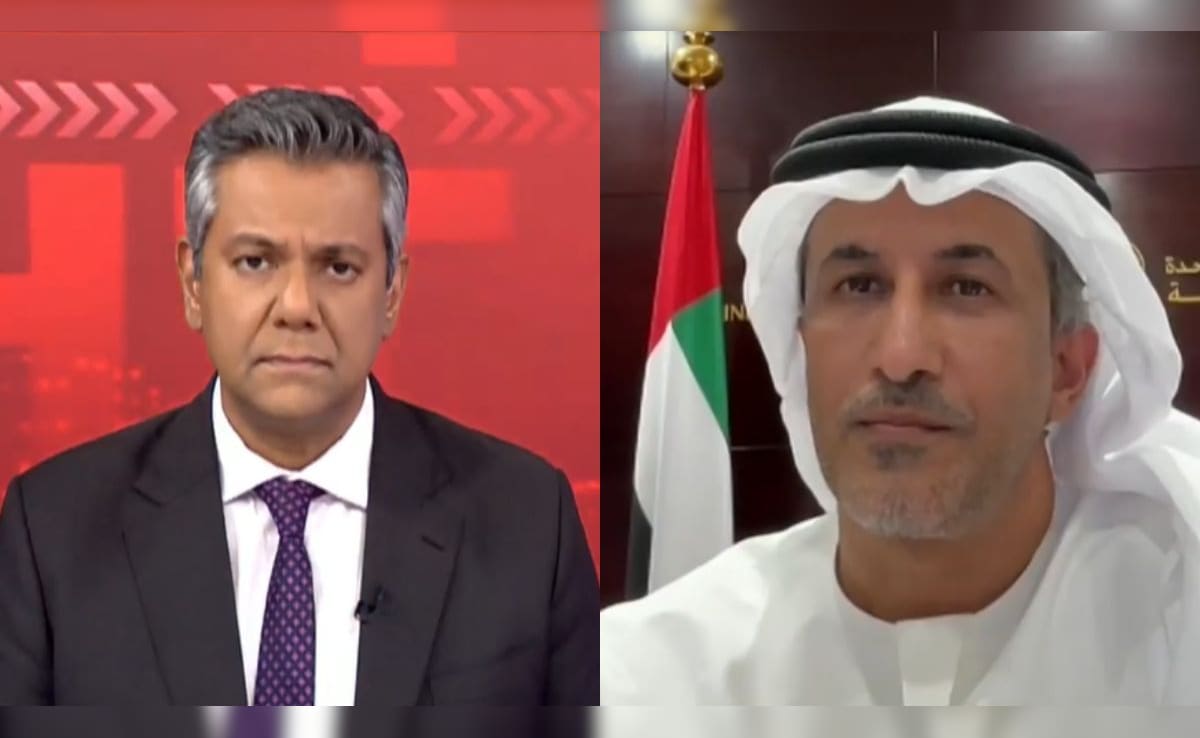
Stop reading the headlines that frame Middle Eastern escalation as a simple battle between order and chaos. When a UAE minister goes on NDTV to label Iranian drone strikes as "unprovoked acts of terror," he isn't providing an objective military analysis. He is executing a scripted piece of diplomatic theater designed to consolidate Western sympathy and justify the next decade of defense spending.
The term "unprovoked" is the most abused word in the modern foreign policy lexicon. In a region defined by a thousand-year-old chess match and a forty-year-old proxy war, nothing—absolutely nothing—is unprovoked. To suggest otherwise is to treat the public like goldfish with a five-second memory span.
The Myth Of The Random Attack
The consensus view suggests that Iran or its affiliates wake up and decide to launch Shahed-136 drones purely out of a desire for "terror." This is a lazy, dangerous oversimplification.
Military aggression in the Persian Gulf operates on a strict, albeit violent, logic of reciprocity. Every drone launch is a response to a cyberattack on an enrichment facility, a targeted assassination of a scientist, or the seizure of an oil tanker. When we call these acts "unprovoked," we ignore the underlying friction that actually drives the engine of war.
If you want to understand the current state of conflict, you have to stop looking at the explosions and start looking at the integrated circuit.
Drones Are Not Terror Weapons; They Are Economic Arbitrage
The media loves to focus on the fear factor. They want you to think about "terror." But the real story is the math. We are witnessing the democratization of airpower, and the established powers are terrified because their expensive toys are becoming obsolete.
Consider the cost-exchange ratio. A high-end interceptor missile from a Patriot battery or an Aegis system can cost between $2 million and $4 million. The Iranian-designed drones being used in these "unprovoked" attacks cost roughly $20,000 to $50,000 to manufacture.
- Attacker Cost: $20,000
- Defender Cost: $3,000,000
This is not a "terror" strategy. This is asymmetric economic warfare. If I can force my opponent to spend $3 million to stop a $20,000 piece of flying lawnmower parts, I win the long game without ever winning a single battle. The UAE and its allies aren't just worried about the physical damage; they are worried about the fact that their defense budgets are being bled dry by cheap, mass-produced silicon and fiberglass.
The UAE Diplomacy Playbook
When officials take to international news outlets like NDTV, they are speaking to two audiences: Washington and the global investor class.
For Washington, the "unprovoked terror" narrative is a request for more hardware. It's a signal that says, "We are the stable partners in a sea of madness; keep the F-35s coming."
For the investor class, it's a plea for stability. The UAE has spent the last twenty years rebranding itself from a desert outpost to a global hub for finance and tourism. Real estate in Dubai doesn't sell if the world thinks drones are falling like rain. By framing attacks as "senseless" or "unprovoked," they attempt to isolate the event as an anomaly rather than a systemic risk of doing business in a conflict zone.
The Technical Reality We Ignore
The "unprovoked" narrative also hides a massive intelligence failure. Drones of this nature require a sophisticated supply chain. They use "dual-use" components—GPS modules found in delivery drones, engines derived from German hobbyist designs, and chips found in your microwave.
The industry insider truth? We can't stop the proliferation because the technology is already out of the bag. You cannot "sanction" a hobbyist motor. You cannot "terror-list" a basic flight controller.
While ministers talk about "international law" and "global norms," the reality on the ground is governed by swarming algorithms. A single drone is a nuisance. A swarm of fifty drones, programmed to fly at low altitudes to avoid radar, is a mathematical certainty of a hit. No amount of indignant rhetoric at a press conference changes the physics of a saturation attack.
Stop Asking If It Is Moral And Start Asking If It Is Effective
The "People Also Ask" sections of the internet are filled with queries like "How can we stop drone terror?" or "Is Iran violating international law?"
These are the wrong questions.
The right question is: Why does the current global security architecture fail to account for $20,000 threats?
The answer is uncomfortable. It’s because our defense industry is built on the "Gold-Plated Solution." We want the $100 million jet. We want the billion-dollar destroyer. We have optimized for a type of war that isn't happening anymore.
When a minister calls an attack "unprovoked," he is distracting you from the fact that his multi-billion dollar defense grid just got bypassed by a glorified RC plane. It’s an admission of vulnerability disguised as a moral high ground.
The Hidden Cost Of "Stability"
I've watched nations pour billions into "anti-drone" tech that only works in controlled testing environments. The salesperson shows a laser melting a stationary target and calls it a "total solution." In the real world, salt spray corrodes the lens, dust interferes with the beam, and the enemy just sends ten more drones than you have lasers.
The UAE’s insistence on the "unprovoked" narrative is a desperate attempt to maintain the illusion of control. But control is a legacy concept. In the new era of warfare, the side with the cheapest, most numerous "smart" projectiles wins.
The Real Escalation Ladder
If we want to actually move the needle, we have to stop the name-calling. Calling an adversary a "terrorist" is a way to end a conversation, not start one. It signals that you have no intention of addressing the core grievances—whether they are territorial, religious, or economic—that lead to the "provocation" in the first place.
The status quo is a feedback loop of escalation:
- Sanctions are applied to "punish" behavior.
- The target of sanctions uses asymmetric means (drones) to signal they can still hurt the enforcer.
- The enforcer calls the response "unprovoked terror" and applies more sanctions.
- Repeat until something actually valuable explodes.
Breaking The Loop
True industry insiders know that the only way out of this is a fundamental shift in how we view regional security. We have to move past the "Good Guys vs. Bad Guys" binary that NDTV interviews promote.
We need to acknowledge that drones are the new "AK-47 of the sky." They are here to stay. They will be used by everyone. And they will always be "provoked" by something.
The UAE isn't just a victim of "terror"; they are a participant in a high-stakes geopolitical gamble where the rules of engagement were rewritten by Silicon Valley ten years ago, and the diplomats are just now realizing they're playing the wrong game.
Stop listening to the outrage. Watch the supply chains. Follow the cost-per-kill. The era of the "unprovoked" narrative is dead, buried under the wreckage of cheap carbon fiber and lithium batteries.
Stop pretending the chess board is empty just because you don't like the other player's opening move.