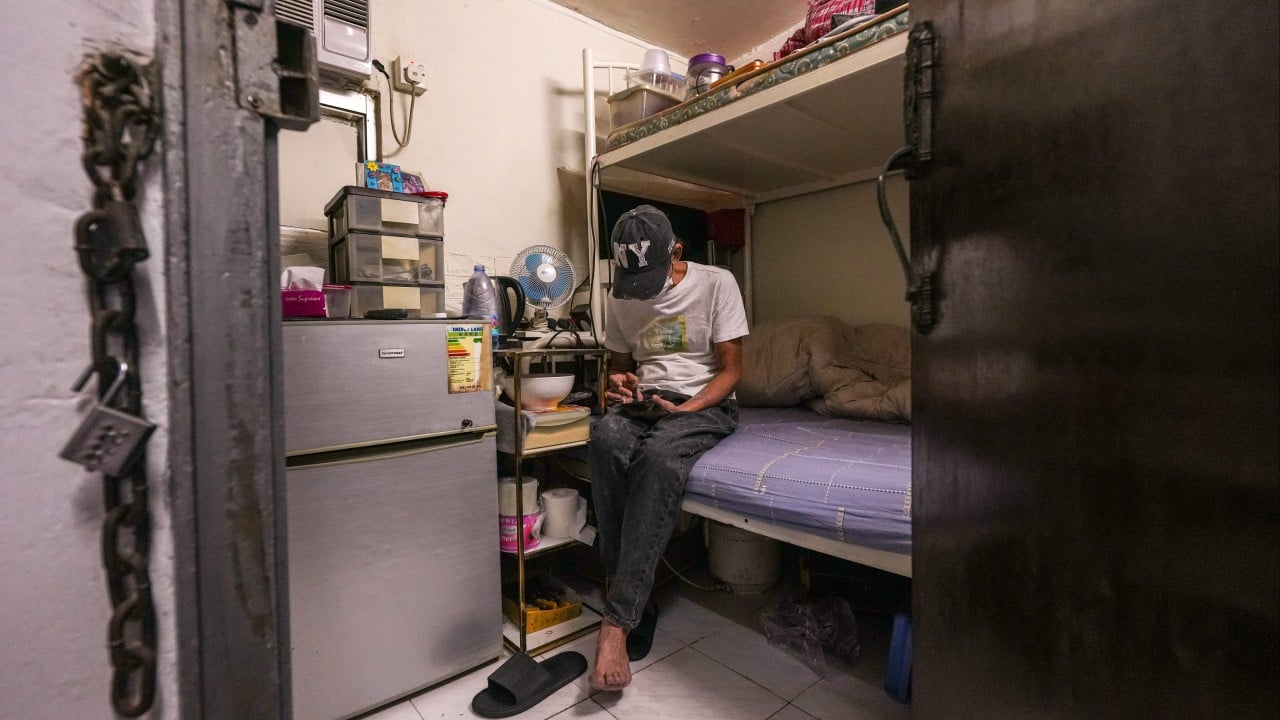
When the government announced that 73,800 subdivided flats had stepped forward to claim a three-year grace period, officials breathed a collective sigh of relief. The narrative pushed through standard channels framed the compliance numbers as a triumph of pragmatism. A better-than-expected turnout, they called it.
Yet numbers told by bureaucrats rarely match the lived experience on the ground.
Underneath that tidy statistical cushion lies an urban housing crisis defined by compromise, structural ambiguity, and a ticking clock. For decades, subdivided units have served as the silent shock absorber for Hong Kong's intractable housing shortage. Families, low-income earners, and aging citizens have squeezed into partitioned apartments born from the carcass of older residential buildings. When authorities introduced statutory standards to eradicate substandard housing—often dubbed "cage homes" or death traps disguised as cubicles—they faced a grim dilemma. Shutting them down immediately would throw tens of thousands into sudden homelessness.
The grace period was designed as a pressure valve. Instead, it became a holding pattern.
The Arithmetic of Compliance
To understand why over 70,000 units applied for temporary shelter under the new regulatory framework, look closer at what the application actually represents. It is not an admission of compliance. It is a declaration of existence.
Landlords and primary tenants rushed to register not because their properties suddenly met rigorous fire safety, structural load, and ventilation codes, but because registration bought them time. In property markets where square footage commands astronomical rates, three years is an eternity for investment amortization, but a blink of an eye for structural overhauls.
Consider the physical reality of these subdivided units. Many occupy aging tenements in districts like Sham Shui Po, Yau Ma Tei, and Wan Chai. Their walls are often thin partitions of wood or lightweight concrete. Drainage pipes weave haphazardly through makeshift kitchens and bathrooms, violating plumbing codes built for single-family occupation. Electrical loads designed for mid-century living now handle multiple air conditioning units, induction cookers, and refrigerators, turning old wiring harnesses into latent fire hazards.
Bringing these properties up to the new statutory baseline requires substantial capital expenditure. Load-bearing walls cannot simply be carved into without engineering clearance. Installing independent fire escapes or compliant fire-resisting doors in narrow, multi-tenant corridors is frequently an architectural impossibility.
When landlords weigh the cost of comprehensive renovation against the potential rental yields of micro-units, the math often points toward a different exit strategy.
The Tenant’s Invisible Bind
For the occupants living behind those partitioned doors, the three-year grace period offers little genuine security.
Housing stability in a subdivided flat has never been about legal frameworks; it has been about rent control and eviction notices. While the government establishes grace periods to give landlords room to maneuver, tenants find themselves caught in a silent squeeze. If a landlord decides that upgrading the flat to legal standards is financially unviable, the property will eventually have to close its doors.
Where do those residents go?
Public housing supply remains backlogged despite continuous governmental efforts to ramp up transitional housing and light public housing projects. The waiting list stretches across years, leaving vulnerable households dependent on the private rental market. If thousands of substandard units eventually vanish from the registry after the grace period expires, market contraction will drive rental prices upward across the remaining stock of affordable housing.
This is the core contradiction of the regulatory push. By setting minimum standards—a necessary moral and safety imperative—the administration risks contracting the very supply pool keeping low-income families housed.
Regulatory Enforcement and the Informal Market
Enforcement remains the ultimate unknown variable.
Bureaucracies excel at collecting registration forms; they struggle mightily with policing compliance at scale. Inspecting tens of thousands of partitioned flats requires an army of surveyors, structural engineers, and housing inspectors. Hong Kong’s municipal departments are already stretched thin managing building safety orders, illegal rooftop structures, and unauthorized alterations.
If a landlord misses the compliance deadline after riding out the three-year grace period, what happens? Will authorities enforce mass evictions? History suggests that governments hesitate to displace massive voting blocks or vulnerable populations en masse. The temptation to grant extensions or look the other way when deadlines loom is institutionalized by political expediency.
Furthermore, an overly aggressive enforcement regime risks driving the subdivided flat market further underground. If legitimate landlords find the compliance burden too punishing, units may slip out of the formal registration system entirely. Unregistered, uninspected, and unregulated micro-flats could proliferate in the shadows, stripping tenants of even the nominal protections the new laws attempt to establish.
The Structural Deadlock
Hong Kong's subdivided flat dilemma cannot be solved with regulatory fiat alone. Partitioned rooms are a symptom, not the disease. They exist because the cost of land acquisition, construction delays, and private development cycles have long failed to produce enough small, affordable homes for the working class.
The three-year grace period bought the government time, but it bought the housing market very little structural change. As the clock ticks down, the fundamental pressure points remain unchanged: too many people, too few affordable square meters, and aging urban infrastructure that refuses to bend to modern safety codes without billions in capital.
Until the supply side catches up with actual human need, every regulatory victory in housing will continue to look suspiciously like a temporary stay of execution.