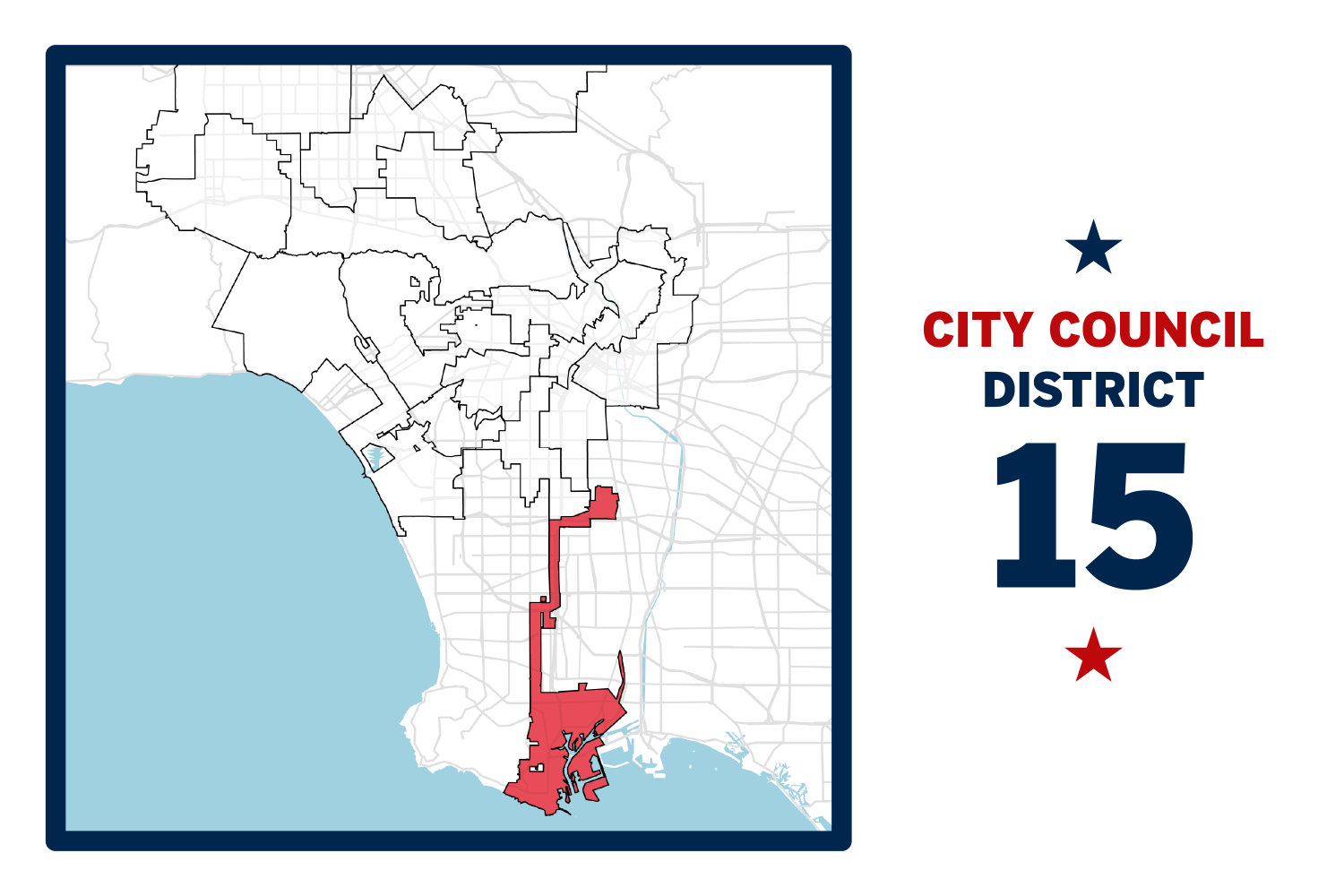
You’re looking at a ballot for Los Angeles City Council District 15 and seeing two names: Tim McOsker and Jordan Rivers. On the surface, it’s a classic setup. You’ve got the seasoned incumbent versus the young, radical challenger. But if you live in Watts, San Pedro, Wilmington, or the Harbor Gateway, you know this isn't just about picking a face for a flyer. It’s about who controls the "One-Five," a massive stretch of land that houses one of the busiest ports on the planet while some of its residents struggle to find a decent grocery store.
The primary on June 2, 2026, isn't a sleepy local affair. It’s a referendum on whether the "insider" method of slow, steady governance actually works, or if the district needs a total system shock.
The Case for the Institutionalist
Tim McOsker isn't just a councilmember; he's basically part of the building's foundation at 200 N. Spring St. He spent decades as a top aide to former Mayor James Hahn and worked as a lobbyist before winning his seat in 2022. He knows where the bodies are buried, how the budget works, and which buttons to push to get a street paved.
In his first term, McOsker pushed the idea of the "One-Five" to try and unite five very different neighborhoods that often feel ignored by the rest of LA. He’s been obsessed with the "cultural crescent," a plan to link the Watts Towers to the San Pedro waterfront. It sounds like a nice PR move, but for McOsker, it’s about pulling investment into areas that haven't seen a new crane in years.
He’s the guy who talks about "internal organizational control." That’s code for: "I know how to manage the city’s massive bureaucracy so it doesn't eat itself." If you want someone who can navigate a 400-page environmental impact report for a port project, he's your man. But for critics, that "insider" status is exactly the problem. They see a career politician who’s too cozy with the unions and the status quo.
The Radical Gamble of Jordan Rivers
Then there’s Jordan Rivers. He’s 22. He’s running as a community activist with the backing of the Green Party. Rivers isn't trying to tweak the system; he wants to flip the table.
His platform reads like a wishlist for a different version of Los Angeles. He wants to turn underused port land into "Essential Service Centers"—city-backed but locally owned spots where people can buy groceries at below-market prices. In a district that deals with serious food deserts, that’s a pitch that hits home. He’s also calling for a rail link between San Pedro and the Long Beach Blue Line, a project that would cost billions and take years, but one he argues is necessary for "upward mobility."
Rivers isn't afraid of the "v" word: Vacancy. He wants to tax developers who let land sit empty while people sleep on the sidewalks. It’s a aggressive stance that wins him fans among the younger, frustrated voters who feel priced out of their own neighborhoods.
However, Rivers carries heavy baggage that has nothing to do with policy. Reports about a violent incident involving a playmate when he was 12 have shadowed his campaign. While his supporters say he’s a different person now and focused on the future, it’s the kind of thing that makes undecided voters pause.
The Real Issues Smothering the District
Forget the personalities for a second. The "One-Five" has problems that don't care who’s in office.
The Housing Trap
McOsker points to industrial land he’s helped reclaim for housing. Rivers points to the tents and says it isn't enough. The reality is that District 15 is a microcosm of the LA housing crisis. You have historic homes in San Pedro and industrial pockets in Wilmington where the air quality is some of the worst in the state.
The Port Power Struggle
The Port of Los Angeles is the district's biggest engine and its biggest headache. It brings jobs, but it also brings massive trucks that tear up roads and choke the air with soot. McOsker, the former CEO of AltaSea, understands the port's economics deeply. Rivers wants the port to pay more—a "fair share" that would go directly into community services. It’s a debate between economic stability and social reparations.
Public Safety and Policing
This is where the two candidates split the most. McOsker has deep ties to the police union (he used to represent them). He tried to reform the police discipline process, but the mayor vetoed it. Rivers represents the "defund and reinvest" wing of the city. He views the current police presence as an "intrusion" and wants that money moved into social programs and "council housing."
What You Should Actually Do
Don't just look at the glossy mailers. Those are paid for by special interest groups who have a specific outcome in mind.
- Check the donor lists. Look at who is funding these campaigns. McOsker has the backing of traditional power players—labor unions and business interests. Rivers relies on small-dollar donors and grassroots activists.
- Attend a neighborhood council meeting. District 15 has some of the most active neighborhood councils in the city. They’re the ones who actually see these guys in person, not just on a screen.
- Verify the "One-Five" progress. If you live in Wilmington or Watts, ask yourself if you’ve actually seen the "equal importance" McOsker promised. If the answer is no, Rivers’ radicalism might look more appealing. If you see the cranes moving, you might stick with the incumbent.
The June 2 primary will decide if District 15 stays the course with a man who knows the machinery of City Hall or takes a flyer on a young activist who wants to build something entirely new. Either way, the "One-Five" won't look the same by 2027.
Make sure you're registered to vote by May 18. You can check your status on the California Secretary of State website. If you're voting by mail, get that ballot in the drop box early. Local races like this are often decided by a few hundred votes. Don't be the person complaining about a pothole in October when you skipped the chance to pick the person who fixes it in June.


