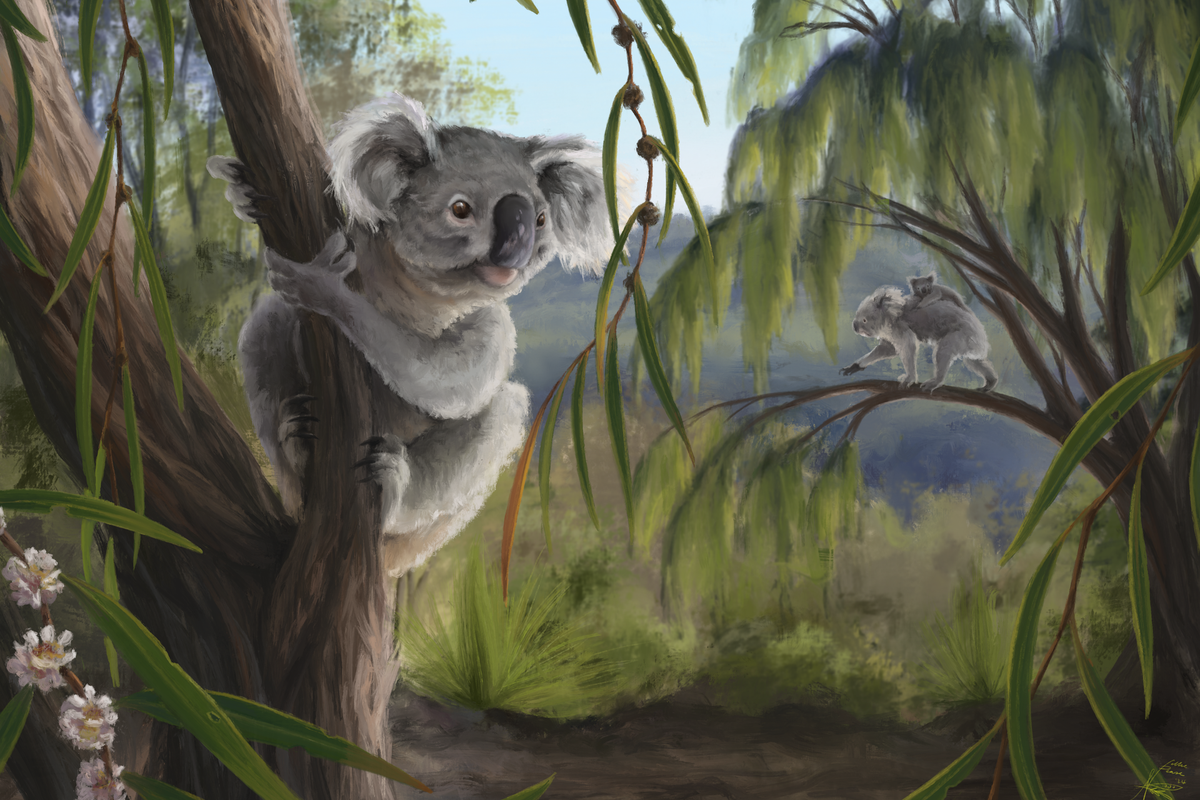
We often think of the modern koala as a single, unchanging creature that has spent millennia lazily munching on eucalyptus leaves on the eastern coast of Australia. But the fossil record tells a completely different story.
A newly identified species of koala from Western Australia throws a massive wrench into those long-held assumptions. Researchers working with the Western Australian Museum and Curtin University confirmed that the fossilized remains found in the region don't belong to the modern koala at all. Instead, they represent a completely unique, extinct species that scientists are calling Phascolarctos sulcomaxilliaris, or the grooved maxilla koala. Read more on a similar issue: this related article.
If you've ever assumed that the koalas living today are identical to those that roamed prehistoric Australia, it's time to rethink the evolutionary timeline.
The Discovery of the Dimpled Koala
The story of this discovery actually began over a century ago in 1910, when the first koala fossils were unearthed at Mammoth Cave in Western Australia. For decades, researchers assumed that these bones and teeth were simply scattered remains of the modern koala (Phascolarctos cinereus) that had somehow drifted from the east. It was a convenient assumption, but one that lacked deep morphological testing. More reporting by Apartment Therapy delves into similar views on the subject.
That all changed when a caver named Lindsay Hatcher donated a rare, well-preserved adult koala skull to the Western Australian Museum. Collected from Moondyne Cave near Margaret River, the skull showed features that stood out immediately. It had distinct dimples, or deep grooves, in the cheek region.
Led by Dr. Kenny Travouillon, the research team compared almost 100 bones and teeth from the museum collections with modern koala specimens. The results confirmed that these specimens fell entirely outside the shape range of modern koalas.
The Western Australian koala wasn't just a stray traveler from the east. It was a completely different species that had been hiding in plain sight for more than a hundred years.
The Anatomy Behind the Dimpled Cheeks
What makes this creature so fascinating is how its bone structure reveals an entirely different way of life. The defining feature of Phascolarctos sulcomaxilliaris is an incredibly deep, rounded groove located on the cheekbone below the eye socket.
In living koalas, the lip and nose muscles attach in this general area. But the groove in the extinct Western Australian species is vastly deeper and more exaggerated.
What does this mean for its daily life and survival?
- Mobile upper lip: The deep sulcus implies a larger surface area for muscle attachment. This likely gave the animal a highly mobile upper lip, allowing it to manipulate and chew much tougher, woodier leaves or shoots than the modern koala eats.
- Enhanced sense of smell: Increased muscle space in the snout could have allowed for greater nostril movement. This would have helped the animal flare its nostrils to detect food sources and resources from farther away.
- More slender frame: Unlike the stout, tree-climbing physique of modern koalas, the fossil evidence suggests a longer, more slender skeleton. This animal was likely less agile when moving between trees and may have spent a larger amount of time on the ground or navigating more open terrain.
Dr. Travouillon and his team suggest that this species was highly adapted to the specific conditions of Western Australia's prehistoric ecosystems. But these very adaptations ultimately proved to be its undoing.
How Climate Shifts Drove the Species to Extinction
We know that Phascolarctos sulcomaxilliaris vanished from the landscape approximately 28,000 years ago. But why did a species that survived for thousands of years suddenly die out?
The answer lies in major, late-Pleistocene climate events. Uranium-thorium dating and radiocarbon analysis of the caves where the fossils were found correlate perfectly with a massive drying event. As the region became significantly colder and drier, the lush eucalyptus forests of the south-west shrank for nearly 10,000 years.
Because koalas rely almost entirely on specific eucalyptus trees for both food and shelter, this habitat loss was catastrophic. The animals essentially ate themselves out of house and home as their territory shrank. The fossil record of this lost species gives us a stark, deep-time perspective on how vulnerable koalas are to habitat loss and environmental changes today.
Learning from the Past to Protect the Future
It's easy to look at this prehistoric discovery as nothing more than an interesting piece of trivia. But it offers practical lessons for modern conservation efforts.
Australia's koala populations are already under immense pressure from deforestation, disease, and changing temperatures. By understanding that multiple species of koalas once roamed different regions of Australia, scientists realize just how diverse the genus used to be. Today, there are four known species of koalas that lived over the past few million years, including the giant Pleistocene koala (Phascolarctos stirtoni), which was almost double the size of the modern koala.
Knowing that these distinct lineages existed teaches us not to treat the modern koala as a single, resilient population that can easily bounce back. It shows that localized climate change can wipe out an entire lineage of marsupials when their specific ecosystems are disrupted.
If you want to support koala conservation, protecting the biodiversity of eucalyptus forests is the most urgent priority. Understanding the past gives us the clearest possible roadmap for what needs to be saved today.