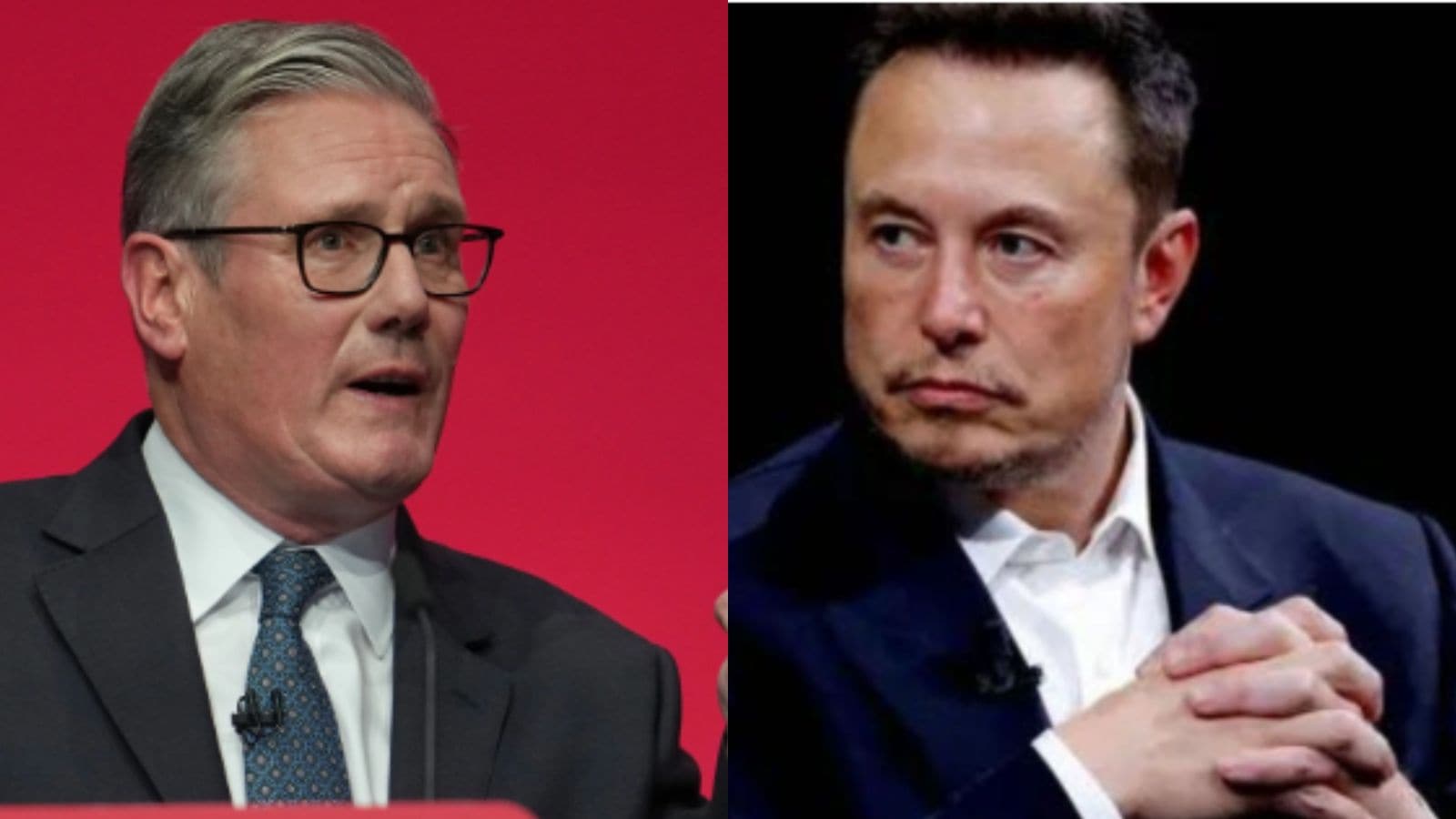
The collision between British Prime Minister Keir Starmer and X owner Elon Musk over the tragic murder of Henry Nowak is not a simple spat between a politician and a billionaire. It is a high-stakes stress test for the United Kingdom’s Online Safety Act and a preview of how Western democracies will struggle to maintain order when algorithmic amplification meets raw social unrest. While the murder of Nowak—a case involving a Sikh suspect—served as the immediate flashpoint, the deeper conflict lies in the fundamental disagreement over who controls the narrative during a national crisis. Starmer views Musk’s platform as a gasoline-soaked rag thrown onto a fire; Musk views Starmer’s government as a thin-skinned autocracy intent on burying uncomfortable truths.
The Nowak Murder and the Anatomy of a Viral Spark
The murder of Henry Nowak could have remained a local tragedy, handled by the courts and the community. However, the identity of the suspect transformed the event into a weaponized data point for online agitators. In the hours following the incident, X became a clearinghouse for unverified claims, directed anger, and the kind of rhetoric that frequently spills from the keyboard into the street.
Starmer’s reaction was swift and, from a traditional governing perspective, predictable. He called out the "irresponsibility" of social media platforms that allow misinformation to bypass the editorial filters that govern television and newspapers. But his sharp rhetoric missed a crucial shift in the information ecosystem. By reacting so publicly, Starmer inadvertently elevated Musk from a platform provider to a political protagonist. This gave Musk the opening to frame the British government as an enemy of free expression.
The Breakdown of Information Control
Governments used to rely on a "cool-down" period after a violent crime. The police would issue a statement, the press would report the facts, and the legal process would begin. That cycle is dead. On X, the "why" of the Nowak murder was decided by influencers and automated bots long before the first official police briefing ended.
Musk’s strategy is built on the idea that the "Community Notes" feature and the raw wisdom of the crowd are superior to government-vetted information. This creates an environment where a Prime Minister is no longer the ultimate authority on public safety; he is just another user in the feed. When Starmer warned that those inciting violence would "feel the full force of the law," he wasn't just talking to the rioters. He was issuing a veiled threat to the platforms that host them.
The Failure of the Online Safety Act
The UK’s Online Safety Act was designed to prevent exactly this kind of situation. It was marketed as a way to hold tech giants accountable for "legal but harmful" content. Yet, the Nowak case shows that the law is largely toothless when a platform owner is ideologically opposed to the government’s goals.
The core issue is the lag time between a post going viral and a regulator taking action. By the time Ofcom (the UK's communications regulator) can investigate whether X violated its duty of care, the damage to social cohesion is already done. We are seeing a mismatch in speed. Government operates in weeks and months; the X algorithm operates in seconds.
Why Fines Don't Scourge Billionaires
The threat of multi-billion pound fines might scare a traditional corporation with a board of directors and a sensitive stock price. It does not scare Elon Musk. He has shown a willingness to burn through brand equity and advertiser relationships in pursuit of his vision for the "digital town square." Starmer’s reliance on the threat of financial penalties assumes that Musk cares about the bottom line more than he cares about his role as a global provocateur. That is a dangerous miscalculation.
The Sikh Community and the Weight of Misrepresentation
Lost in the noise of the Starmer-Musk feud is the actual impact on the ground. The suspect in the Henry Nowak case being a Sikh man was used as a shorthand for broader anti-immigrant sentiment, regardless of the suspect's specific background or the nuances of the case.
When political leaders and tech moguls trade barbs, the communities caught in the middle face the actual consequences. The Sikh community in the UK, long established and deeply integrated, suddenly found itself being characterized through the lens of a single violent act. This is the "algorithmic bias" that Starmer’s team is most concerned about—the way a single event can be scaled into a narrative of cultural conflict.
The Echo Chamber of Grievance
Musk’s response to Starmer—often involving memes or one-line provocations like "Civil war is inevitable"—acts as a dog whistle to those who feel marginalized by "establishment" politics. It creates a feedback loop.
- Step 1: A crime occurs.
- Step 2: Social media influencers highlight the race or religion of the suspect.
- Step 3: The government calls for "restraint" and "responsibility."
- Step 4: Musk frames that call as "censorship."
- Step 5: The original crime is forgotten, replaced by a battle over free speech and national identity.
Starmer’s Impossible Position
Keir Starmer is a lawyer by trade, a man of process and precedent. He is trying to apply 20th-century legal frameworks to a 21st-century psychological war. Every time he condemns Musk, he validates Musk’s claim that the "elites" are trying to hide the truth from the people.
If Starmer does nothing, he looks weak and allows social unrest to fester. If he moves to ban X or throttle its traffic, he risks being compared to authoritarian regimes in Turkey or China. It is a trap with no clean exit. The Nowak murder was merely the catalyst that exposed how little power the British state actually has over the information its citizens consume.
The Geopolitical Reality
This isn't just a domestic UK issue. Musk is increasingly positioning himself as a sovereign entity. He meets with world leaders, dictates the terms of satellite internet in war zones, and now, challenges the legal authority of a G7 Prime Minister. Starmer is fighting a man who has more followers than the UK has citizens.
The British government’s attempts to "moderate" the internet are being viewed by the Silicon Valley right as an existential threat to the American concept of free speech. This creates a diplomatic friction that extends beyond social media posts. It affects trade, security cooperation, and the future of AI regulation.
Beyond the Rhetoric
The hard truth is that the UK government cannot win a direct war with X. The platform is too decentralized, and its owner is too insulated from traditional pressure. To regain control, the Starmer administration must stop reacting to every tweet and start addressing the underlying conditions that make the public so susceptible to viral misinformation.
Public trust in the UK’s institutions—the police, the media, and the Parliament—is at a historic low. When people don't trust the official version of events, they look for an alternative. Musk provides that alternative. Henry Nowak’s death became a symbol because there was a vacuum of trust that the "official narrative" could not fill.
The Future of Policing the Feed
We are moving toward a period of "digital balkanization." Governments will likely begin to demand that data and algorithms be localized. We might see the rise of "sovereign clouds" where the UK government has more direct oversight of what its citizens see. But even this is a technical nightmare to implement and a political minefield.
The Starmer-Musk feud is the opening salvo in a decade-long conflict over the soul of the internet. It is a battle between the safety of the collective and the absolute right of the individual to speak, no matter how damaging that speech might be. Starmer is betting that the public wants order. Musk is betting that the public wants to be heard.
The Nowak case will eventually fade from the headlines, but the blueprint for the next crisis is already written. The next time a high-profile crime occurs, the same players will take the same positions. The algorithm will churn, the Prime Minister will condemn, and the billionaire will post. The only way to break the cycle is to realize that the law is no longer the highest authority in a world governed by engagement metrics.
Stop looking for the government to "fix" social media through legislation alone. The power of the platform isn't in its code; it's in the vacuum of credibility left behind by the state.