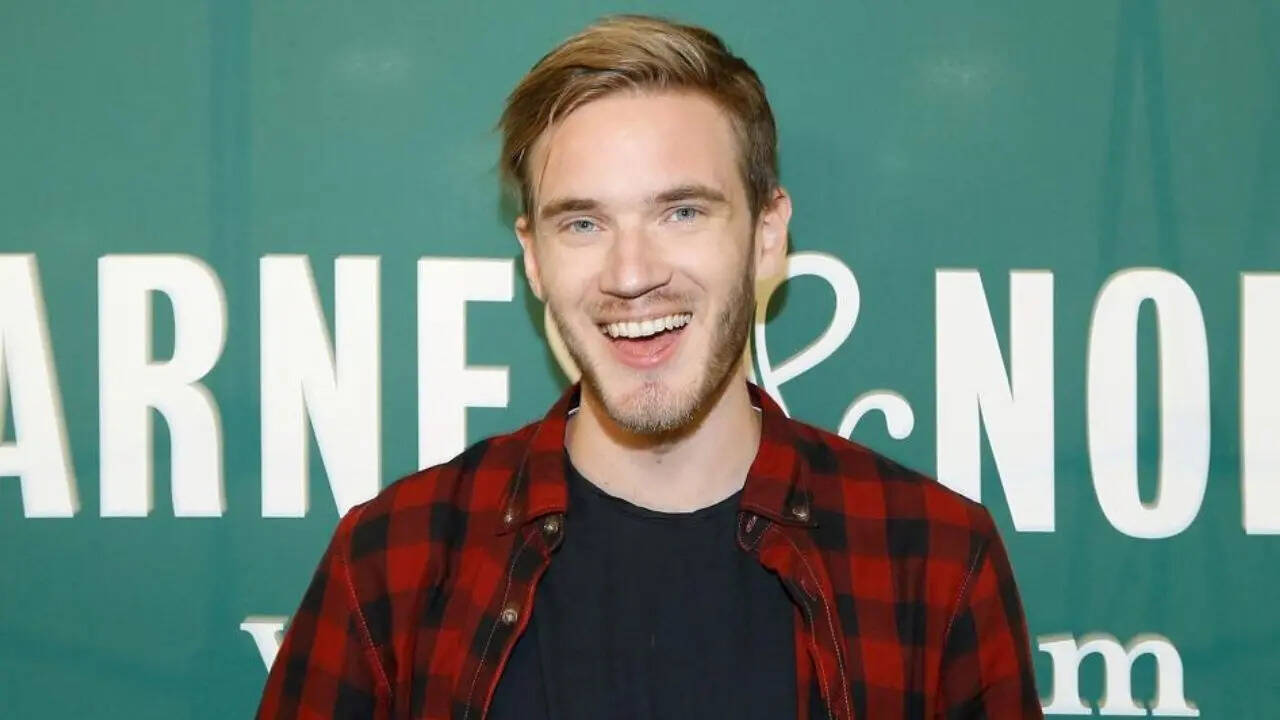
Felix Kjellberg sat in a room bathed in the sterile glow of studio lighting, looking at a lens that had defined his entire adult life. For over a decade, that glass circle was his window to a hundred million people. It transformed a Swedish college dropout selling hot dogs into PewDiePie, a cultural titan who shaped the internet’s very architecture.
Then, he turned it off.
The decision to end his deeply personal Japan vlogs was not a sudden burst of petulance. It was a calculated act of survival. To understand why the king of YouTube decided to pull the curtain down on his family life, you have to understand the invisible tax that digital fame extracts from the human soul. It is a tax paid in privacy, measured in seconds of stolen normalcy, and compounded daily by an algorithm that demands everything until there is nothing left to give.
The Truman Show Blueprint
In 1998, a film predicted our current reality with terrifying accuracy. Jim Carrey played a man whose entire existence was broadcast to a global audience without his consent. Today, creators willingly step into that dome. They build their own sets. They buy their own cameras. They become the directors of their own surveillance.
For years, the formula worked. Felix transitioned from shouting at horror games in a dark apartment to sharing the quiet, domestic bliss of his life in Tokyo with his wife, Marzia, and their newborn son, Björn. The vlogs were beautiful. They were shot with cinematic lenses, edited with a gentle, lo-fi rhythm, and filled with the mundane joys of checking out Japanese convenience stores or walking their aging pugs.
Audiences loved it. The comment sections swelled with a warmth rarely seen on a platform notorious for its toxicity. It felt like watching an old friend finally find peace after years of public trial and tribulation.
But a dark paradox lurked beneath the surface of those cozy videos.
The more authentic a creator appears, the more the audience feels entitled to ownership over that authenticity. Psychologists call this a parasocial relationship. It is a one-sided psychological bond where the viewer feels a deep, reciprocal friendship that simply does not exist. When you watch a man grow up, marry, move across the world, and cradle his newborn child, you don’t feel like a spectator anymore. You feel like family.
That is where the danger begins.
The Weight of a Million Eyes
Imagine walking down a street. Now imagine that every single person you pass is staring at you, analyzing your posture, judging the expression on your face, and whispering about your history. Now multiply that by a hundred million.
Felix has spoken openly about the claustrophobia of hyper-fame. In his earlier years, the pressure manifested as burnout, a relentless cycle of feeding the content monster to stay atop the search rankings. But a man changes when he becomes a father. The stakes shift. The perimeter of what needs protection shrinks from a global brand down to a single crib.
Consider the reality of producing a family vlog. Every shot must be vetted. Is the street sign visible? Did the camera catch the reflection of a house number in a car window? Are there fans lingering in the background, mapping out the family’s daily routine? The mental overhead of keeping a child safe in the digital age is staggering.
The internet is a place of infinite memory and zero nuance. A single stray detail in a video can lead to doxxing, harassment, or worse. For a long time, Felix managed this tightrope walk by heavily editing his content, blurring out faces, and keeping his locations ambiguous. But editing out the world defeats the purpose of documenting a life. You end up capturing a sanitized, artificial version of reality, a ghost of the experience you actually lived.
He realized he was no longer living his life. He was staging it for post-production.
The Silent Evolution of Joy
There is a specific kind of tragedy that happens when a hobby becomes an empire. The thing that brought you joy becomes the thing that confines you.
Felix did not quit YouTube entirely; he redefined his relationship with it. The end of the vlogs marks the boundary line between the public commodity known as PewDiePie and the private individual named Felix Kjellberg. He chose to stop treating his family as characters in a ongoing reality show.
This shift mirrors a broader cultural exhaustion. We are witnessing a quiet rebellion against the total transparency of the internet. For years, the prevailing wisdom was that success required total vulnerability. You had to show the highs, the lows, the breakups, and the breakdowns. The algorithm rewarded raw, unfiltered access.
But the human mind was never evolved to handle the feedback loop of global critique on its personal milestones. When you share your child’s first steps with the world, the corporate algorithms quantify that milestone. It assigns a click-through rate to a father’s joy. It attaches a dollar amount to a mother’s exhaustion.
Felix looked at that ledger and realized the math no longer made sense. The revenue, the views, the engagement metrics—none of it could buy back the anonymity his son deserved.
The Final Frame
In one of his last vlogs, there is a moment that encapsulates the entire transition. The camera is steady, capturing a quiet afternoon. The world outside is bustling, but inside the frame, the noise fades away. There are no frantic cuts, no loud jokes, no bids for attention. It is just a man realizing that the most valuable parts of his life are the ones that will never be uploaded to a server.
The decision to end the family series wasn't a failure of the format. It was its ultimate completion. He used the platform to build a life, and then he used that life to escape the platform's clutches.
The screen goes black. The watch next queue populates with loud, neon thumbnails screaming for attention. But the room in Tokyo remains quiet, the camera resting on a shelf, its lens capped, protecting a world that belongs entirely to them.


